Slow Cooker Time Converter & Safety Checker
Recommended Time
--
Estimated equivalent time on .
Risk Assessment
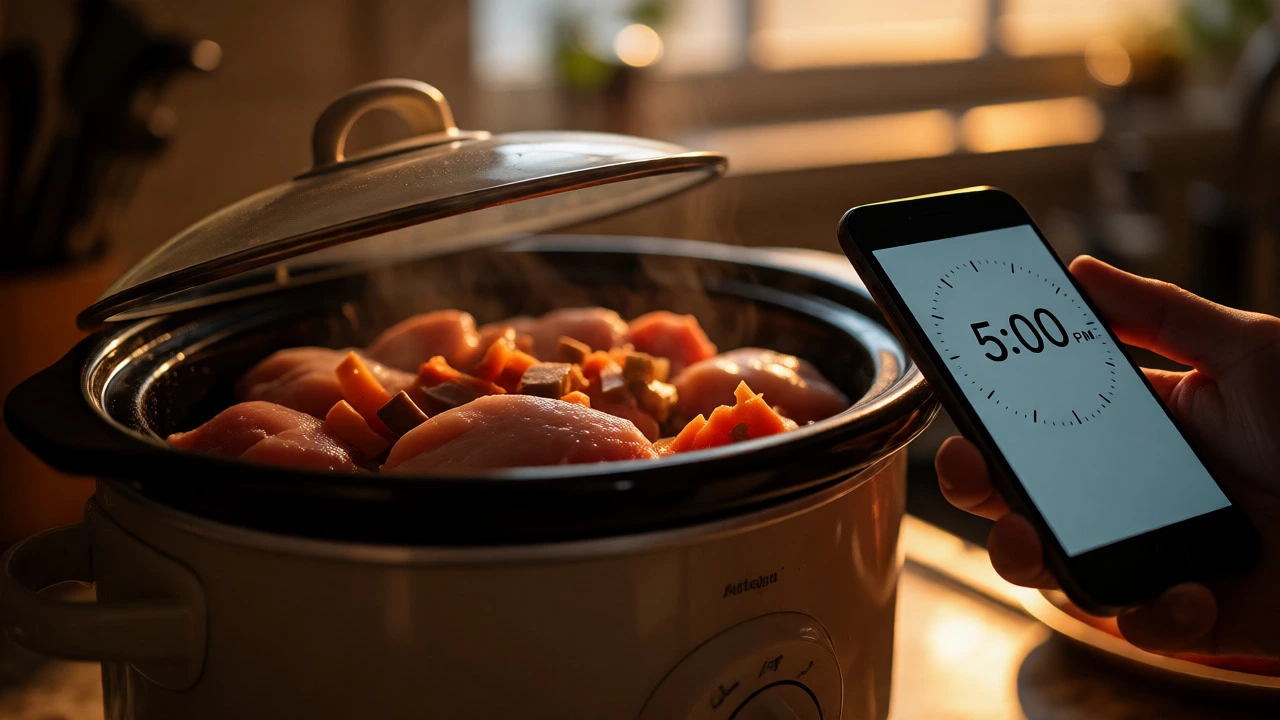
You’re standing in your kitchen at 5 PM, staring into a cold slow cooker containing raw chicken and vegetables. You wanted to start this meal at 8 AM on the "Low" setting, but life got in the way. Now you have exactly four hours before dinner needs to be ready. The question that plagues every busy home cook is simple but critical: Is 6 hours on low the same as 4 hours on high?
The short answer? Almost, but not quite. And getting it wrong can mean the difference between fall-apart tender beef and dry, stringy leather-or worse, undercooked poultry. While manufacturers often suggest a rough equivalence, real-world cooking involves variables like food density, liquid volume, and appliance calibration. Let’s break down the actual science of heat transfer so you can stop guessing and start eating.
The Temperature Reality Check
To understand if the time swap works, we first need to look at what "Low" and "High" actually mean inside the pot. Unlike an oven where you dial in specific degrees, a slow cooker maintains a narrow temperature range based on the wattage applied to the heating element surrounding the ceramic insert.
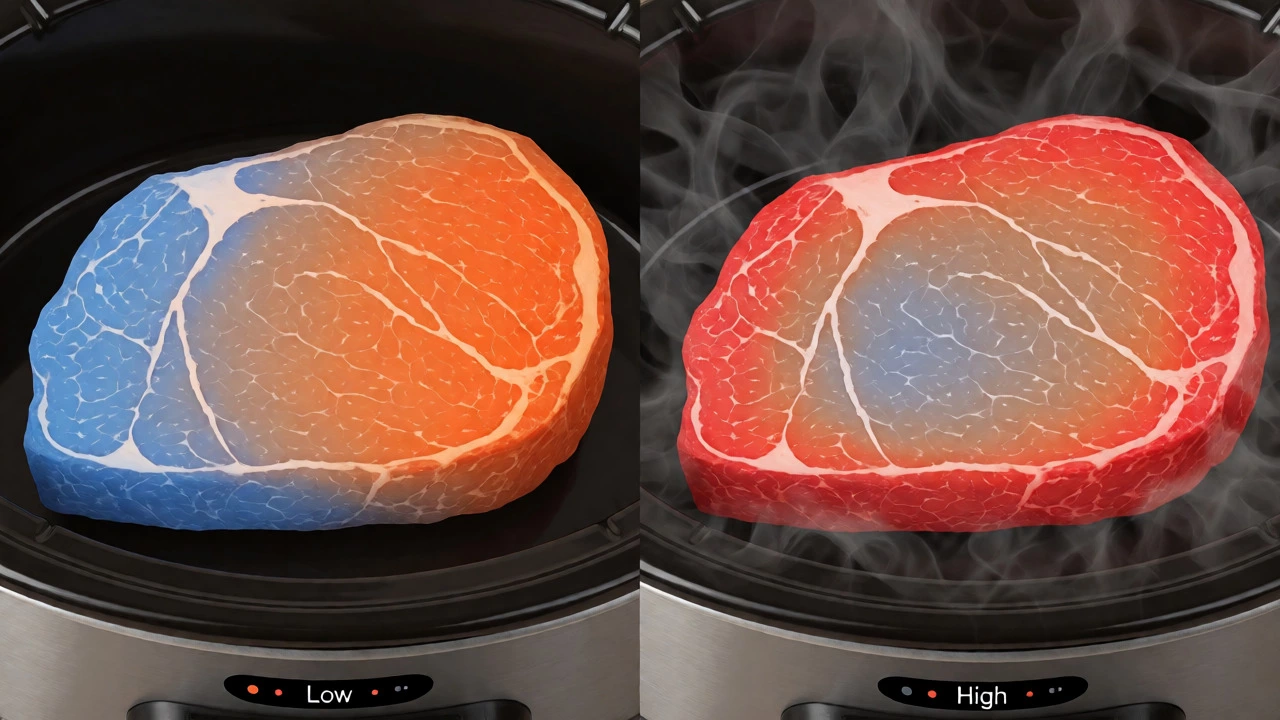
According to standards set by the USDA and major manufacturers like Crock-Pot, the Low setting typically holds food at approximately 190°F (88°C). The High setting, conversely, pushes temperatures up to around 300°F (149°C). Yes, you read that right. The internal environment of a slow cooker on High is nearly as hot as a conventional oven, though the moisture trapped inside prevents the surface from burning or drying out too quickly.
This massive temperature gap explains why you can’t simply halve the time. Heat doesn't penetrate meat linearly. It takes energy to raise the core temperature of the food to the safety threshold (usually 165°F for poultry), and then more time to break down collagen into gelatin. On Low, this process is gentle and slow. On High, the external heat forces moisture out faster while trying to cook the center. If you switch from a planned 8-hour Low recipe to 4 hours on High, you risk overcooking the edges before the center is safe.
The General Conversion Rule (And Why It Fails)
Cookbooks often provide a cheat sheet: 1 hour on High equals roughly 2 to 2.5 hours on Low. This suggests that 4 hours on High might approximate 8 to 10 hours on Low. So, is 6 hours on Low equal to 4 hours on High? By this math, 6 hours on Low would theoretically equate to only about 2.5 to 3 hours on High. Therefore, running a 6-hour Low recipe for 4 hours on High means you are likely overcooking the dish by about an hour in thermal units.
| Recipe Time on LOW | Estimated Time on HIGH | Risk Factor |
|---|---|---|
| 4-6 Hours | 2-3 Hours | Low. Good for lean meats. |
| 7-8 Hours | 3.5-4.5 Hours | Moderate. Watch for dryness. |
| 9-10 Hours | 4.5-6 Hours | High. Collagen may break down too fast. |
If your original plan was 6 hours on Low, switching to High for 4 hours puts you in the danger zone for texture. You are applying significantly more heat energy than intended. For delicate proteins like chicken breast or white fish, this extra hour of high heat will squeeze out every drop of juice, leaving you with chalky meat. For tough cuts like chuck roast or pork shoulder, however, this aggressive approach can sometimes work, provided there is enough liquid to prevent scorching.
When the Swap Works (And When It Doesn’t)
Not all foods react to heat the same way. Your decision to convert should depend entirely on what is inside the pot.
Foods that tolerate the High setting well:
- Tough Cuts of Meat: Beef chuck, pork shoulder, and lamb shanks are built for long, slow breakdown. They contain high amounts of connective tissue. Applying higher heat accelerates this breakdown. A 4-hour High stint here is usually fine because the fat renders slowly and keeps the meat moist.
- Root Vegetables: Potatoes, carrots, and parsnips are dense. They benefit from higher temperatures to soften their cell walls quickly without turning to mush immediately.
- Liquid-Heavy Dishes: Soups, stews, and chili have a high water content. Water boils at 212°F (100°C) at sea level. Even if the air inside the lid hits 300°F, the boiling liquid caps the food's temperature near 212°F until most of the water evaporates. This makes soups much safer to convert than dry roasts.
Foods that fail on High:
- Lean Poultry: Chicken breasts, turkey cutlets, and pork loin have very little intramuscular fat. On High, they reach the safe internal temperature quickly, but continue to contract and expel moisture rapidly. Four hours on High for a recipe meant for six on Low will almost certainly result in dry chicken.
- Dairy and Cream: Adding milk, cream, or cheese early in a High-cook cycle causes curdling. Dairy proteins denature and separate when held at high temperatures for too long. Always add these in the last 30 minutes.
- Delicate Seafood: Fish flakes apart easily. High heat turns seafood rubbery in less than two hours. Never convert a seafood stew to High unless you reduce the time drastically to under 2 hours.
Safety First: The Danger Zone
Before you hit the "High" button, consider food safety. The USDA states that perishable food must pass through the "Danger Zone" (40°F to 140°F / 4°C to 60°C) as quickly as possible. Bacteria multiply rapidly in this range.
A slow cooker on Low takes longer to bring food up to temperature. If you load a large, frozen roast into a pot set to Low, it might spend several hours in the Danger Zone. Switching to High helps bypass this zone faster. However, if you are converting a recipe, ensure your food starts fresh or properly thawed. Putting frozen food directly into a High-setting slow cooker can lead to uneven cooking, where the outside burns while the inside remains frozen for the first hour.
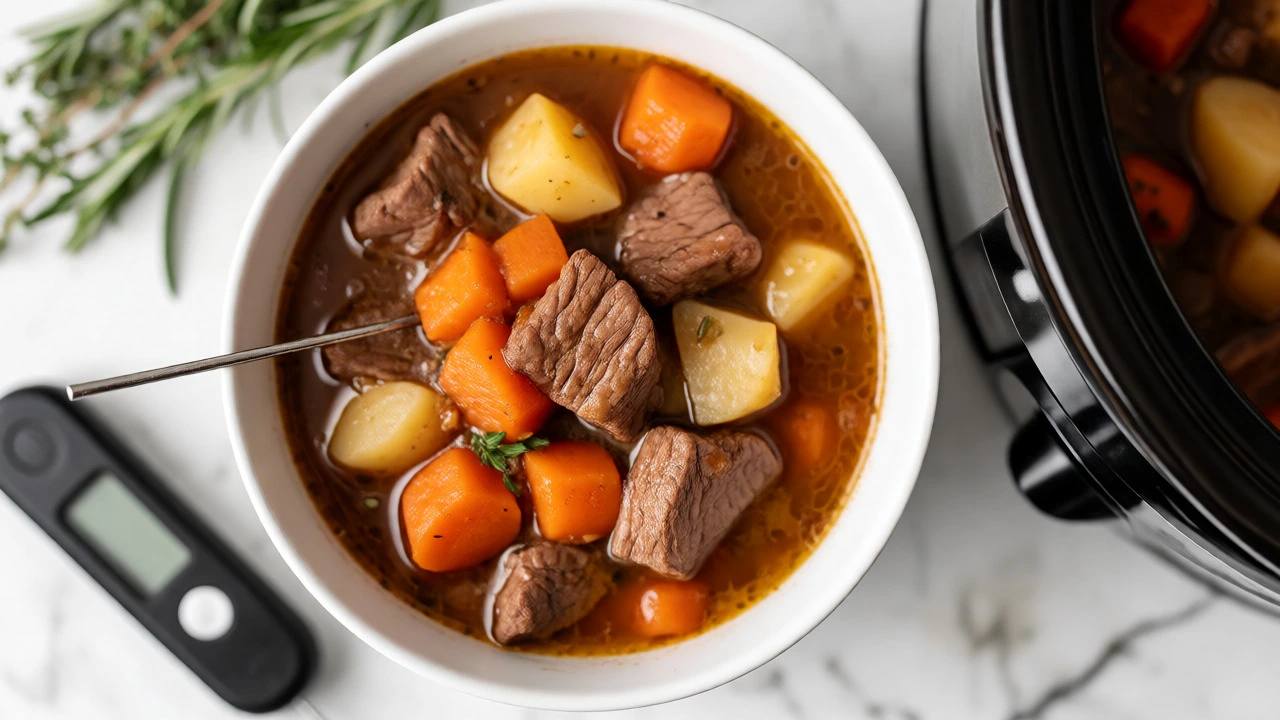
Pro Tip: Use a meat thermometer to verify doneness. Do not rely solely on the clock. The FDA recommends an internal temperature of 165°F (74°C) for all poultry and 145°F (63°C) for whole cuts of beef, pork, and lamb, followed by a three-minute rest time.
How to Adjust Your Recipe for the Switch
If you are forced to run a 6-hour Low recipe for 4 hours on High, you need to make tactical adjustments to mitigate the risks of dryness and overcooking.
- Add More Liquid: High heat increases evaporation rates. Add an extra ½ cup of broth, water, or sauce to the pot. This creates a buffer against scorching and ensures the food stays submerged in simmering liquid rather than baking in its own juices.
- Cut Ingredients Smaller: Larger chunks take longer to heat through. By cutting vegetables and meat into smaller, uniform pieces, you increase the surface area. This allows heat to penetrate the center faster, reducing the total time needed to reach safe temperatures. It also prevents the exterior from overcooking while waiting for the interior to catch up.
- Delay Delicate Add-ins: Keep pasta, rice, quick-cooking vegetables (like zucchini or peas), and dairy products out of the pot until the final 30-45 minutes. These ingredients cannot withstand four hours of high heat.
- Check Early: Set your timer for 3 hours instead of 4. Check the tenderness of the meat and the temperature of the food. If it’s done, turn it off. You can always keep it warm, but you can’t uncook it.
The Pressure Cooker Alternative
If you find yourself constantly needing to speed up slow cooker recipes, you might be using the wrong tool. The question "Is 6 hours on Low the same as 4 hours on High?" highlights the limitations of traditional slow cooking. It is inherently inefficient for time-saving.
A pressure cooker uses steam pressure to raise the boiling point of water to 250°F (121°C). This cooks food up to 70% faster than a standard oven or slow cooker. What takes 6 hours on Low in a Crock-Pot often takes 45-60 minutes in an Instant Pot. If time is your primary constraint, investing in a multi-cooker that handles both pressure and slow cooking functions is a smarter move than trying to hack the settings on a basic slow cooker.
However, if you stick with the slow cooker, remember that consistency is key. Older models lose efficiency over time, meaning their "High" setting might only reach 250°F instead of 300°F. Newer models are calibrated more precisely. Test yours by filling it with water and measuring the temperature after 8 hours on Low. If it hasn't reached 185°F, your unit runs cool, and you may need to extend cooking times even on High.
Can I leave food on Warm after converting to High?
Yes, but be careful. The "Warm" setting typically holds food between 145°F and 165°F. This is above the bacterial danger zone, but prolonged exposure can dry out food further. Limit the time on Warm to 2-4 hours maximum for best quality.
Does the size of the slow cooker matter for conversion?
Absolutely. A full 6-quart cooker retains heat better than a half-empty one. If your pot is less than half full, the air space absorbs heat, causing the food to cook slower and potentially dry out. For small batches, use a smaller slow cooker or adjust the time downward slightly, as there is less thermal mass to heat.
Why does my chicken taste rubbery on High?
Chicken muscle fibers contract tightly when exposed to high heat for extended periods. This squeezes out moisture. On High, this contraction happens faster and more aggressively. To avoid rubbery chicken, either cook on Low for longer or remove the chicken once it hits 165°F and shred it back into the sauce later.
Is it safe to open the lid frequently to check progress?
Every time you lift the lid, the internal temperature drops significantly-sometimes by 20-25 degrees-and it takes 15-20 minutes to recover. Frequent opening extends the total cooking time and can push the food back into the lower end of the safe temperature range. Trust your timer and a thermometer instead of peeking.
What if my slow cooker doesn't have a High setting?
Some older or specialized models only have Low and Warm. In this case, you cannot accelerate the cooking process significantly. You must plan ahead. If you forget to start in the morning, you will likely miss dinner time unless you finish the cooking on the stovetop or in the oven, transferring the contents carefully.

Recent Posts
-
 Healthy Lunch Alternatives to Chips: Delicious and Easy Ideas January 28, 2025
-
 What Not to Ask a Vegan: Avoiding Awkward Questions April 14, 2025
-
 Comfort Food: When You're Feeling Under the Weather February 14, 2025