Volume Eating & Satiety Calculator
Build Your High-Volume Meal
Select ingredients to add to your plate.
Meal Analysis
You’ve been there. You finish a meal that looks decent on the plate, but twenty minutes later, your stomach is growling again. You ate enough calories to power a small truck, yet you feel empty. It’s frustrating, and it’s exactly why so many diets fail. We are taught to count calories like they are currency, but our bodies don’t run on math alone. They run on signals.
The real question isn't just "what should I eat?" It's "how do I trick my brain into feeling full without packing on pounds?" The answer lies in a concept called energy density, which refers to the number of calories in a given weight or volume of food. When you eat foods with low energy density, you can fill up your physical stomach space while keeping your caloric intake low. This is the secret sauce for eating big portions without gaining weight.
The Physics of Fullness: Volume Eating Explained
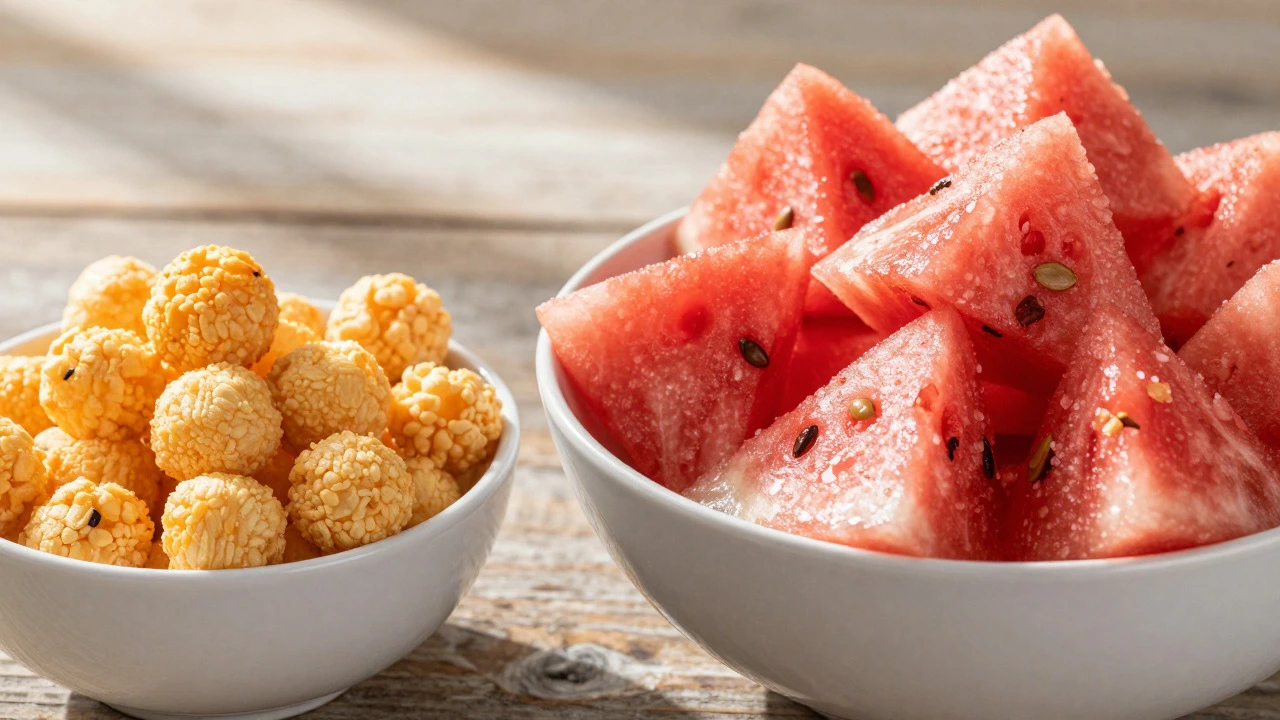
Imagine two bowls. Bowl A contains one cup of cheese puffs. Bowl B contains one cup of watermelon chunks. Both take up the same amount of space in your kitchen cupboard. But when you put them in your body, they behave completely differently. The cheese puffs deliver about 400 calories in a tiny handful. The watermelon delivers roughly 85 calories in a massive pile. If you eat until your stomach physically stretches, signaling to your brain that you are full, you will have consumed four times fewer calories with the watermelon.
This approach, often called volume eating, relies on maximizing the bulk of your food while minimizing its calorie content. It works because human hunger is partly mechanical. Our stomachs have stretch receptors. When these receptors fire, they send a message to the hypothalamus in your brain saying, "Hey, we’re stuffed." If you wait until those receptors fire after eating high-calorie, low-volume foods, you’ve already overconsumed. If you trigger them with low-calorie, high-volume foods, you win.
To make this work, you need to focus on three main components: water, fiber, and protein. These are the building blocks of satiety. Water adds weight and volume without adding calories. Fiber slows down digestion, keeping food in your system longer. Protein triggers specific hormones that suppress appetite more effectively than carbs or fats.
The Power Trio: Fiber, Protein, and Water
Let’s break down why these three nutrients are non-negotiable if you want to stay full without getting fat.
Fiber is the unsung hero of digestion. Specifically, soluble fiber absorbs water and forms a gel-like substance in your gut. This slows gastric emptying, meaning food stays in your stomach longer. Think of beans, lentils, oats, and Brussels sprouts. Insoluble fiber, found in vegetables like celery and zucchini, adds structural bulk. It literally takes up space. A study published in the American Journal of Clinical Nutrition showed that increasing fiber intake by just 14 grams per day led to participants eating 10% less food naturally, without trying to restrict themselves.
Protein is the most satiating macronutrient. It reduces the level of ghrelin (the hunger hormone) and boosts peptides like GLP-1 and PYY (the fullness hormones). If your breakfast is sugary cereal, your blood sugar spikes and crashes, leaving you hungry an hour later. If your breakfast is eggs or Greek yogurt, you might not think about food again until lunch. Aim for at least 20-30 grams of protein per meal to hit that satiety sweet spot.
Water is free, calorie-free, and essential. Many high-volume foods are mostly water anyway. Cucumbers are 95% water. Lettuce is 96%. Broccoli is 92%. By choosing these foods, you are essentially drinking your calories’ worth of volume. Drinking a large glass of water before a meal can also help you eat less, as it pre-fills the stomach slightly.
Top Foods That Are Filling But Not Fattening
Not all low-calorie foods are created equal. Some leave you craving more; others keep you satisfied for hours. Here are the best options to stock your pantry and fridge.
- Leafy Greens: Spinach, kale, arugula, and romaine lettuce. You can eat a pound of spinach for under 100 calories. It sounds impossible, but it’s true. Use them as the base for every salad or stir-fry.
- Cruciferous Vegetables: Broccoli, cauliflower, cabbage, and Brussels sprouts. These are high in fiber and require significant chewing, which gives your brain time to register fullness.
- Berries: Strawberries, raspberries, and blackberries. Compared to bananas or mangoes, berries are lower in sugar and higher in fiber. One cup of strawberries has only 50 calories and provides a substantial amount of volume.
- Legumes: Lentils, chickpeas, and black beans. They provide both fiber and protein, making them incredibly filling. Half a cup of cooked lentils has about 110 calories and 9 grams of fiber.
- Oats: Old-fashioned or steel-cut oats expand in your stomach as they absorb liquid. They release glucose slowly, preventing energy crashes.
- Eggs: A whole egg provides high-quality protein and healthy fats that promote long-lasting satiety. Boiled eggs are a perfect portable snack.
- Greek Yogurt: Choose plain, non-fat Greek yogurt. It has twice the protein of regular yogurt and very little sugar. Add some fruit for flavor.
Practical Swaps: How to Transform Your Meals
You don’t need to cook entirely new recipes to benefit from volume eating. You just need to swap out high-density ingredients for low-density ones. Here are some easy modifications you can start today.
| Original Ingredient | Filling Swap | Why It Works |
|---|---|---|
| White Rice | Cauliflower Rice | Reduces calories by ~90% while maintaining similar texture and volume. |
| Pasta | Zucchini Noodles (Zoodles) or Shirataki Noodles | Negligible calories, high water content, allows for heavy sauce usage. |
| Mashed Potatoes | Mashed Cauliflower with Garlic | Provides creamy texture with a fraction of the starch and calories. |
| Croutons | Roasted Chickpeas or Pumpkin Seeds | Adds crunch and protein/fiber instead of refined carbs and oil. |
| Sugar in Oatmeal | Cinnamon and Berries | Flavor enhancement without the blood sugar spike and crash. |
| Heavy Cream Sauce | Blended White Beans or Greek Yogurt | Creates creaminess using fiber and protein rather than saturated fat. |
For example, if you love pasta bolognese, try mixing half the usual amount of pasta with an equal volume of spiralized zucchini or finely chopped mushrooms. You’ll still get the comfort of the dish, but you’ll be able to eat a larger portion because the vegetable content increases the overall volume significantly.
The Role of Mindful Eating in Satiety
Even the best filling foods won’t work if you inhale them. It takes approximately 20 minutes for the signal of fullness to travel from your gut to your brain. If you finish a large bowl of soup in five minutes, you might feel stuffed immediately due to the mechanical stretch, but you haven’t allowed the hormonal signals to kick in properly. This often leads to overeating because you stop too late.
Chewing thoroughly is another critical factor. Foods that require more chewing, like raw vegetables or lean meats, tend to be more satisfying. The act of chewing sends signals to the brain that you are eating, and it breaks down food into smaller particles, aiding digestion. Try putting your fork down between bites. It sounds simple, but it forces you to slow down and listen to your body’s cues.
Also, consider the variety of flavors and textures. A bowl of plain boiled chicken breast might be low in calories, but it’s boring. Boredom can lead to mindless snacking later. Season your food generously with herbs, spices, lemon juice, vinegar, and hot sauces. These add zero calories but massive satisfaction. A spicy salsa on top of a bean salad makes the meal feel indulgent without adding any fattening elements.
Common Pitfalls to Avoid
One major mistake people make when trying to eat filling but not fattening foods is relying too heavily on liquid calories. Smoothies are great, but blending fruits and vegetables removes the physical structure of the fiber. Liquid calories pass through the digestive system faster than solid foods, leading to quicker returns of hunger. Always prefer whole fruits over juices, and whole vegetables over soups whenever possible.
Another trap is the "health halo" effect. Just because a food is labeled "healthy" doesn’t mean it’s low in energy density. Avocados are nutritious, but they are very high in fat and calories. A few slices are fine, but a whole avocado will quickly negate the calorie deficit you’re trying to create. Nuts and seeds are similar. They are incredibly satiating, but their calorie density is extremely high. Measure them out. A tablespoon of chia seeds is powerful; a cup is a calorie bomb.
Finally, don’t ignore hydration. Sometimes thirst masquerades as hunger. Before reaching for a snack, drink a large glass of water. Wait ten minutes. If you’re still hungry, then eat. Often, the urge passes.
Building a Day of Filling, Lean Meals
Putting it all together, here is what a day of eating filling but not fattening foods might look like.
Breakfast: A large bowl of steel-cut oats made with water or unsweetened almond milk, topped with a scoop of whey protein powder, cinnamon, and a cup of fresh raspberries. This gives you complex carbs, high protein, and fiber to keep you going until noon.
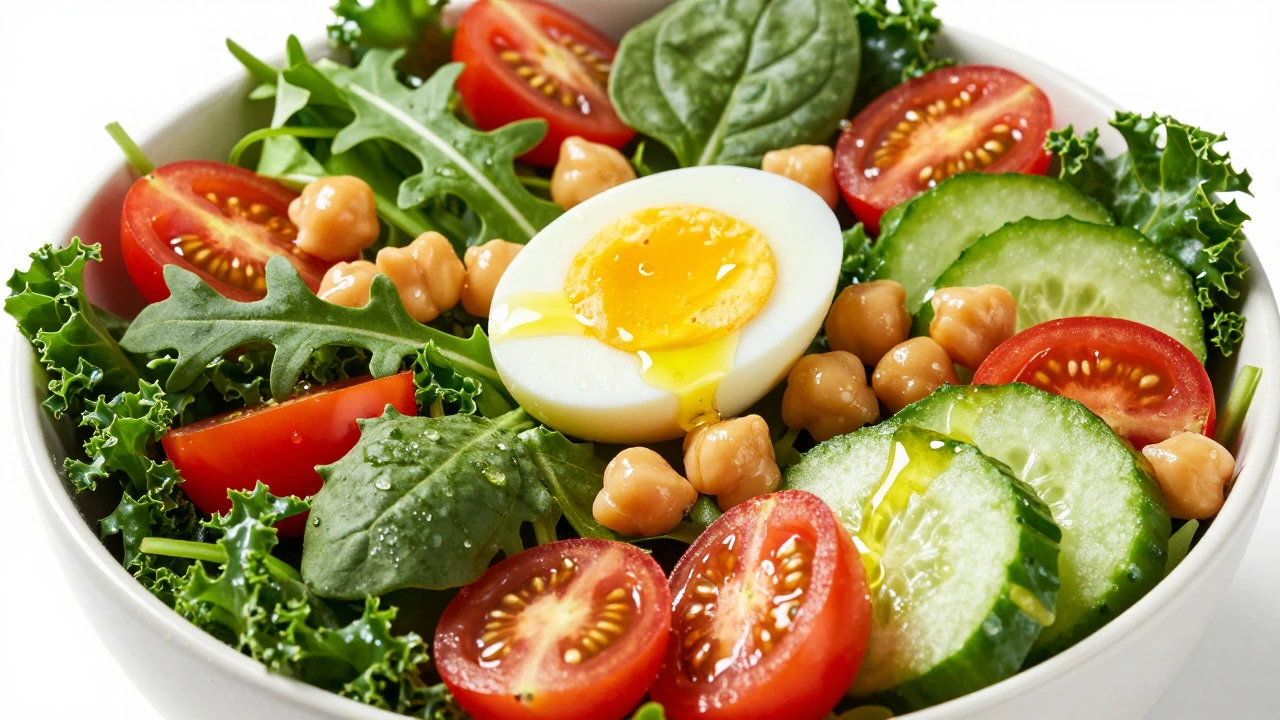
Lunch: A massive salad bowl. Start with 3 cups of mixed greens, add half a cup of chickpeas, a hard-boiled egg, cherry tomatoes, cucumber, and red onion. Dress with olive oil (measured), lemon juice, and Dijon mustard. The volume is enormous, but the calories are moderate.
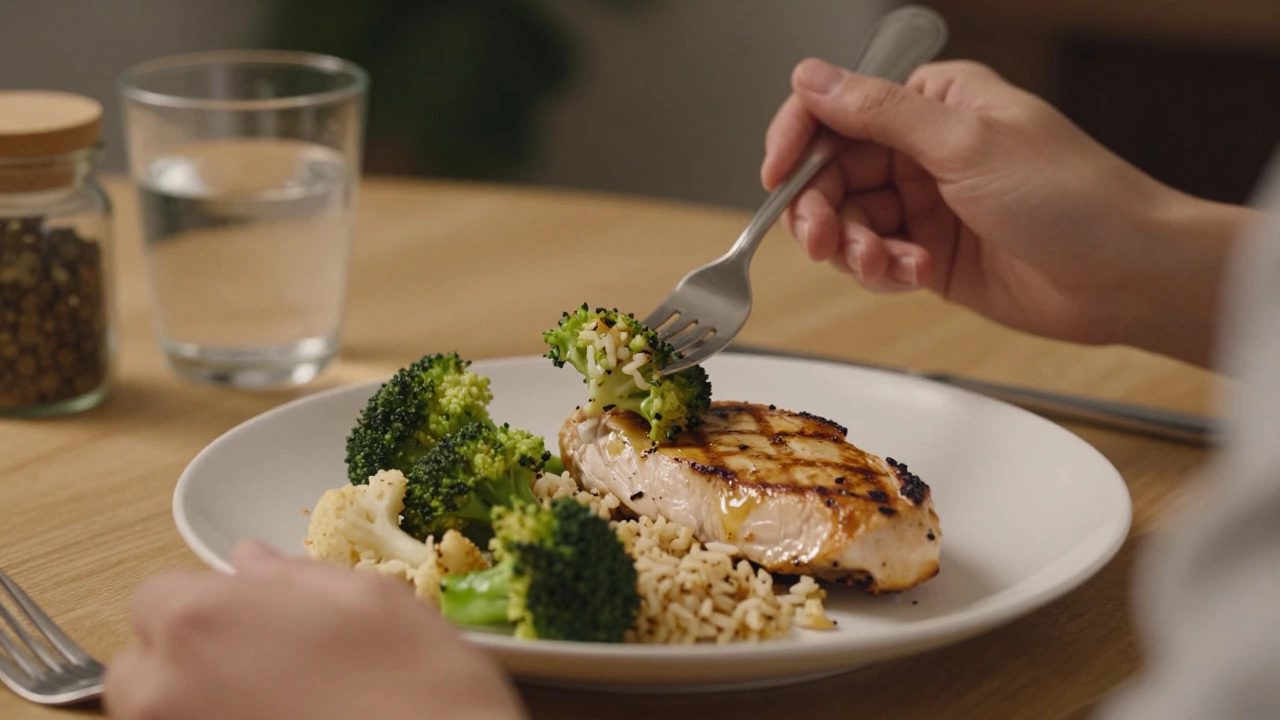
Dinner: Grilled chicken breast or tofu served over a bed of roasted broccoli and cauliflower rice. Add a side of steamed asparagus. Season everything with garlic, paprika, and black pepper. This meal is high in protein and fiber, ensuring you sleep without waking up hungry.
Snacks: Air-popped popcorn (3 cups is only ~100 calories), an apple with a tablespoon of peanut butter, or a cup of edamame. Keep snacks structured rather than grazing.
Is volume eating suitable for everyone?
Volume eating is generally safe and effective for most people looking to lose weight or maintain a healthy weight. However, individuals with certain digestive conditions, such as Irritable Bowel Syndrome (IBS) or gastroparesis, may find that high-fiber, high-volume foods cause bloating or discomfort. In such cases, it’s important to introduce high-fiber foods gradually and consult with a healthcare provider.
Can I still enjoy treats while eating filling but not fattening foods?
Absolutely. The key is balance. Because your main meals are high in volume and low in calories, you create a "calorie budget" that allows for occasional treats. The trick is to eat your filling, nutrient-dense foods first. This ensures you get your nutrients and stay full, so any treat you eat afterward is truly for pleasure, not out of hunger.
Does cooking method affect how filling a food is?
Yes, significantly. Frying foods adds oil, which increases calorie density and reduces volume relative to calories. Steaming, boiling, roasting, and grilling preserve the natural water content and fiber of foods, keeping their energy density low. For example, baked potato chips are much less calorie-dense than fried chips, and steamed broccoli is more filling per calorie than broccoli sautéed in butter.
How much protein do I need to feel full?
Research suggests that consuming 20 to 30 grams of protein per meal is optimal for promoting satiety and preserving muscle mass during weight loss. This amount helps regulate hunger hormones effectively. Sources include lean meats, fish, eggs, dairy, legumes, and tofu.
Are there any filling foods that are surprisingly high in calories?
Yes, nuts, seeds, avocados, and coconut products are very filling due to their fat and fiber content, but they are also extremely calorie-dense. While healthy, they should be eaten in moderation if your goal is weight loss. A small handful of almonds can contain 160 calories, whereas a large bowl of leafy greens contains less than 20.

Recent Posts
-
 What Foods Help Burn Fat? Science-Backed Choices That Actually Work November 18, 2025
 -
 Feeding the Masses on a Modest Budget: Family Meal Mastery February 4, 2025