Slow Cooker Meat Safety & Settings Calculator
Results
Select your options and click "Get Recommendations".
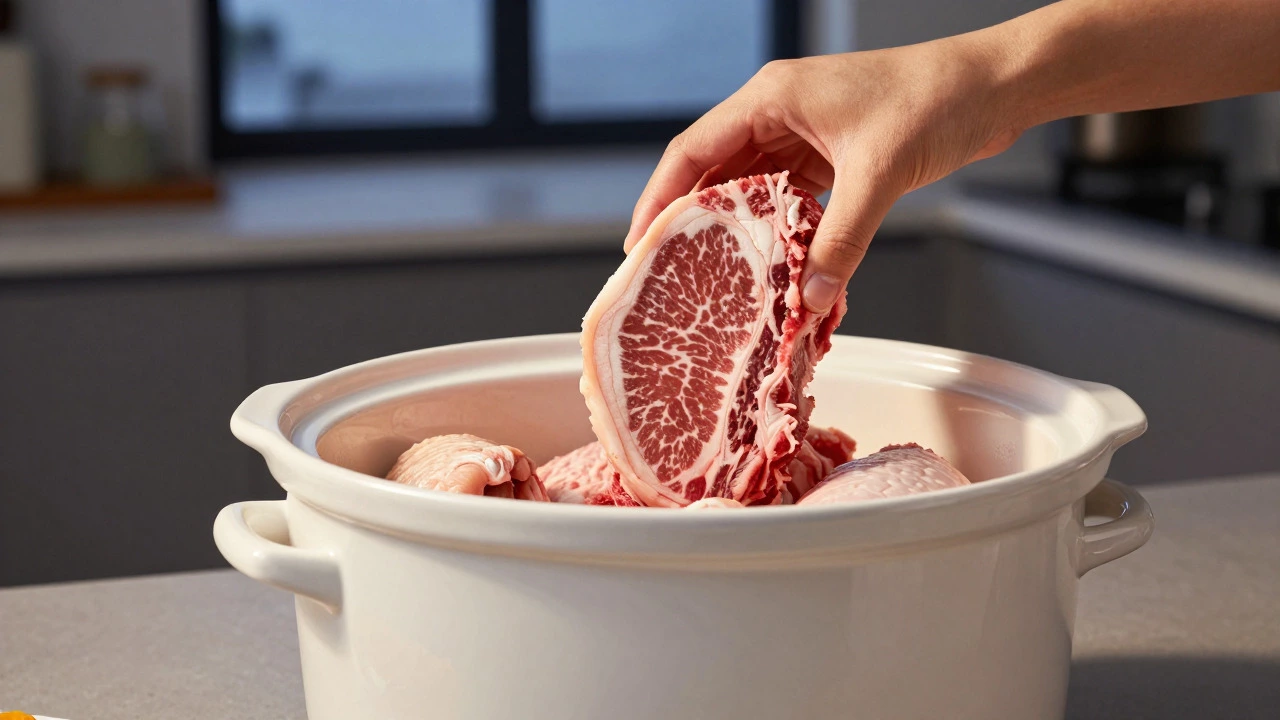
It’s 6:30 PM. You’ve had a long day, and the last thing you want to do is stand over a hot stove browning meat before tossing it into your slow cooker. You grab a pack of raw chicken thighs or a chunky beef roast from the fridge, drop them straight into the ceramic pot, add some sauce, set the timer for eight hours, and walk away. It sounds like the ultimate hack for easy dinners. But here’s the question that keeps many home cooks up at night: Is it actually safe?
The short answer is yes. You can absolutely put raw meat in a slow cooker. In fact, most modern slow cooker recipes are designed specifically for raw ingredients. However, there is a right way and a wrong way to do it. If you skip a few critical steps, you risk ending up with tough, gray meat-or worse, foodborne illness. Let’s break down exactly how to cook raw meat safely and deliciously without turning your kitchen into a science lab.
Why Safety Matters More Than Convenience
Before we talk about flavor, we have to talk about bacteria. When you buy raw meat, whether it’s ground beef, chicken breast, or pork chops, it carries natural bacteria like Salmonella and E. coli. These pathogens die when exposed to high heat. The danger zone for bacterial growth is between 4°C (40°F) and 60°C (140°F). If your meat sits in this range for too long, bacteria multiply rapidly.
A common myth is that slow cookers don’t get hot enough to kill germs. This is false. A properly functioning slow cooker will eventually reach temperatures well above 74°C (165°F), which is the magic number for killing most harmful bacteria. The issue isn’t the maximum temperature; it’s the time it takes to get there. If you overload the pot or use the 'Low' setting for a huge cut of meat, the center might linger in the danger zone for several hours. That’s where bad things happen.
To keep things safe, always ensure your slow cooker is plugged in and turned on before you start adding ingredients. Never leave raw meat sitting in an unplugged slow cooker while you prep other veggies. And if you’re using frozen meat, be extra cautious-more on that later.
The Golden Rule: Size and Shape Matter
If you decide to throw raw meat directly into the pot, the size of the cut is your best friend. Large, dense cuts of meat cook differently than small, thin pieces. Here is why:
- Large Cuts (Best for Raw): Chunks like beef chuck roast, pork shoulder, or whole chicken legs are ideal for raw cooking. They take hours to break down connective tissue, and the slow, steady heat does this beautifully. Because they are thick, they retain moisture and reach safe internal temperatures gradually but surely.
- Small Cuts (Tricky): Thin slices like steak strips, small chicken breasts, or ground meat behave differently. They cook much faster. If you put a small piece of raw chicken in a full pot of liquid on Low, it might become rubbery and dry by hour four, even though the total cook time is eight hours. For these, consider browning first or switching to the High setting.
When working with large roasts, try to keep the shape uniform. An irregularly shaped roast will have one part that is overcooked while another part is still underdone. Trimming excess fat can help create a more even surface area for heat distribution.
Browning vs. Skipping the Step: What’s the Trade-off?
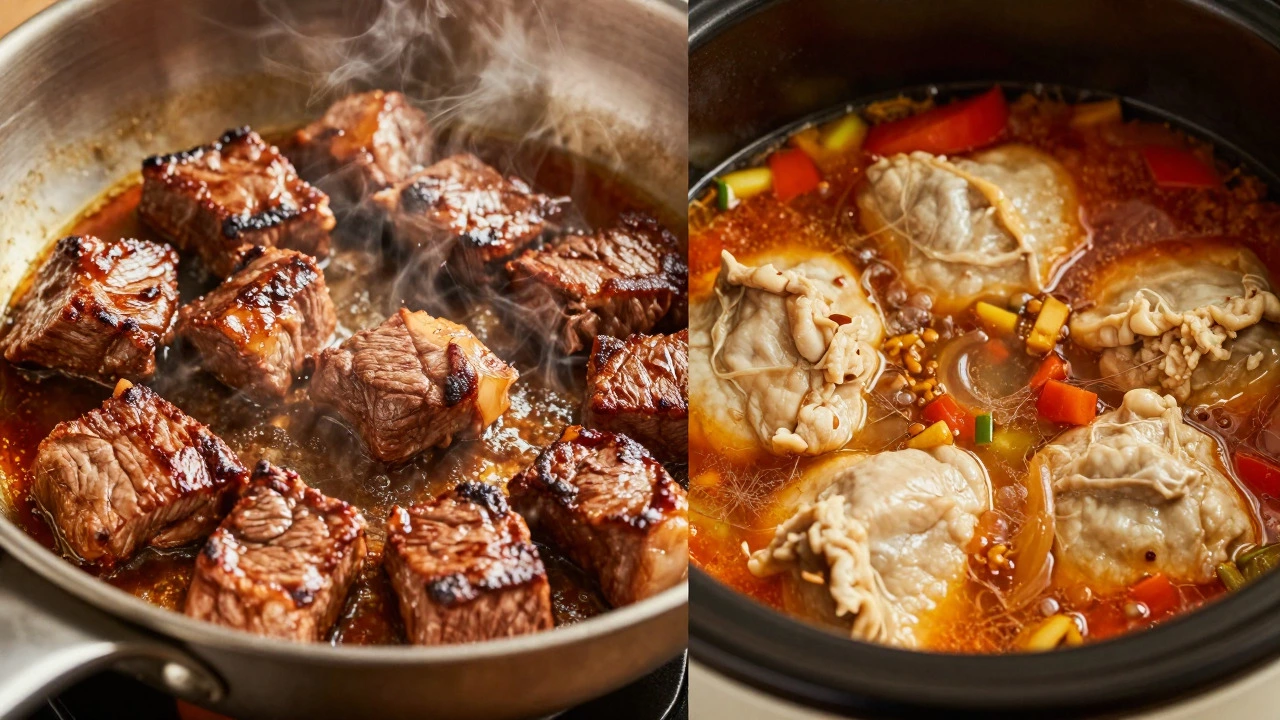
You’ve heard people say, "Always brown your meat first." Why? Is it just for looks? Not entirely. Searing meat before slow cooking serves three main purposes:
- Flavor Development: The Maillard reaction-that chemical process that turns meat brown and savory-only happens at high temperatures (above 150°C/300°F). A slow cooker rarely exceeds 100°C (212°F) because it’s mostly boiling water/liquid. So, no searing means less depth of flavor. Browning adds that rich, roasted taste that makes a stew feel "homemade" rather than "boiled."
- Texture Control: Searing creates a crust that helps hold the meat together, especially for ground beef or delicate fish. Without it, ground meat can turn into mushy clumps that disintegrate into the sauce.
- Sauce Consistency: The fond (the browned bits stuck to the bottom of the pan) dissolves into the deglazing liquid, thickening and enriching your sauce naturally.
So, should you skip it? If you’re making a simple shredded chicken soup where texture doesn’t matter as much, go ahead. Drop the raw chicken in. But if you’re making a hearty beef bourguignon or a pulled pork sandwich, taking ten minutes to sear the meat in a skillet first will make a night-and-day difference in the final dish. It’s not strictly necessary for safety, but it is essential for quality.
Choosing the Right Setting: Low vs. High
This is where most mistakes happen. People assume "Low and Slow" works for everything. It doesn’t. Understanding the difference between Low and High settings is crucial when cooking raw meat.
| Setting | Temperature Range | Best For | Cook Time Multiplier |
|---|---|---|---|
| Low | ~90°C (190°F) | Tough cuts (beef chuck, pork shoulder), large roasts | 8-10 hours |
| High | ~110-120°C (230-250°F) | Poultry, smaller cuts, vegetables, quick meals | 4-6 hours |
| Warm | ~70-80°C (160-175°F) | Holding finished food only (not for cooking raw meat) | N/A |
Here’s the rule of thumb: Poultry needs to reach 74°C (165°F) quickly to stay juicy and safe. If you cook a whole raw chicken on Low for 8 hours, it often ends up dry and stringy because the proteins tighten up over that long period. Cooking chicken on High for 4-5 hours usually yields better results. Conversely, tough beef cuts need that long, low simmer to break down collagen into gelatin. Putting a beef roast on High might cook it through, but it could remain chewy if not given enough time to tenderize.
Also, remember that every slow cooker is different. Some models run hotter than others. If you’re unsure, use a meat thermometer. It’s the only way to know for sure.
Frozen Meat: The Big No-No
Can you put frozen meat in a slow cooker? Technically, yes. Practically? Probably not. Most food safety experts recommend thawing meat in the refrigerator before slow cooking. Here’s why:
When you put a frozen block of meat into a slow cooker, it acts as a giant ice cube. It absorbs heat from the surrounding liquid, keeping the entire pot cool for a significant amount of time. This extends the time the meat spends in the "danger zone" (4°C-60°C). While the meat will eventually cook, it may spend 3-4 hours warming up slowly, giving bacteria plenty of time to grow.
If you must cook from frozen, follow these strict guidelines:
- Use the High setting only. Never use Low for frozen meat.
- Reduce the amount of liquid slightly, as frozen meat releases more water as it thaws.
- Add extra cooking time (usually 1.5 times the normal recipe duration).
- Ensure the meat is not too large. Small cubes or thin steaks are safer than a whole frozen roast.
However, the texture often suffers. Frozen meat tends to release more juices, diluting your sauce and resulting in a watery final product. Thawing overnight in the fridge is always the superior choice for both safety and flavor.
Safe Internal Temperatures: Know Your Numbers
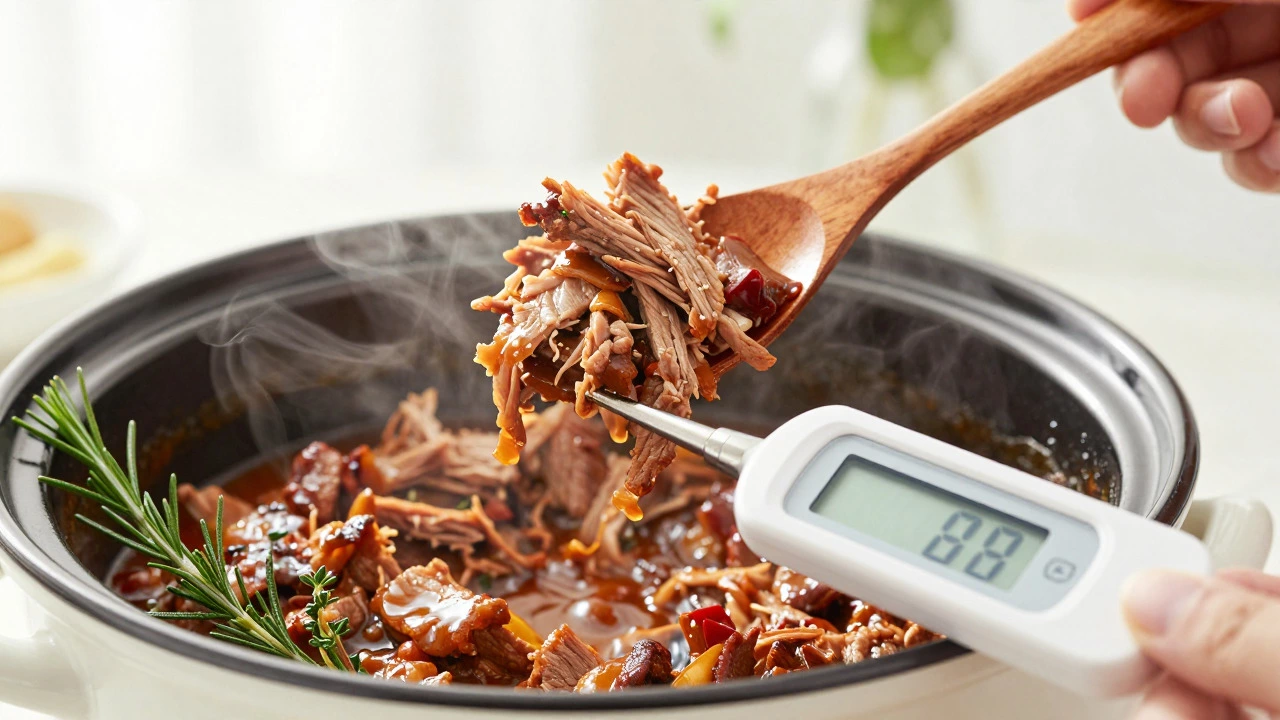
Don’t guess. Use a thermometer. Even if your recipe says "cook for 6 hours," ovens vary, and so do slow cookers. The only proof that your meat is safe is its internal temperature. Insert the probe into the thickest part of the meat, avoiding bone.
- Poultry (Chicken/Turkey): 74°C (165°F). This is non-negotiable. Undercooked chicken is risky.
- Ground Beef/Pork/Lamb: 71°C (160°F). Ground meats have more surface area exposed to bacteria during processing, so they need higher temps.
- Whole Cuts of Beef/Veal/Lamb: 63°C (145°F) for medium-rare, followed by a 3-minute rest. For slow cooker stews, you’ll likely cook these to 80°C+ (175°F+) to achieve tenderness, which is perfectly safe.
- Pork Chops/Roasts: 63°C (145°F) with a 3-minute rest. Again, for pulled pork, you’ll aim for higher temps to shred easily.
If you’re making a stew with mixed ingredients, check the meat separately from the vegetables. Veggies cook faster and can turn to mush if left in too long, while the meat might still be tough.
Pro Tips for Better Results
Now that you know it’s safe, let’s make it delicious. Here are some tricks to elevate your raw-to-slow-cooker meals:
- Layer Correctly: Place harder vegetables (carrots, potatoes) at the bottom, then the meat, then softer veggies (peppers, zucchini) on top. This ensures even cooking. Dense roots take longer to soften than leafy greens.
- Don’t Overfill: Keep your slow cooker between half and two-thirds full. If it’s packed tight, heat circulation is poor, leading to uneven cooking. If it’s too empty, the food might burn or dry out.
- Add Acid Early: Ingredients like tomato paste, vinegar, or wine help break down tough fibers in meat. Adding them at the beginning gives them all day to work their magic.
- Hold Off on Dairy: Milk, cream, or yogurt can curdle if heated too slowly for too long. Add dairy-based sauces in the last 30 minutes of cooking, once the meat is done.
- Thicken at the End: If your sauce is too thin after cooking raw meat (which releases lots of juice), mix a tablespoon of cornstarch with cold water and stir it in during the last 15 minutes on High. Or, simply remove the lid and let it boil uncovered for 20 minutes to reduce.
Cooking raw meat in a slow cooker is one of the greatest conveniences in modern cooking. It saves time, energy, and effort. As long as you respect the temperatures, choose the right cuts, and maybe take five minutes to sear that beef, you’ll enjoy safe, tender, and flavorful meals every time. So, go ahead-toss that raw roast in, hit Low, and come home to something amazing.
Is it safe to put raw chicken in a slow cooker?
Yes, it is safe to put raw chicken in a slow cooker as long as it reaches an internal temperature of 74°C (165°F). For best results, use the High setting for 4-5 hours to prevent the meat from becoming dry and stringy. Ensure the chicken is fully submerged in liquid or sauce to promote even heating.
Do I need to brown meat before putting it in the slow cooker?
No, you do not need to brown meat for safety reasons. However, browning (searing) meat before slow cooking significantly improves flavor and texture by creating a crust and developing complex tastes through the Maillard reaction. It also helps ground meats hold their shape.
Can I cook frozen meat in a slow cooker?
It is generally recommended to thaw meat before slow cooking to avoid keeping it in the bacterial "danger zone" for too long. If you must cook from frozen, use the High setting only, increase cooking time by 50%, and ensure the meat pieces are small. Thawing in the refrigerator is the safest method.
How long does it take to cook raw beef in a slow cooker?
Cooking times depend on the cut and size. Tough cuts like beef chuck roast typically require 8-10 hours on Low or 4-6 hours on High to become tender. Always check that the internal temperature has reached at least 63°C (145°F) for safety, though stews are often cooked higher for tenderness.
What is the danger zone for slow cooker meat?
The danger zone is between 4°C (40°F) and 60°C (140°F). Bacteria grow most rapidly in this temperature range. To stay safe, ensure your slow cooker heats the meat through this zone quickly and maintains a temperature above 74°C (165°F) for poultry and appropriate levels for other meats.

Recent Posts
-
 How to Plan Low Cost Meals: A Step-by-Step Guide for Families August 16, 2026