Budget Lunch Cost Calculator
Choose Your Budget Lunch
How much do you spend on lunch every day? If you’re buying a sandwich, salad, or wrap from a café or delivery app, you’re probably dropping $8 to $15. That adds up to over $200 a month. But what if you could eat a full, satisfying lunch for less than a dollar? It’s not a myth. People all over the world eat cheap, filling meals every day - and you can too.
Beans and Rice - The Universal Budget Meal
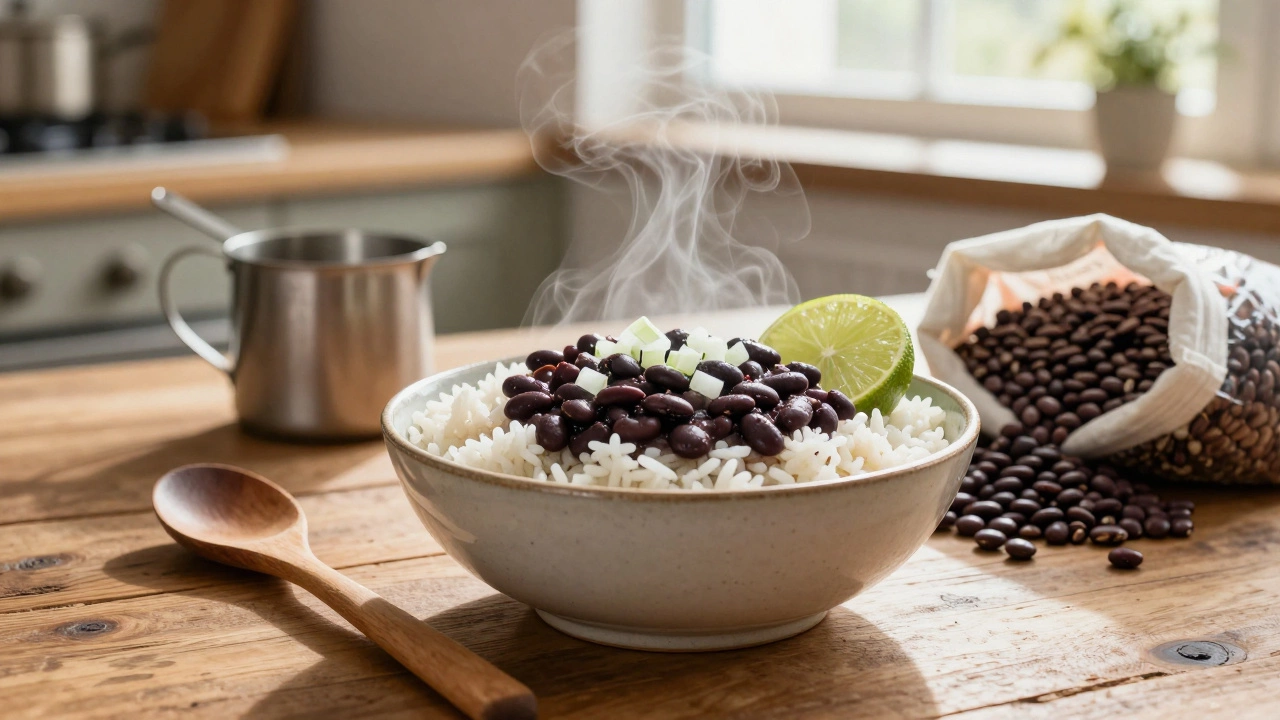
Black beans, pinto beans, or lentils cooked with rice is one of the most cost-effective meals on the planet. A 1-pound bag of dried black beans costs around $1.50 and makes about 6 servings. A 5-pound bag of white rice runs $2-$3 and gives you 25+ servings. Cook a big batch on Sunday, and you’ve got lunch for the whole week.
Season it with garlic powder, cumin, salt, and a splash of vinegar. Add chopped onions or a squeeze of lime if you have them. No meat? No problem. Beans have 15 grams of protein per cup. Rice fills you up with carbs that last. Together, they’re a complete protein. This combo is the backbone of meals in Mexico, Brazil, the Caribbean, and parts of Africa. It’s not fancy. But it keeps you full until dinner.
Instant Oatmeal with Peanut Butter and Banana
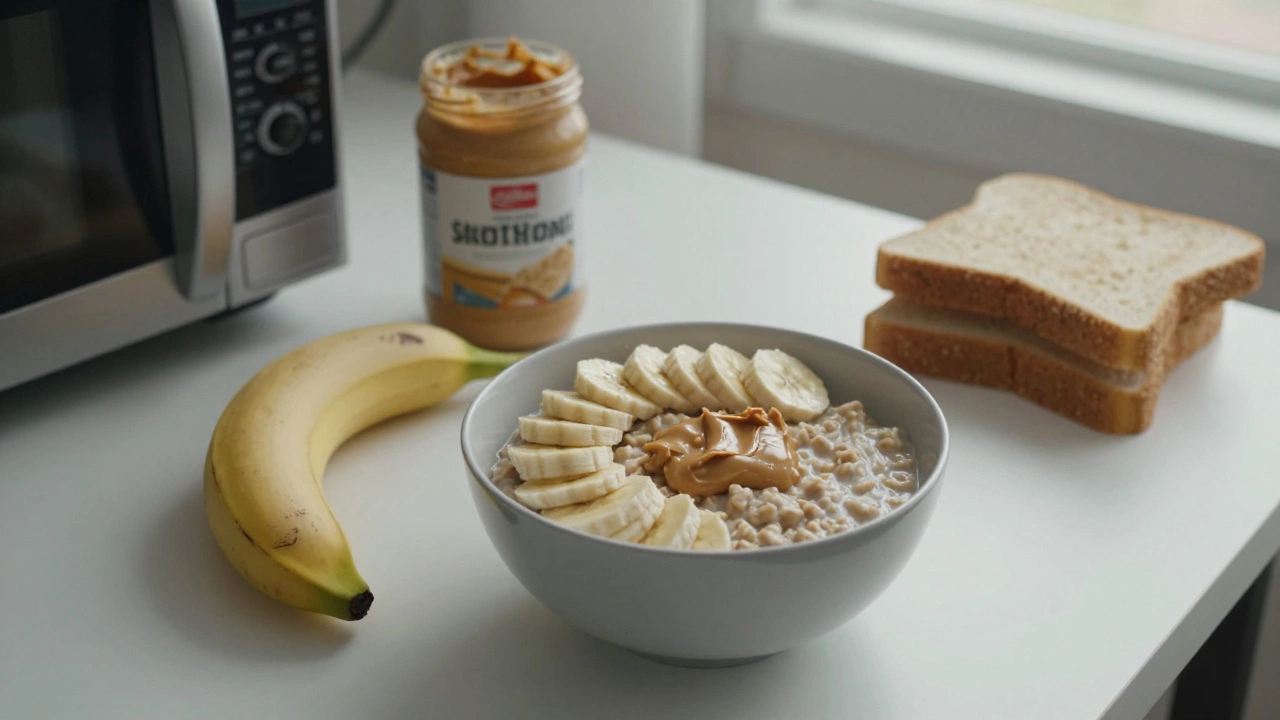
Think oatmeal is just a breakfast thing? Think again. A single serving of plain instant oatmeal costs about 10 cents. Add a tablespoon of store-brand peanut butter (around 8 cents) and half a banana (5 cents). That’s 23 cents for a warm, filling, high-fiber meal.
Peanut butter adds protein and healthy fats. The banana gives you natural sweetness and potassium. You can eat it hot or cold. If you’re at work, just microwave the oatmeal and stir in the rest. No cooking? Mix it cold with a little water or milk. It’s not gourmet, but it stops hunger cold. And it’s way cheaper than a granola bar.
Scrambled Eggs on Toast
Eggs are one of the most affordable sources of high-quality protein. A dozen large eggs cost about $3 in most U.S. grocery stores. That’s 25 cents per egg. Two eggs scrambled with a pinch of salt and pepper, served on one slice of store-brand white bread (5 cents), comes to 55 cents.
It’s quick - under 5 minutes. You can make it with no oil if your pan is nonstick. Add a sprinkle of cheese if you have it - that’s another 10 cents. Eggs give you 12 grams of protein and keep your blood sugar steady. Unlike sugary cereals or pastries, this meal won’t leave you crashing by 2 p.m.
Mac and Cheese from a Box - But Make It Real
Yes, the boxed kind is cheap. A box of Kraft Mac & Cheese costs $1.25. But here’s the trick: make it better and stretch it further. Cook the pasta. Then add 1/2 cup of shredded cheddar cheese (about 30 cents) and 1/4 cup of milk (5 cents). Stir it in. You’ve turned a $1.25 meal into a richer, creamier version that feels like homemade.
Now add a cup of steamed frozen broccoli (40 cents). You’ve got fiber, calcium, and veggies. Total cost? Under $2. Split it into two servings. That’s $1 per lunch. You can even freeze half for later. This is what college students and tight budgets live on - and for good reason.
Leftover Pasta with Tomato Sauce
Leftovers are the secret weapon of cheap eating. If you made pasta last night, you’ve already won. Cooked pasta lasts 3-5 days in the fridge. A jar of store-brand tomato sauce costs $1.50 and gives you 4-5 servings. Heat up a cup of leftover pasta, add 1/2 cup of sauce, and sprinkle with dried oregano. That’s 40 cents per serving.
Want to make it even cheaper? Skip the jar. Make sauce from canned crushed tomatoes ($1.25 for a 28-oz can, good for 6+ servings). Add garlic, onion powder, and a pinch of sugar. Boil it for 10 minutes. It’s better than store-bought and costs 20 cents per serving.
Popcorn with Salt - Yes, Really
Popcorn isn’t just a snack. It’s a legitimate lunch when done right. A 1-pound bag of popcorn kernels costs $2.50 and makes about 30 servings. Each serving uses 2 tablespoons of kernels - that’s 8 cents. Pop it in a pot with a little oil or air-pop it. Add salt. Done.
It’s high in fiber, low in calories, and fills your stomach. One cup of air-popped popcorn has 30 calories and 1 gram of fiber. Eat 4 cups - that’s 120 calories and 4 grams of fiber. Add a hard-boiled egg (25 cents) on the side and you’ve got protein. It’s not a traditional lunch, but it’s real food. And it’s cheaper than a candy bar.
Simple Tuna Salad Sandwich
Canned tuna is one of the most underrated budget proteins. A 5-ounce can of water-packed tuna costs $1.50. That’s 75 cents per half-can. Mix it with 2 tablespoons of mayo (10 cents), a dash of mustard, chopped celery if you have it, and salt. Spread it on two slices of bread (10 cents). Total: 95 cents.
Use whole wheat bread if you want fiber. Skip the bread? Eat it with crackers or on top of a bed of lettuce. Tuna gives you 20 grams of protein and omega-3s. It’s shelf-stable, so you can keep a few cans in your pantry. No fridge? No problem. This meal lasts for days.
Why These Meals Work
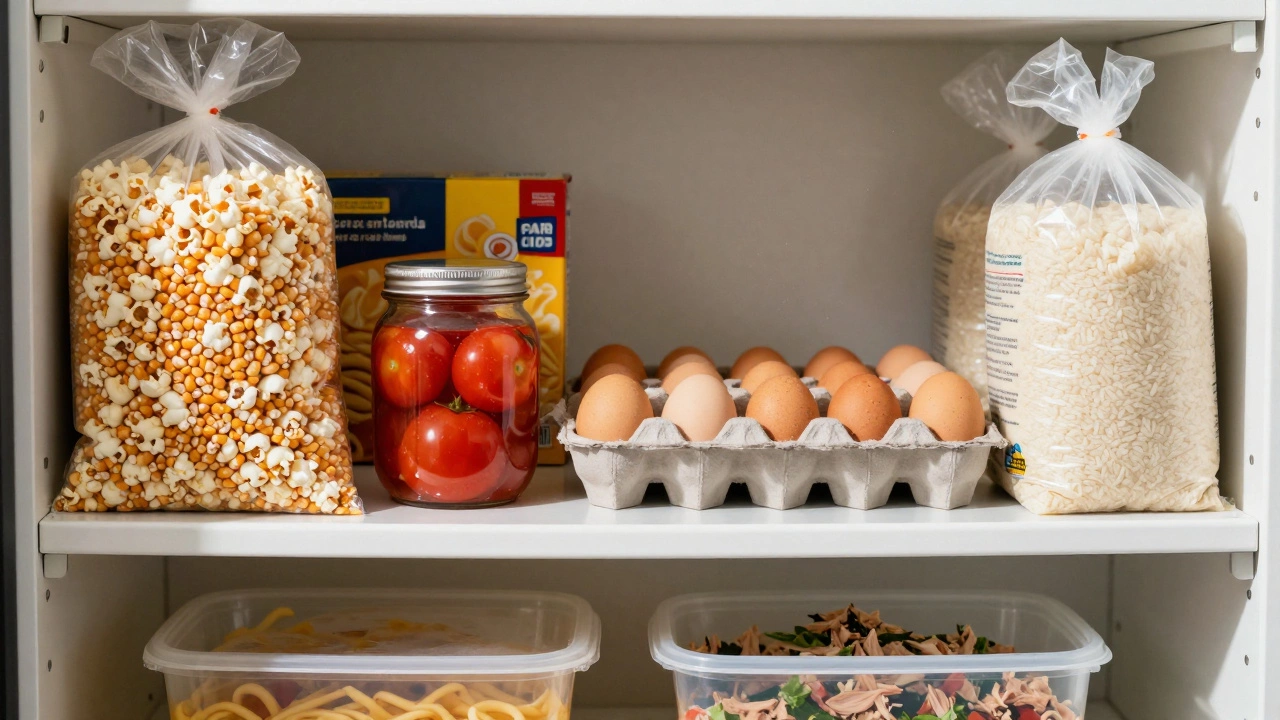
These meals aren’t fancy. They don’t need special ingredients or fancy tools. They rely on three things: bulk buying, simple cooking, and using what you already have.
Buying in bulk cuts cost per serving. Dried beans, rice, oats, and popcorn are way cheaper than pre-packaged meals. Cooking in batches saves time and energy. Making five servings at once means you only cook once. And using leftovers prevents waste - which is the biggest money drain in kitchens.
These meals also keep you full longer. They’re high in fiber, protein, or healthy fats - not just sugar and refined carbs. That means fewer snacks, fewer cravings, and fewer impulse buys at the vending machine.
What to Avoid
Don’t fall for the “cheap meal” trap. Pre-packaged meals labeled as “value” often cost more per gram of nutrition. A $2 frozen burrito might seem cheap, but it’s loaded with sodium and preservatives. A $1.50 protein bar has 150 calories and 5 grams of sugar - you could get 300 calories of protein and fiber for less with beans and rice.
Also, avoid buying single-serve items. A pack of 10 individual yogurts costs more than a 32-ounce tub. A bag of chips is pricier per ounce than buying the big bag and portioning it out.
Start Small
You don’t have to switch everything overnight. Try replacing just one lunch a week with one of these meals. Next week, do two. In a month, you’re saving $30-$50. That’s a Netflix subscription, a tank of gas, or a new pair of shoes.
Keep a small jar or envelope for lunch savings. Every time you skip the $10 lunch, put a dollar in it. After a few weeks, you’ll see the pile grow. That’s real money you earned by choosing simple food over convenience.
What is the absolute cheapest thing you can eat for lunch?
The absolute cheapest is plain popcorn made from bulk kernels - about 8 cents per serving. But for a balanced, filling lunch, beans and rice is the best value. It’s cheap, nutritious, and keeps you full for hours.
Can you really eat lunch for under $1 every day?
Yes - if you plan ahead. Meals like scrambled eggs on toast, oatmeal with peanut butter, or leftover pasta with tomato sauce all cost under $1 per serving. It takes a little prep, but not much time. Once you have staples like rice, beans, eggs, and canned tuna in your pantry, you’re set.
Are canned beans cheaper than dried beans?
Dried beans are almost always cheaper. A 1-pound bag of dried beans costs $1.50 and makes 6 servings - that’s 25 cents per serving. Canned beans cost $1.25 per can, which is about 40 cents per serving. Dried beans need soaking and cooking, but they save you money and have less sodium.
What if I don’t have a microwave or stove at work?
No problem. Make meals that don’t need heat. Tuna salad sandwiches, hard-boiled eggs with bread, oatmeal mixed cold with milk, or a bowl of popcorn with salt all work fine at room temperature. Pack them in a container the night before.
Is it healthy to eat cheap lunches every day?
Absolutely - if you focus on whole foods. Beans, rice, eggs, oats, canned tuna, and popcorn are all nutrient-dense. They’re not processed. They give you protein, fiber, and essential vitamins. The real health risk isn’t eating cheap - it’s eating fast food or sugary snacks because you think you can’t afford better.
Next Steps
Start by picking one of these meals to try this week. Make a grocery list for the ingredients. Buy in bulk where you can. Cook extra on Sunday. Pack it in a container. That’s it.
After a few weeks, you’ll notice more than just savings. You’ll feel better. You’ll have more energy. And you’ll realize that eating well doesn’t require expensive ingredients - just smart choices.

Recent Posts
-
 How to Plan Low Cost Meals: A Step-by-Step Guide for Families August 16, 2026
 -
 Delicious and Easy Lunch Ideas for Homebound Adults November 22, 2024
 -
 Quick and Delicious Lunch Ideas for Your Busy Days January 17, 2025
 -
 The Ultimate Comfort Foods When You're Feeling Under the Weather January 4, 2025