
Home Food Profit Calculator
Stop underpricing your baked goods. Use this tool to calculate a profitable retail price based on your ingredient costs, ensuring you cover time, electricity, and packaging.
Enter details to see your recommended pricing strategy.
You need cash. Like, right now. Maybe your car broke down, maybe rent is due in three days, or maybe you just want that new air fryer without waiting for payday. When the bank account hits zero, panic sets in fast. But here’s the thing: if you already love cooking, you’re sitting on a goldmine. You don’t need a degree in finance or a second job at a call center. You need to leverage what you already do best-making food.
Getting money asap isn’t about magic tricks. It’s about speed and low barriers to entry. Most people think selling food means opening a restaurant. Wrong. That takes months of permits and thousands in capital. We’re talking about the "garage sale" equivalent of the culinary world. Fast turnover, minimal overhead, and immediate payment. Let’s break down how to turn your kitchen into an ATM within 48 hours.
Why Food Is the Fastest Route to Cash
Think about human behavior. People always eat. Even in a recession, people buy snacks, coffee, and prepared meals because it saves them time. Unlike selling old clothes (where buyers are picky about size) or electronics (where tech moves too fast), food has universal appeal. Plus, the profit margins on home-baked goods or prepped meals can be surprisingly high if you keep costs low.
The key is immediacy. You aren’t building a brand; you’re solving an immediate hunger problem for someone nearby. If you bake ten loaves of banana bread today, you can sell them by tonight. If you list a used toaster on eBay, you might wait two weeks for shipping and buyer hesitation. Food doesn’t wait. This velocity is why Home-Based Food Sales is such a powerful tool for urgent financial needs. It bypasses the slow machinery of traditional employment.
Sell What You Can Make Today
Don’t overthink the menu. Look in your pantry. What do you have? Flour? Sugar? Eggs? Chocolate chips? These are the ingredients for instant cash. The goal is high-volume, low-cost items. Fancy French pastries take too long and require expensive butter. Go for crowd-pleasers that travel well and don’t spoil instantly.
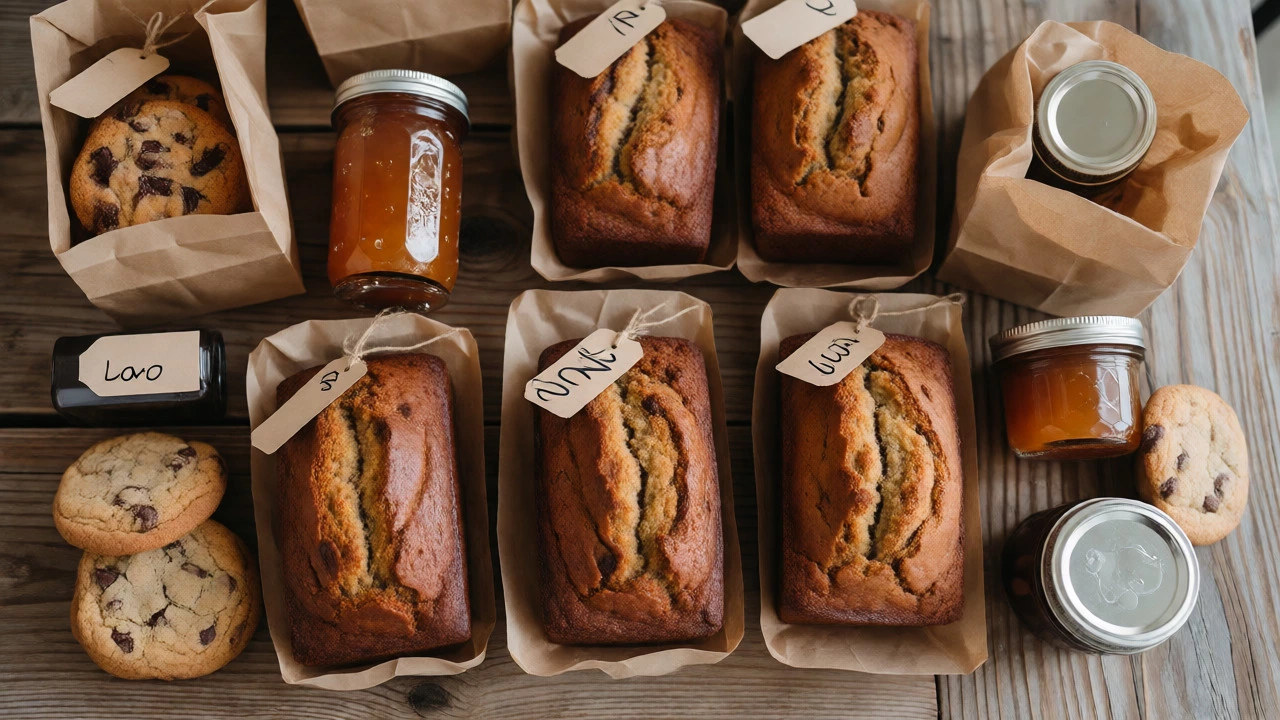
Banana bread is the classic example. It uses up brown bananas (free inventory!), requires one bowl, and bakes in under an hour. Sourdough starter? If you have it, you have free yeast. Bake baguettes or focaccia. Sell them while warm. Warm bread sells faster than cold bread. Always.
Consider these quick-turnaround items:
- Cookies: Chocolate chip or oatmeal raisin. They freeze well, so you can bake a batch, sell half, and save the rest.
- Muffins: Blueberry or lemon poppy seed. Easy to package individually.
- Granola Bars: No-bake options mean no oven time. Mix oats, honey, and nuts, press into a pan, chill, cut, and sell.
- Jams or Pickles: If you have fruit from a neighbor’s tree or garden, boil it with sugar and vinegar. Jar it. Label it. Done.
Navigating the Legal Gray Area
Before you start selling, check your local rules. In New Zealand, where I live, we have specific guidelines for home-based food businesses. Generally, if you’re selling directly to consumers (not wholesale to shops), the regulations are lighter. You still need to maintain hygiene standards. Wash your hands. Keep pets out of the kitchen. Use clean containers.
In many places, including parts of Australia and the US, there’s a "Cottage Food Law." This allows you to sell non-hazardous foods (like baked goods, jams, and candies) made in a home kitchen without a commercial license. Hazardous foods (meat, dairy-heavy sauces) usually require a commercial kitchen. Stick to the safe list to avoid fines. A fine eats into your profits, and you’re trying to make money, not lose it.
If you’re unsure, ask your local council. In Wellington, for instance, the City Council has clear resources on home food sales. It’s worth ten minutes of research to ensure you’re compliant. Ignorance isn’t bliss when health inspectors are involved.
Where to Find Buyers Instantly
You don’t need a website. You don’t need Instagram ads. You need neighbors. Your first market is within a five-kilometer radius. Why? Because they can pick up immediately. No shipping costs. No waiting for couriers. Cash changes hands the moment the product leaves your hand.
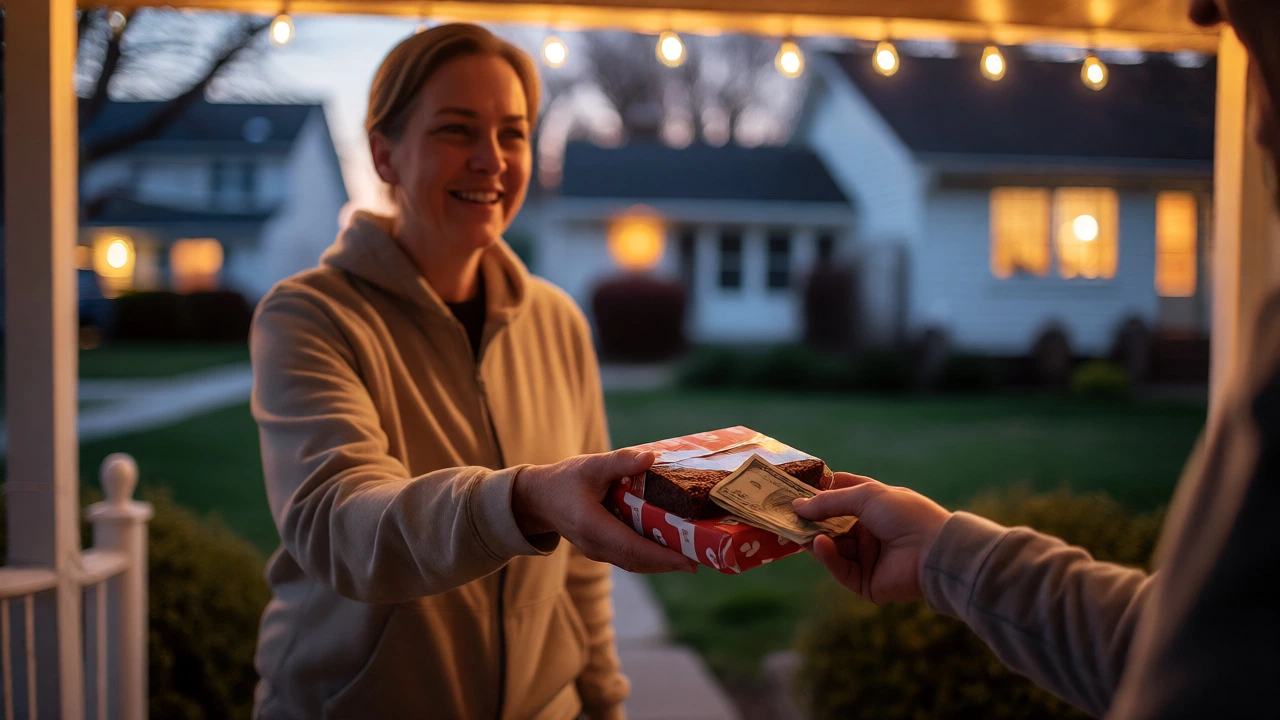
Use Facebook Marketplace and local community groups. Post a photo of your product. Not a stock photo. A real photo. Show the texture. Show the chocolate melting. Write a simple caption: "Fresh Banana Bread, $5 per loaf. Ready for pickup in Newtown this evening." Add urgency: "Only 6 loaves left." Scarcity drives action.
Word of mouth is faster than digital marketing. Tell your colleagues. Tell your gym buddies. Tell your barber. "Hey, I’m baking cookies this weekend if you want some." People support locals. They feel good helping a neighbor. Plus, they know the quality is better than supermarket plastic-wrapped nonsense.
Pricing for Profit, Not Just Cost
Many beginners price their food too low. They calculate ingredient cost ($1) and charge $2. Big mistake. You forgot your time, electricity, packaging, and wear-and-tear on your mixer. You’re working for pennies.
Here’s a simple formula: Ingredient Cost x 3 = Minimum Price. If your ingredients cost $10, charge at least $30 total for the batch. If that yields ten muffins, each muffin should be $3. Check local cafes. If they sell similar muffins for $5, you can undercut them slightly at $4.50. You’re still making a profit, but you’re offering value.
| Item Type | Avg. Ingredient Cost | Recommended Retail Price | Profit Margin |
|---|---|---|---|
| Banana Bread Loaf | $2.50 | $8.00 - $10.00 | High |
| Dozen Cookies | $3.00 | $12.00 - $15.00 | Medium-High |
| Homemade Jam (Jar) | $1.50 | $6.00 - $8.00 | High |
| Prepped Salad Kit | $4.00 | $10.00 - $12.00 | Medium |
Beyond Baking: Other Kitchen Cash Flows
Not everyone wants to bake. Maybe you hate the smell of burnt sugar. Fine. There are other ways to monetize your kitchen skills quickly.
Offer meal prep services. Busy professionals hate deciding what to eat. Offer a "Sunday Prep" service. For $50, you’ll chop vegetables, marinate chicken, and portion out four lunches for the week. You use their groceries (so no upfront cost for you), or you buy bulk staples like rice and beans. It’s labor-intensive but pays immediately.
Another angle: sell your excess produce. Do you have zucchini plants taking over your garden? Don’t compost them. Sell them. Zucchini glut is a seasonal opportunity. Bundle three large zucchinis for $5. People will buy them just to get rid of the problem before it rots. Same with tomatoes in summer or citrus in winter.
What about equipment? If you have a stand mixer gathering dust, sell it. But only if you don’t need it for your current hustle. Conversely, if you need a mixer to scale up, look for cheap ones on Trade Me. Sometimes you can find deals that pay for themselves after two weekends of cookie sales.
Common Pitfalls to Avoid
Don’t try to be gourmet. You’re not running a Michelin-starred kitchen. Keep it simple. Complexity kills speed. If a recipe requires seven steps and three pans, skip it. Choose recipes with one bowl and one pan.
Don’t ignore presentation. A plain ziplock bag looks unprofessional. Spend $5 on some kraft paper bags and stickers. Handwritten labels add charm. "Made with Love by Ewan" sounds better than "Food." Small touches justify higher prices.
Don’t oversupply. Start small. Bake six loaves, not twenty. If they sell out, great! You can bake more tomorrow. If they don’t, you haven’t wasted a fortune in ingredients. Test demand before scaling production.
Finally, don’t forget to track your expenses. Keep a simple notebook. Write down every dollar spent and every dollar earned. At the end of the week, see if you actually made money. Often, hidden costs (like buying specialty flour) eat into profits. Adjust accordingly.
Real-Life Scenario: The Weekend Hustle
Let’s say it’s Friday night. You need $100 by Monday. You check your pantry: flour, sugar, eggs, vanilla, cocoa powder. You decide on brownies. Recipe makes 16 squares. Ingredients cost $6. You bake them Saturday morning. By noon, they’re cooled. You cut them into squares and wrap them individually.
You post on the neighborhood app: "Fudgy Brownies, $3 each or 5 for $13. Pickup available Saturday afternoon." By Sunday evening, you’ve sold 12 brownies. Revenue: $36. Minus $6 cost, you made $30. Not enough yet. So you bake another batch using leftover chocolate chips and walnuts. You also offer a "Brownie + Coffee" bundle. You partner with a local cafe that lets you leave flyers. You sell 20 more units. Total revenue jumps to $90. Costs rise to $12. Net profit: $78. Close enough. You hit your target through volume and iteration.
Scaling Up Without Slowing Down
Once you’ve got the hang of it, you can systematize. Buy ingredients in bulk. Costco or local wholesalers offer discounts on flour and sugar. Pre-measure dry ingredients on Sunday so weekday baking takes minutes, not hours. Create a standard packaging setup. One pile of bags, one pile of stickers, one pen.
Consider subscriptions. Offer a "Weekly Cookie Club." Customers pay $20/month for eight cookies delivered or picked up weekly. Guaranteed income. Predictable workload. Less stress. You’re no longer hunting for buyers every day; you’re fulfilling orders.
This model works because it builds recurring revenue. While one-time sales give you cash now, subscriptions build stability later. Start with one-time sales to generate the initial cash flow, then convert regular customers into subscribers.
Do I need a business license to sell homemade food?
It depends on your location. In New Zealand, if you sell directly to consumers from your home, you generally don't need a full commercial license, but you must comply with food safety standards. In the US, Cottage Food Laws vary by state. Always check local regulations to avoid fines.
What foods sell the fastest?
Baked goods like cookies, brownies, and banana bread sell quickly because they have long shelf lives and wide appeal. Fresh bread and savory snacks like granola bars also move fast. Avoid perishables like cream-filled pastries unless you have guaranteed same-day buyers.
How much should I charge for homemade cookies?
Aim for $2-$4 per cookie depending on size and ingredients. Calculate your ingredient cost, multiply by three, and divide by the number of cookies. Compare with local cafes to ensure you're competitive but profitable.
Can I sell food if I have pets in my house?
Yes, but keep them out of the kitchen during preparation and storage. Ensure all surfaces are sanitized and food is covered. Transparency helps; mentioning that pets are present but kept away reassures cautious buyers.
Is it better to sell online or locally?
For getting money ASAP, local sales are superior. Online sales involve shipping costs and delays. Local pickup means instant cash and no logistical headaches. Use online platforms like Facebook Marketplace to find local buyers, but complete transactions in person.

Recent Posts
-
 Exploring the World's Most Popular Desserts November 25, 2024
-
 How Do True Italians Eat Spaghetti? Real Traditions from Italy January 19, 2026
-
 Is 3 Hours on High the Same as 6 Hours on Low in a Slow Cooker? December 1, 2025
-
 Creative Ways to Cook with Limited Resources December 25, 2024
-
 Common Challenges Vegans Face and How to Overcome Them January 7, 2025