Mood-Boosting Meal Builder
Build Your Mood-Boosting Meal
Select ingredients from the science-backed foods that support your mood. See how your combination scores for serotonin and neurotransmitter support.
Ever had one of those days where nothing feels right? The rain’s pounding, your inbox is overflowing, and you just want to crawl under the covers with something warm and familiar? You’re not alone. And chances are, you’ve reached for a bowl of mac and cheese, a slice of chocolate cake, or a steaming mug of broth before-without even thinking about it. That’s not weakness. That’s your brain asking for help.
Why food affects your mood
Your gut and brain are wired together. More than 90% of your serotonin, the chemical that helps you feel calm and happy, is made in your digestive system. That means what you eat doesn’t just fill your stomach-it changes how you feel. Foods rich in tryptophan, complex carbs, omega-3s, and magnesium don’t just taste good. They help your body make the chemicals that make you feel like yourself again.
It’s not magic. It’s biology. And science backs this up. A 2023 study from the University of Otago tracked over 1,200 adults for six weeks. Those who ate more whole foods-like fruits, vegetables, whole grains, nuts, and fatty fish-reported significantly higher levels of well-being compared to those who ate mostly processed snacks. The effect wasn’t huge overnight, but after three weeks, people noticed a shift: less anxiety, better sleep, more energy.
Top mood-boosting foods you can actually cook
Not all comfort food is created equal. Some foods give you a quick sugar rush and then a crash. Others? They steady your mood, calm your nerves, and give you real, lasting comfort. Here’s what actually works.
- Dark chocolate (70% cocoa or higher) - It’s not just a treat. Cocoa contains flavonoids that increase blood flow to the brain and trigger the release of endorphins. A small square after dinner can lower cortisol, the stress hormone, by up to 14% in just 30 minutes, according to research from the University of California.
- Salmon and other fatty fish - Omega-3 fats in salmon, mackerel, and sardines reduce inflammation in the brain and support serotonin production. One 150g fillet gives you over 2,000mg of EPA and DHA-the exact amounts linked to lower depression rates in clinical trials.
- Oats - A bowl of plain oatmeal with a dash of cinnamon and a spoon of honey isn’t just breakfast. Oats are packed with complex carbs that help your body absorb tryptophan, the amino acid that turns into serotonin. Add a handful of walnuts for extra omega-3s.
- Spinach and leafy greens - They’re not just for salads. Spinach, kale, and Swiss chard are rich in folate, a B-vitamin your body needs to make dopamine and serotonin. Low folate levels are tied to low mood. A simple sauté with garlic and olive oil turns them into a warm, comforting side.
- Chicken soup - Yes, the old-school kind. The steam helps clear sinuses, the broth hydrates, and the chicken provides tryptophan. Studies show it also has mild anti-inflammatory effects. Homemade is best-store-bought versions often lack the nutrients because they’re boiled too long or loaded with salt.
- Bananas - They’re nature’s candy. Bananas have natural sugars, vitamin B6 (which helps turn tryptophan into serotonin), and potassium to balance electrolytes. Eat one with a spoonful of almond butter for a slow-release energy boost.
- Whole grain bread with nut butter - Simple, but powerful. The combo of complex carbs and healthy fats stabilizes blood sugar. No spikes. No crashes. Just steady calm. Try rye or sourdough for extra gut-friendly fiber.
What to avoid when you’re feeling low
Not all comfort food helps. Some makes things worse.
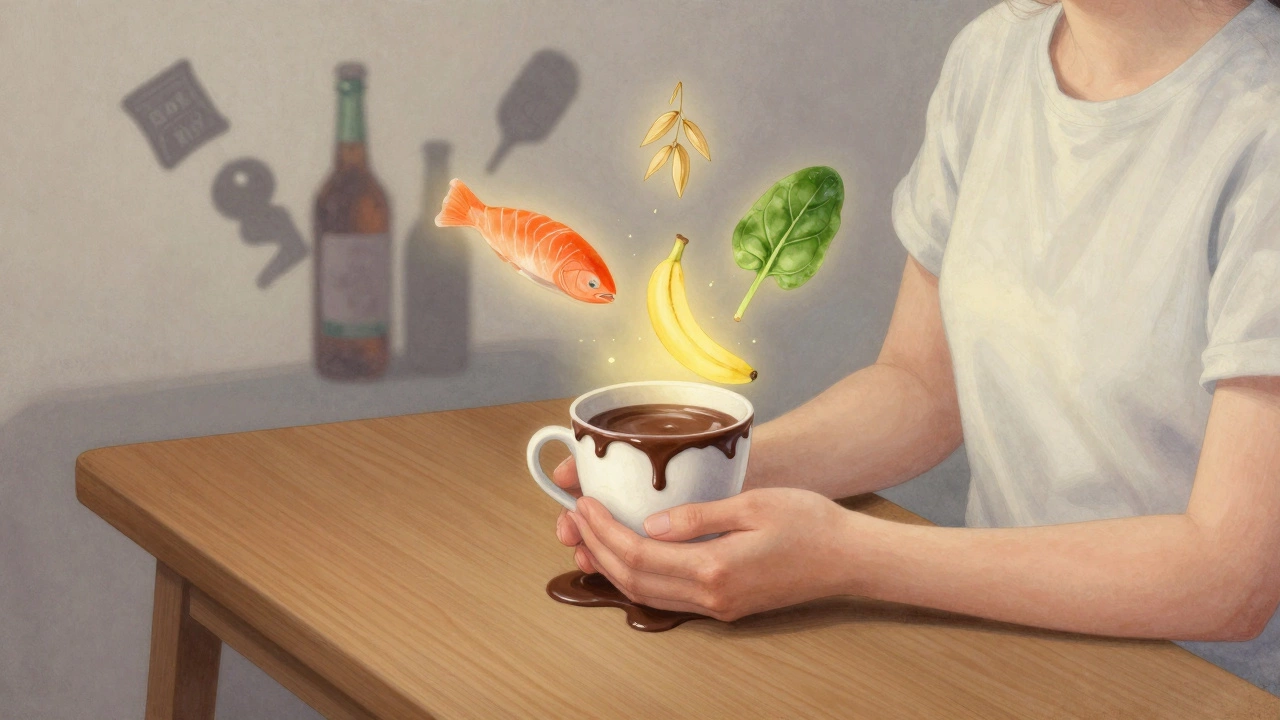
Highly processed snacks-chips, cookies, candy bars-give you a quick spike of dopamine, but they’re stripped of nutrients. Your body uses up its own vitamins and minerals to process them, leaving you more drained. Sugar crashes lead to irritability. Caffeine can make anxiety worse. And alcohol? It’s a depressant. It might help you fall asleep, but it ruins your deep sleep cycles, which is when your brain resets emotionally.
There’s a difference between eating for comfort and eating to numb. The first nourishes. The second leaves you feeling worse afterward. Notice how you feel an hour after eating. If you’re sluggish, bloated, or moody, it’s a sign the food didn’t support your mood-it just distracted you from it.
How to build a mood-boosting plate
You don’t need to overhaul your diet. Just make small, smart swaps.
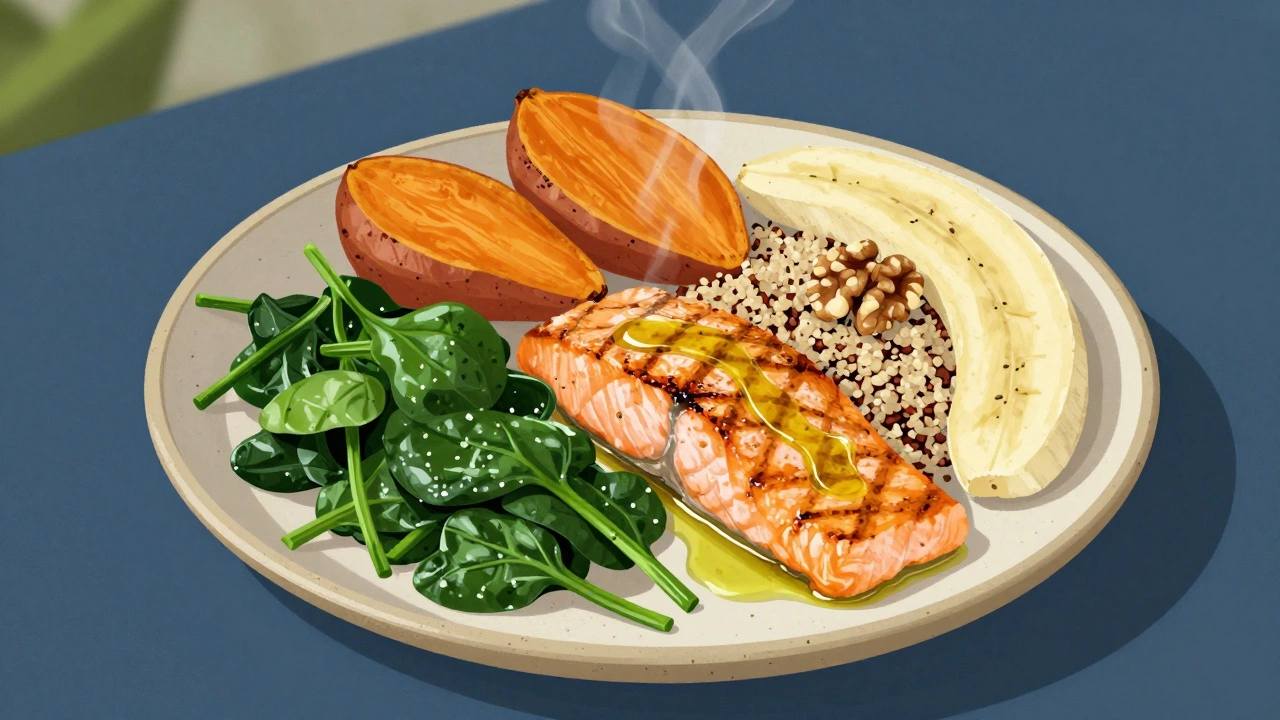
Start with a base: whole grains like brown rice, quinoa, or whole wheat pasta. Add a protein: grilled chicken, tofu, beans, or eggs. Toss in a handful of greens or roasted veggies. Then, top it with something that feels like a hug: a drizzle of olive oil, a sprinkle of nuts, a square of dark chocolate.
Here’s a simple formula:
- 1/2 plate veggies or salad
- 1/4 plate whole grains or starchy veg (sweet potato, corn, barley)
- 1/4 plate protein
- Add one mood-boosting fat: avocado, olive oil, nuts, or seeds
- Finish with a small sweet: a few berries, a square of dark chocolate, or a banana
It’s not fancy. But it’s the kind of meal that makes you feel grounded, not stuffed.
Real people, real results
In Wellington, a local community group called ‘Mood Meals’ started cooking together during winter last year. Members shared simple recipes-baked oatmeal with apples, lentil stew with rosemary, miso soup with tofu. After eight weeks, 78% of participants said they felt less overwhelmed. One woman, 62, told me she stopped reaching for chocolate bars at 4 p.m. and started making a cup of warm milk with turmeric and honey. "I didn’t think it would do anything," she said. "But now I fall asleep easier. I wake up less grumpy."
It’s not about perfection. It’s about consistency. One good meal a day, eaten slowly, without distractions, can shift your whole week.
When food isn’t enough
Food helps-but it’s not a cure. If you’ve been feeling down for weeks, have trouble sleeping, or lost interest in things you used to enjoy, talk to a doctor. Low mood can be a sign of depression, and it’s not something you should handle alone. Nutrients support mental health, but they don’t replace therapy, medication, or rest when you need them.
Think of food like a warm blanket. It won’t fix a broken heater, but it keeps you from freezing while you wait for help.
Try this tonight
Don’t wait for a "perfect" day. Tonight, make one simple thing:
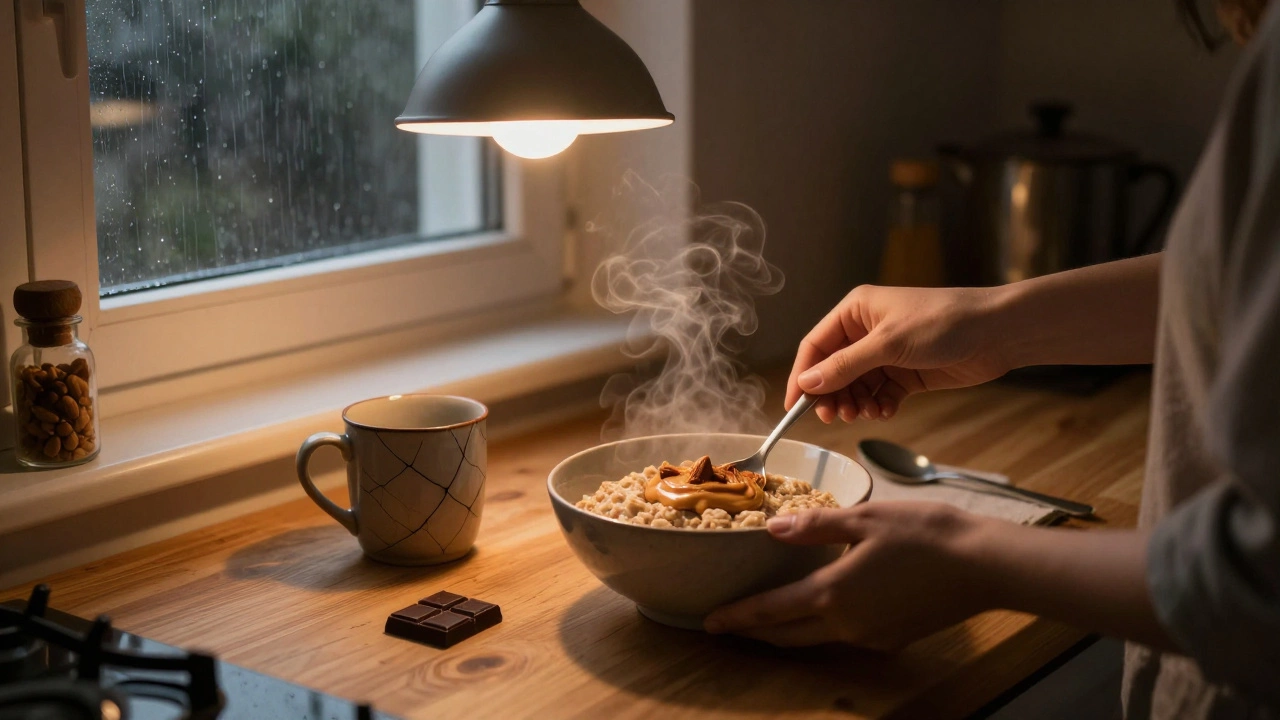
- Warm up a bowl of oatmeal with a pinch of cinnamon and a spoon of almond butter.
- Or fry up some eggs, toss them on whole grain toast, and add a side of sautéed spinach.
- Or melt a square of dark chocolate into a cup of hot milk and sip it slowly.
Turn off the screen. Sit at the table. Breathe. Eat like you’re giving yourself permission to feel better.
That’s not indulgence. That’s self-care.
What’s the fastest food to improve my mood?
Bananas and dark chocolate work quickly. Bananas have natural sugars and vitamin B6, which help your body make serotonin. A square of 70% dark chocolate triggers endorphin release within minutes. Both are easy to grab and eat slowly for maximum effect.
Is comfort food bad for me?
Not if you choose wisely. Traditional comfort foods like mashed potatoes, mac and cheese, or soup aren’t bad-they’re just often made with unhealthy ingredients. Swap white pasta for whole grain, use real cheese instead of powder, and add veggies. You keep the comfort without the crash.
Can eating better replace therapy or medication?
No. Food supports mental health but doesn’t replace professional care. If you’re struggling with persistent sadness, fatigue, or hopelessness, talk to a doctor or therapist. Good nutrition is part of healing, not the whole solution.
Why do I crave carbs when I’m stressed?
Your body is trying to boost serotonin. Carbs help tryptophan cross into your brain, where it turns into serotonin. That’s why you crave bread, pasta, or rice when you’re anxious. The key is choosing whole, unrefined carbs-oats, quinoa, sweet potatoes-so you get the mood lift without the sugar spike.
Does alcohol really make me feel worse later?
Yes. Alcohol lowers serotonin and disrupts sleep. Even one drink can reduce your deep sleep by up to 40%, which is when your brain processes emotions. You might feel relaxed at first, but the next day you’ll feel more tired, irritable, and low.
What if I don’t like cooking?
You don’t need to cook elaborate meals. Buy pre-washed greens, canned beans, frozen salmon, and whole grain bread. Warm them up. Add olive oil, salt, pepper, and maybe a squeeze of lemon. That’s a mood-boosting meal. It takes 10 minutes. No fancy skills needed.
Food doesn’t fix everything. But it can be the quiet, daily act that reminds you: you’re worth caring for. Even on the hard days.

Recent Posts
-
 Top 7 Tasty and Healthy Snack Ideas for Comfort January 1, 2025
 -
 Cheapest Long-Lasting Foods: Best Budget Pantry Staples April 26, 2026
 -
 What Does Chick-fil-A Soak Their Chicken Before Cooking It? September 13, 2026
 -
 Easy Lunches for Picky Eaters: Tasty and Simple Ideas February 25, 2025
 -
 Do I Cover Chicken When Baking? Here's What You Need to Know February 21, 2025