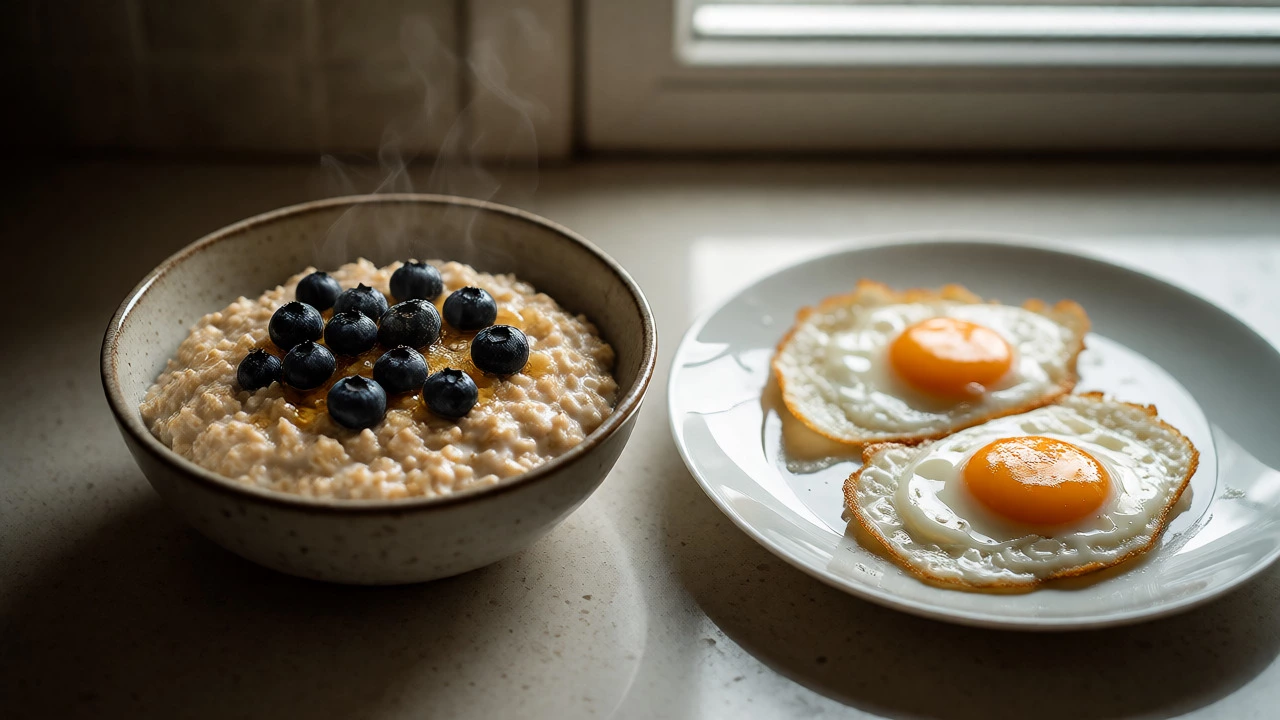
Breakfast Matchmaker: Oats vs. Eggs
Answer these questions to see which breakfast base is best for your current goals.
You’re standing in the kitchen at 7 AM, staring into the fridge and the pantry. On one side, a carton of eggs. On the other, a canister of rolled oats. It’s the ultimate breakfast standoff. One promises creamy comfort; the other delivers fluffy protein power. But which one actually serves your body better? The answer isn’t black and white-it depends entirely on what you need that morning.
If you’re trying to lose weight, eggs often win because they keep hunger away longer. If you’re an athlete needing quick fuel or someone with high cholesterol looking to lower it, oatmeal takes the crown. Let’s break down the science, the nutrition, and the practical reality so you can stop guessing and start eating right for your goals.
The Nutritional Face-Off: What’s Inside?
To make a smart choice, you have to look under the hood. Both foods are nutrient-dense, but their profiles are wildly different. Understanding these differences is key to matching the food to your daily needs.
| Nutrient | 1 Cup Cooked Oatmeal (Plain) | 2 Large Eggs (Boiled) |
|---|---|---|
| Calories | ~158 kcal | ~143 kcal |
| Protein | 6 grams | 12 grams |
| Carbohydrates | 27 grams | 0.7 grams |
| Fiber | 4 grams | 0 grams |
| Total Fat | 3 grams | 9.5 grams |
| Saturated Fat | 0.5 grams | 3 grams |
| Cholesterol | 0 mg | 372 mg |
| Vitamin B12 | Trace amounts | High (covers ~40% DV) |
Notice the trade-off immediately. Oatmeal is a carbohydrate powerhouse loaded with fiber. Eggs are a protein and fat container with almost no carbs. This fundamental difference dictates how your body reacts to them.
Why Choose Eggs? The Satiety King
If your biggest struggle is reaching for a snack bar by 10 AM, eggs are likely your best friend. Research consistently shows that high-protein breakfasts reduce ghrelin, the "hunger hormone," more effectively than carb-heavy meals. When you eat two eggs, you’re getting about 12 grams of high-quality protein. This triggers a stronger feeling of fullness that lasts hours.
Eggs are also incredibly versatile. You don’t have to stick to boring boiled eggs. A quick scramble with spinach and feta adds volume and nutrients without adding many calories. Plus, eggs are one of the few natural sources of Vitamin D and Choline, a nutrient crucial for brain health that most people don’t get enough of.
Eggs are a complete source of protein containing all nine essential amino acids required by the human body. Unlike plant-based proteins, animal proteins like those in eggs have high bioavailability, meaning your body absorbs and uses them very efficiently.
Why Choose Oatmeal? The Heart Health Hero
Oatmeal gets a bad rap for being "carb-heavy," but this is misleading. Not all carbs are created equal. Rolled or steel-cut oats contain beta-glucan, a specific type of soluble fiber. Beta-glucan has been proven to lower LDL (bad) cholesterol levels. How? It binds to bile acids in your gut and removes them from your body, forcing your liver to pull cholesterol from your blood to make more bile.
Beyond heart health, oatmeal is great for digestive regularity. If you struggle with constipation, the fiber content in oats acts as a gentle broom for your system. It also provides steady energy. Because whole grains digest slowly, they prevent the sharp insulin spikes associated with sugary cereals or white toast.
Oatmeal is a warm porridge made from hulled grain seeds of Avena sativa, known for its high fiber content and ability to stabilize blood sugar. However, be careful with instant packets. They are often pre-sweetened and stripped of much of their fiber, turning them into a sugar bomb rather than a health food.
Blood Sugar and Energy Levels
This is where the decision becomes personal. Do you crash hard after lunch? Or do you feel sluggish if you don’t eat carbs?
Eggs have a negligible impact on blood glucose. For diabetics or those following a ketogenic diet, eggs are the safer bet. They provide stable energy derived from fats and proteins, which burn slowly. There’s no spike, so there’s no crash.
Oatmeal raises blood sugar, but if you choose whole rolled oats, the rise is gradual thanks to the fiber matrix. However, if you add brown sugar, honey, or dried fruit, you’re adding simple sugars that can cause a spike. To keep oatmeal low-glycemic, pair it with a protein source (like nuts or Greek yogurt) and healthy fats (like chia seeds). This combination slows digestion further, keeping your energy stable until lunch.
Weight Loss: Which Helps More?
Studies suggest that for pure weight loss, eggs have a slight edge due to the thermic effect of food. Protein requires more energy to digest than carbohydrates or fats. This means you burn more calories just processing your eggs. Additionally, the high satiety factor means you’re less likely to overeat later in the day.
However, oatmeal is lower in calorie density per volume. You can eat a large bowl of plain oatmeal for fewer calories than two fried eggs cooked in butter. If you love volume and want to feel physically full without consuming too many calories, a big bowl of water-rich oatmeal might trick your brain into thinking you’ve eaten more than you have.
The catch? Preparation matters. Two poached eggs (approx. 140 calories) versus a cup of dry oatmeal cooked with water (approx. 150 calories) are similar. But add cheese and bacon to the eggs, and you’re at 400+ calories. Add peanut butter and banana to the oats, and you’re also at 400+. Portion control and toppings decide the winner here, not the base ingredient alone.

Practicality and Lifestyle Fit
Nutrition aside, what fits your life? Oatmeal wins on speed and prep-ahead convenience. Overnight oats take five minutes to assemble the night before. You wake up, grab the jar, and eat. No cooking required. This is huge for busy parents or commuters.
Eggs require active cooking time unless you boil them in batches on Sunday. Scrambling or frying takes attention. You can’t walk out the door while they cook. However, eggs are portable if hard-boiled. Peel and go. Oatmeal is messier to transport unless it’s in a sealed container, and cold oatmeal isn’t everyone’s favorite texture.
Consider your budget too. In most places, eggs remain one of the cheapest sources of animal protein. Oats are also cheap, especially when bought in bulk bags. Both are wallet-friendly staples, making them accessible regardless of income level.
How to Optimize Your Choice
You don’t have to pick one forever. Rotate them based on your schedule and goals.
- Choose Eggs When: You’re doing intermittent fasting, you’re on a low-carb diet, you have a long morning ahead without snacks, or you need extra protein for muscle recovery.
- Choose Oatmeal When: You have a sedentary job, you need fiber for digestion, you’re training for endurance sports (needing glycogen), or you want a comforting, warm meal on a cold day.
A pro tip: Combine them. Have one egg alongside a half-cup of oatmeal. You get the fiber and carbs from the oats, plus the protein and fat from the egg. This hybrid approach offers the best of both worlds-steady energy, high satiety, and balanced macros.
Is oatmeal healthier than eggs for lowering cholesterol?
Generally, yes. Oatmeal contains beta-glucan, a soluble fiber specifically linked to reducing LDL cholesterol. While dietary cholesterol from eggs affects blood cholesterol less than previously thought, people with existing high cholesterol or diabetes may still benefit more from the lipid-lowering effects of oats compared to the saturated fat in egg yolks.
Do eggs cause inflammation?
For most healthy people, no. Some studies suggest that excessive consumption of omega-6 rich eggs (from grain-fed chickens) might promote inflammation in susceptible individuals. Choosing pasture-raised eggs, which have a better omega-3 to omega-6 ratio, can mitigate this risk. Oatmeal is generally anti-inflammatory due to its antioxidant content.
Which is better for building muscle?
Eggs are superior for muscle building. They provide leucine, an amino acid critical for triggering muscle protein synthesis. Two eggs offer significantly more protein than a standard serving of oatmeal. Athletes often pair oatmeal with whey protein powder to match the protein content of an egg-based meal.
Can I eat oatmeal every day?
Yes, eating oatmeal daily is safe and beneficial for most people. It supports heart health and digestion. Just ensure you vary your toppings to avoid nutrient gaps and watch out for added sugars in flavored varieties. Pairing it with fruits and nuts ensures a broader range of vitamins and minerals.
Are instant oats worse than rolled oats?
Instant oats are processed more heavily, which breaks down the fiber structure slightly faster. This leads to quicker digestion and a higher glycemic index compared to rolled or steel-cut oats. They also often come with added sodium and sugar. For the best health benefits, stick to old-fashioned rolled oats or steel-cut oats.

Recent Posts
-
 4 Delicious Must-Try Foods for Easy Dinner Recipes January 2, 2025
-
 Discover Why Vegetarians Often Appear More Youthful November 21, 2024
-
 What Are the 5 Metabolic Superfoods That Actually Boost Your Metabolism? December 25, 2025