Chicken Soaking & Brining Advisor
Not sure whether to soak, brine, or skip it? Answer three quick questions to get a personalized recommendation based on science and safety guidelines.
You’re standing in your kitchen, staring at a package of raw chicken, and you wonder: should I soak this in water before I cook it? It’s a question that pops up constantly in home kitchens. Some people swear by it for tenderness; others think it’s just a way to spread bacteria around the sink. The truth isn’t black and white-it depends entirely on what you want from your dinner.
If you’re looking for juicier meat, soaking (or more accurately, brining) works wonders. If you’re worried about hygiene, you might be better off skipping the bath and patting it dry. Let’s break down exactly why you’d put chicken in water, when it helps, and when it hurts, so you never have to guess again.
The Core Reason: Moisture and Flavor Absorption
At its simplest, putting chicken in water is about hydration. Raw poultry loses moisture rapidly when exposed to high heat. As the proteins tighten during cooking, they squeeze out internal fluids. If you start with a piece of meat that has already absorbed extra liquid, you have a buffer against drying out. This is especially true for lean cuts like breasts, which lack the fat content of thighs or wings.
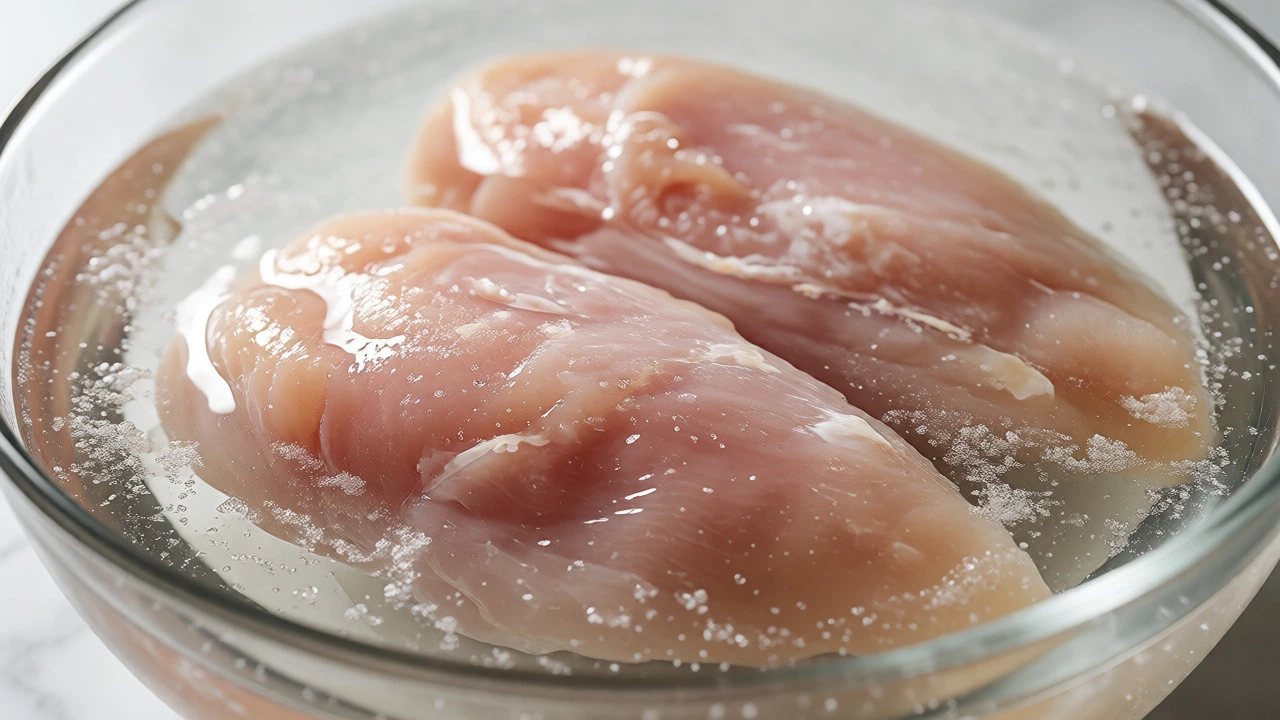
But plain water isn’t always enough. Most chefs recommend adding salt, sugar, and aromatics. This turns a simple soak into a brine. A basic brine uses a ratio of 1/4 cup kosher salt per 4 cups of water. The salt breaks down some protein structures, allowing the muscle fibers to relax and hold onto more water. It’s not magic; it’s chemistry. When you bite into a properly brined breast, it feels plumper because the cells are literally holding more fluid.
Soaking vs. Brining: What’s the Difference?
People often use these terms interchangeably, but they do different jobs. Soaking usually refers to rinsing off blood, bone fragments, or slime under cold running water or in a bowl. This is purely mechanical cleaning. It doesn’t change the texture much. You do this if you bought whole chickens directly from a farm and see visible debris.
Brining, on the other hand, is a chemical process. It changes the protein structure. There’s also dry brining, where you rub salt directly on the skin and let it sit in the fridge. Dry brining concentrates flavor better than wet brining because it draws out moisture, dissolves the salt, and then reabsorbs it as a seasoned juice. If you have time, dry brining is often superior for crispy skin, while wet brining is faster for tenderizing tough cuts.
| Method | Primary Benefit | Best For | Time Required |
|---|---|---|---|
| Plain Water Rinse | Cleans surface debris | Farm-fresh whole birds | 1-2 minutes |
| Wet Brine | Maximum juiciness | Breasts, roasting whole | 30 mins - 4 hours |
| Dry Brine | Flavor concentration + crisp skin | Roast chicken, fried chicken | 1 hour - overnight |
| No Soak | Simplicity, food safety | Pre-packaged supermarket chicken | 0 minutes |
The Food Safety Myth: Does Washing Spread Germs?
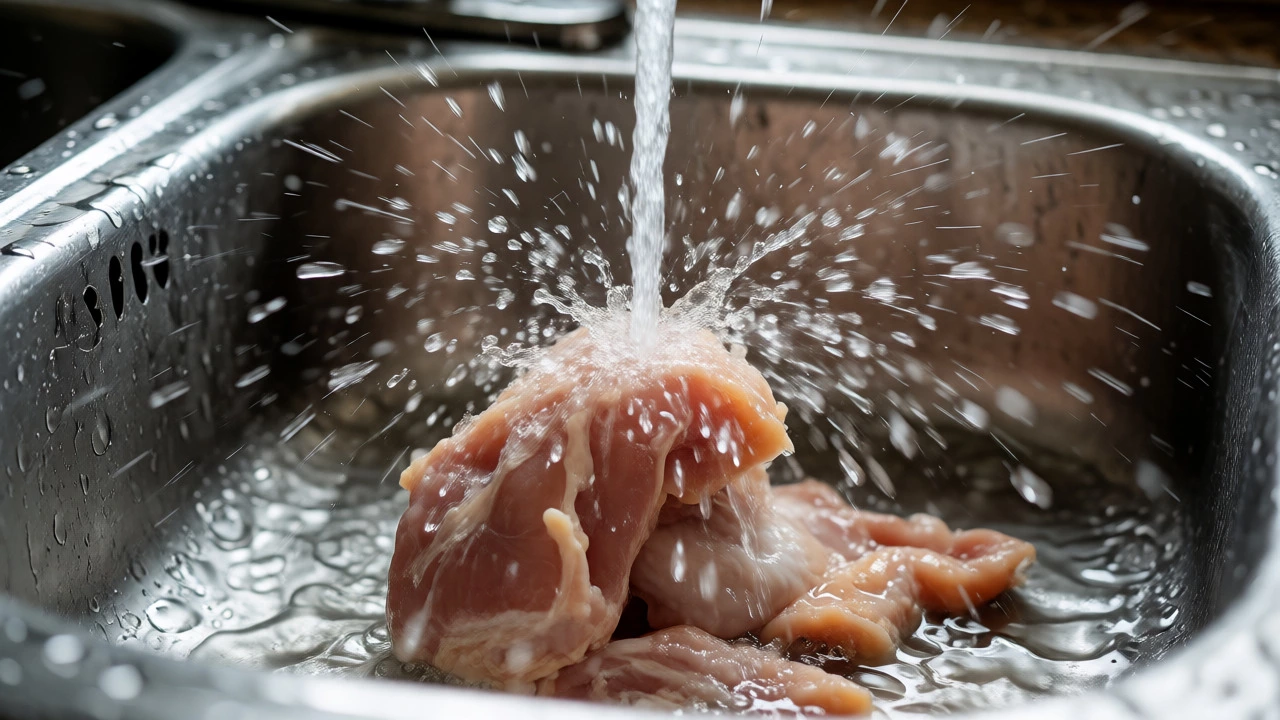
Here’s the controversial part. The USDA and other food safety agencies explicitly advise against washing raw chicken. Why? Because splashing water can spray Salmonella and Campylobacter bacteria up to three feet away from your sink. That means your countertops, utensils, and even nearby fruit could get contaminated. You don’t kill bacteria by washing them off; you only kill them with heat.
So, does soaking make it safer? No. In fact, if you soak chicken in a shared bowl and then drain it without sanitizing the bowl, you’ve created a breeding ground for bacteria. The key rule is temperature control. Keep chicken below 4°C (40°F). If you soak it, keep it in the refrigerator, not on the counter. Bacteria multiply rapidly between 5°C and 60°C. If you leave a bowl of chicken water on the stove for two hours, you’re inviting trouble.
When Soaking Actually Helps Your Recipe
Despite the safety warnings, there are specific scenarios where soaking wins. Think about fried chicken. Many Southern-style recipes call for a buttermilk soak. Buttermilk contains lactic acid and enzymes that gently tenderize the meat without turning it mushy. The acidic environment also helps the flour coating adhere better. If you skip the soak, your crust might slide off.
Another case is older or tougher birds. If you’re cooking heritage breed chickens or older hens, the meat can be stringy. A longer brine (up to 12 hours) penetrates deeper, breaking down connective tissue. Similarly, if you’re using frozen chicken that wasn’t thawed perfectly, a quick soak in cold water can help ensure even thawing and remove any ice crystals that might cause steaming instead of searing.
How to Do It Right: Step-by-Step
If you decide to soak or brine, follow these steps to avoid disaster:
- Use Cold Water Only: Never use warm or hot water. Warm water promotes bacterial growth and starts cooking the outside of the meat prematurely.
- Keep It Covered: Put the bowl in the fridge. Don’t leave it uncovered on the counter.
- Pat It Dry: After soaking, remove the chicken and pat it thoroughly with paper towels. Wet chicken won’t brown. You want a Maillard reaction (that delicious browning), which requires a dry surface.
- Sanitize Surfaces: Clean the bowl, sink, and any surfaces touched by raw chicken water with hot soapy water or a disinfectant.
For a standard wet brine, mix 1/4 cup kosher salt and 1/4 cup sugar into 4 cups of cold water until dissolved. Submerge the chicken completely. For breasts, 30 minutes is plenty. For a whole bird, 2 to 4 hours is ideal. Any longer, and the texture becomes spongy.
Alternatives to Water Soaking
If you’re worried about the mess or safety risks of water soaking, consider these options. Marinating in oil-based sauces adds flavor and slight tenderization without the osmotic pressure of salt water. Yogurt marinades work similarly to buttermilk, using acidity to soften proteins.
You can also rely on proper cooking techniques instead of pre-soaking. Using a meat thermometer ensures you pull the chicken off the heat at 74°C (165°F) internal temperature. Overcooking is the real enemy of juicy chicken, not the lack of a pre-cook soak. Resting the meat for 5-10 minutes after cooking allows juices to redistribute, giving you similar results to brining without the prep time.
Troubleshooting Common Issues
My chicken tastes salty. You likely brined it too long or used table salt instead of kosher salt. Table salt is denser, so you end up with double the sodium. Always rinse the chicken briefly after brining if you suspect over-salting, though this removes some flavor.
The skin is soggy. You didn’t dry it enough after soaking. Moisture prevents crisping. Leave the chicken uncovered in the fridge for an hour after patting it dry to air-dry the skin further.
I forgot to brine. Don’t panic. Cook it normally. Serve it with a sauce or gravy to compensate for potential dryness. Or, try injecting butter or broth directly into the breast with a syringe right before cooking.
Is it safe to soak chicken in tap water?
Yes, provided the water is cold and the chicken stays refrigerated. Tap water itself is safe, but the risk comes from cross-contamination via splashing. Ensure you sanitize all surfaces afterward.
Does soaking chicken remove bad smells?
Sometimes. A soak in water with vinegar or lemon juice can neutralize strong odors associated with older poultry. However, if the chicken smells sour or ammonia-like, it’s spoiled. Soaking won’t fix rotten meat; throw it away.
Can I soak chicken in milk?
Absolutely. Milk, especially buttermilk, contains calcium and lactic acid that activate natural enzymes in the chicken, helping to tenderize the meat. It’s a popular technique for fried chicken and curries.
How long should I soak chicken in salt water?
For individual pieces like breasts or thighs, 30 minutes to 1 hour is sufficient. For a whole chicken, 2 to 4 hours is ideal. Avoid exceeding 8 hours, as the texture can become unpleasantly soft or mealy.
Do I need to soak store-bought chicken?
No. Store-bought chicken is processed and cleaned. Unless you want to brine it for flavor and moisture, there is no need to soak it. Patting it dry is usually enough preparation for most recipes.

Recent Posts
-
 Quick and Delicious Dinner Ideas for When You're Stumped December 23, 2024
-
 Can You Eat Pizza as a Vegetarian? March 17, 2025