Hidden Sugar & Calorie Calculator
Select a food to begin
Compare processed options with real nutrition.
Choose an option above.
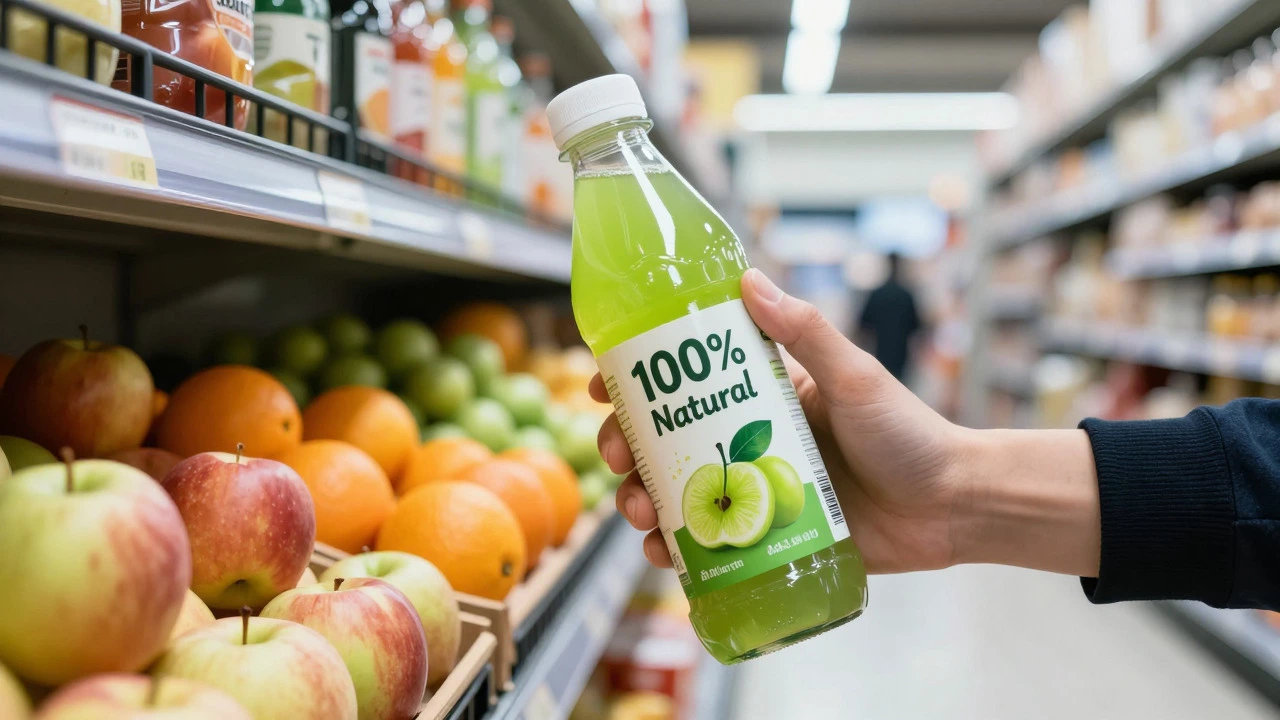
Picture this: you’re standing in the grocery aisle, staring at a bright green bottle of juice. The label screams "100% Natural" and "No Added Sugar." It feels like the responsible choice compared to the soda next to it. You grab it, feeling good about your health decision. But here’s the kicker-that single bottle might pack more sugar than a can of cola, zero fiber, and enough liquid calories to derail your weight management goals for the day.
We live in an era where "healthy" is a marketing buzzword as much as a nutritional descriptor. Food manufacturers have mastered the art of making processed items look virtuous while stripping away the very nutrients that make whole foods beneficial. If you are trying to eat clean but finding yourself stuck on the scale or feeling sluggish, you might be falling victim to these dietary imposters. Let’s expose the unhealthiest "healthy" foods hiding in plain sight and swap them for options that actually fuel your body.
The Juice Trap: Liquid Calories Without the Fiber
Fruit Juice is often marketed as a vitamin-rich superfood, but the juicing process removes almost all the fiber found in whole fruit. When you eat an apple, you get pectin (a type of soluble fiber) that slows down sugar absorption. When you drink apple juice, you are consuming pure fructose with nothing to buffer its impact on your blood glucose levels.
Consider the math. To make one glass of orange juice, you need roughly four oranges. Eating four oranges takes time and effort; drinking their juice takes ten seconds. That rapid consumption spikes insulin levels quickly. Many commercial juices also add cane sugar or high-fructose corn syrup under the guise of "natural flavors," pushing the sugar content even higher. A standard 8-ounce serving of many fruit juices contains around 24 grams of sugar-comparable to a candy bar.
What to do instead: Stick to whole fruits. If you crave a smoothie, blend the entire fruit including the skin (if edible) or add leafy greens. This keeps the fiber intact, keeping you fuller longer and stabilizing energy levels. For hydration, water with a slice of lemon or cucumber beats sugary nectars every time.
Dried Fruit: Nature’s Candy with a Calorie Bomb
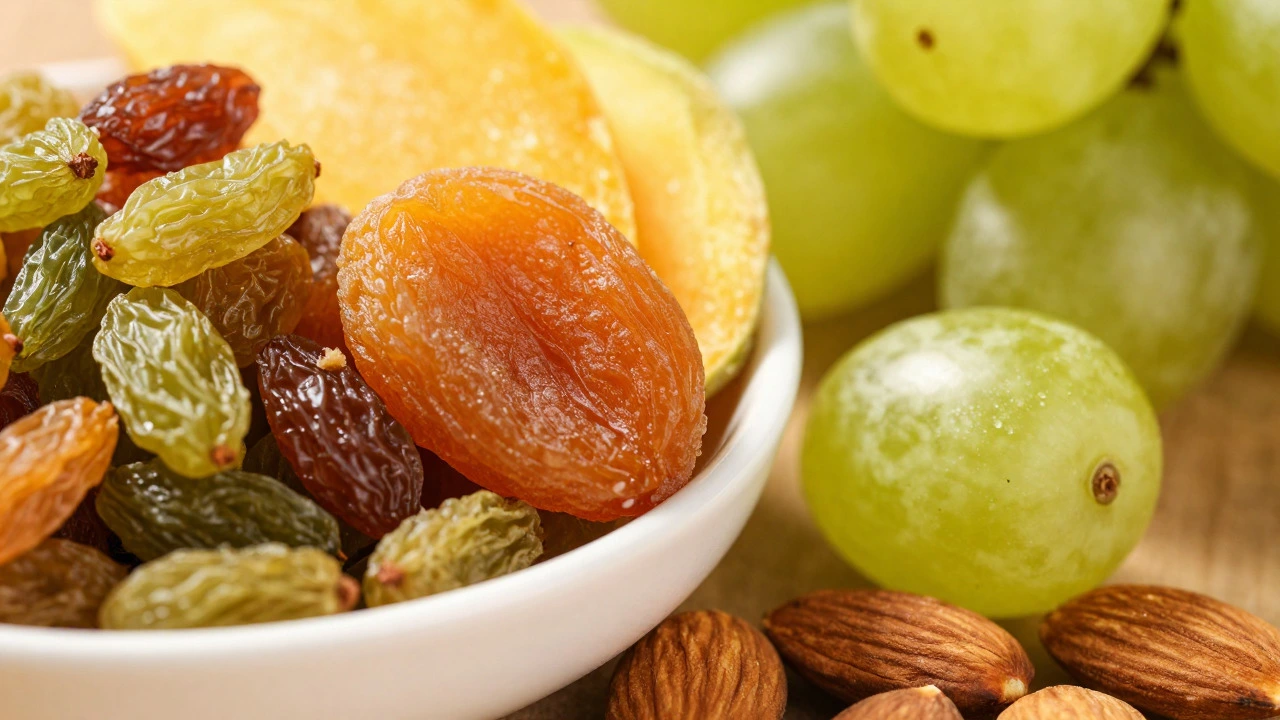
Dried Fruit is concentrated fruit with water removed, resulting in significantly higher calorie density and often added sugars. Raisins, dried apricots, and mango slices seem like innocent snacks, especially when labeled "no added sugar." However, removing water concentrates the natural sugars. One cup of fresh grapes has about 104 calories. One cup of raisins? Nearly 434 calories. It is incredibly easy to mindlessly consume a pound of dried fruit in one sitting, which equals the caloric load of several meals.
Worse yet, many brands soak dried fruits in sugar before dehydrating them to improve texture and shelf life. Even if no sugar is added, the glycemic index of dried fruit is often higher than fresh fruit because the lack of water means faster digestion. This leads to quick energy crashes rather than sustained fuel.
What to do instead: Portion control is key. Measure out a small handful (about 1/4 cup) and mix it with nuts. The fat and protein in almonds or walnuts slow down sugar absorption. Better yet, choose fresh berries or seasonal apples. They provide volume, hydration, and crunch without the caloric density.
Granola and Cereal Bars: The Breakfast Sweeteners
You want a quick, convenient breakfast that isn’t fast food. So you grab a granola bar or a bowl of "healthy" cereal. Marketing labels highlight "whole grains," "oats," and "multivitamins." But look closer at the ingredient list. Honey, brown rice syrup, maple syrup, and agave nectar often sit right near the top. These aren’t just flavor enhancers; they are binding agents that turn oats into hard, sweet bricks.
A typical granola bar can contain as much sugar as a Snickers bar, sometimes up to 15-20 grams per serving. The "whole grain" claim is technically true if the first ingredient is whole wheat, but if the second and third ingredients are syrups, the nutritional benefit is negligible. Furthermore, these bars are highly processed. Processing breaks down the complex carbohydrates into simple sugars, negating the slow-release energy benefits of raw oats.
What to do instead: Make your own overnight oats. Mix rolled oats with chia seeds, unsweetened almond milk, and a dash of cinnamon. Add fresh berries for sweetness. This gives you the convenience of a grab-and-go meal with controlled sugar and high fiber. If you must buy bars, look for ones with less than 5 grams of added sugar and more than 3 grams of fiber.
Low-Fat Yogurt: The Sugar Swap Scam
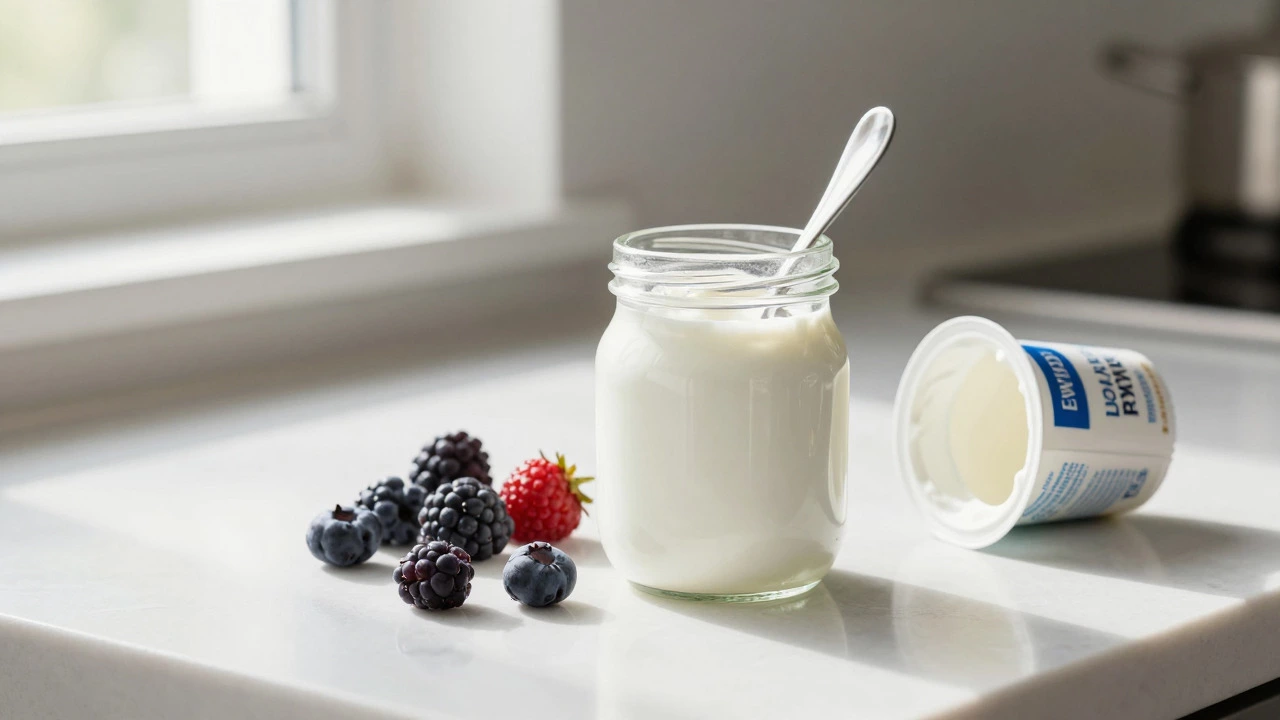
For decades, we were told that fat makes you fat. In response, dairy companies stripped fat from yogurt and replaced it with sugar to maintain palatability. Low-fat yogurt is a product where reduced fat content is compensated by increased added sugars to preserve taste and texture. A cup of nonfat flavored yogurt can contain over 30 grams of sugar, whereas full-fat Greek yogurt with no added sugar has only the natural lactose present in milk.
Fat is satiating. It signals to your brain that you are full. When you remove fat and replace it with carbs (sugar), you lose that satiety signal. You end up eating more calories overall because you feel hungry again sooner. Plus, recent research suggests that moderate intake of saturated fats from dairy does not carry the same cardiovascular risks previously feared, especially when paired with probiotics.
What to do instead: Choose plain, full-fat Greek yogurt. It has double the protein of regular yogurt, which aids muscle repair and keeps you full. Sweeten it yourself with a teaspoon of honey or mashed banana. You control the sugar level, and you get the creamy texture without the artificial additives.
Energy Drinks and Protein Shakes: Convenience vs. Content
Fitness culture has normalized the daily consumption of bottled protein shakes and energy drinks. They promise muscle recovery and sustained focus. While some quality products exist, the market is flooded with options loaded with artificial sweeteners, preservatives, and excessive caffeine. Many "fitness" drinks contain aspartame or sucralose, which may disrupt gut bacteria and increase cravings for sweet foods later in the day.
Protein powders themselves are fine, but pre-mixed shakes often add maltodextrin-a cheap filler that spikes blood sugar. Energy drinks frequently combine high caffeine doses with taurine and B-vitamins, creating a jittery high followed by a crash. Relying on these beverages can mask poor sleep habits and inadequate whole-food nutrition. Your body synthesizes protein best from real food sources like eggs, chicken, or lentils, which come packaged with essential micronutrients that powders cannot replicate.
What to do instead: Brew green tea for a gentle caffeine boost with antioxidants. For protein, opt for a post-workout snack like hard-boiled eggs or a turkey wrap. If you need a shake, buy plain whey or plant-based powder and blend it with spinach and frozen fruit. It tastes better and costs less per serving.
Comparison: Healthy Claims vs. Reality
| Food Item | Marketing Claim | Hidden Issue | Better Alternative |
|---|---|---|---|
| Fruit Juice | Vitamin-rich, natural | No fiber, high sugar spike | Whole fruit or smoothies with pulp |
| Dried Fruit | Natural snack, no preservatives | Calorie-dense, easy to overeat | Fresh berries or measured portions |
| Granola Bars | Whole grains, convenient | High added sugar, processed | Homemade overnight oats |
| Low-Fat Yogurt | Light, low-calorie | Added sugar, low satiety | Plain full-fat Greek yogurt |
| Flavored Water | Zero calories, refreshing | Artificial sweeteners, cravings | Infused water with herbs/citrus |
Reading Labels Like a Pro
The best defense against unhealthiest healthy foods is literacy. Manufacturers know consumers scan for keywords like "organic," "gluten-free," or "non-GMO." These terms describe production methods, not nutritional value. An organic cookie is still a cookie. A gluten-free cracker can be made entirely of refined white flour and salt.
Focus on two things: the ingredient list length and the order of ingredients. Ingredients are listed by weight. If sugar, honey, or syrup appears in the top three, put it back. Look for recognizable whole foods. If you wouldn’t find it in a kitchen pantry (like "modified food starch" or "natural flavors"), question its necessity. Also, check the serving size. Many packages contain two or three servings, meaning you double or triple the sugar and calorie count if you eat the whole container.
Remember, "healthy" is subjective. For an athlete, a sugary sports drink might be appropriate during endurance training. For someone managing diabetes, it’s dangerous. Context matters. But for the average person seeking general wellness, whole, minimally processed foods remain the gold standard. Stop trusting the front of the package. Read the back. Your body will thank you.
Is fruit juice really as bad as soda?
In terms of sugar content and lack of fiber, yes. While juice contains vitamins, the absence of fiber means the sugar hits your bloodstream rapidly, similar to soda. Whole fruit provides fiber that slows absorption and promotes satiety, making it a far superior choice for metabolic health.
Are granola bars a good pre-workout snack?
Many commercial granola bars are too high in sugar and fat for a pre-workout snack, potentially causing digestive distress. A better option is a banana or a slice of toast with a thin layer of jam. These provide quick-digesting carbs without the heavy processing and excess sugar found in most bars.
Why is full-fat yogurt healthier than low-fat?
Full-fat yogurt is more satiating due to its fat content, helping you eat less overall. Low-fat versions often replace fat with sugar to maintain taste, leading to higher calorie intake and blood sugar spikes. Full-fat dairy also retains more fat-soluble vitamins like A and D.
Can I eat dried fruit if I'm watching my weight?
Yes, but in strict moderation. Because water is removed, dried fruit is calorie-dense. One cup of dried cranberries has nearly four times the calories of fresh cranberries. Measure out a small portion (1/4 cup) and pair it with nuts to slow sugar absorption and increase fullness.
What should I look for on food labels to avoid hidden sugars?
Check the ingredient list for words ending in "-ose" (sucrose, fructose, dextrose) and syrups (corn, rice, agave). Also, watch for "natural flavors" and "fruit juice concentrate," which can indicate added sugars. If sugar is in the top three ingredients, the product is likely high in added sweeteners.

Recent Posts
-
 Mayonnaise and Keto: Carb Count, Net Carbs, and Low‑Carb Recipes October 25, 2025
 -
 Does Oatmeal Have Gluten? The Truth About Gluten-Free Oats March 23, 2026