Weekly Food Budget Calculator
Budget Meal Planner
Calculate your weekly food budget using the same principles from the article. Based on Wellington prices for staples.
Your Weekly Budget
Based on Wellington prices and 4-person family. Using rice, lentils, eggs, and potatoes as main staples.
You can save $10+ by avoiding processed foods and using leftovers.
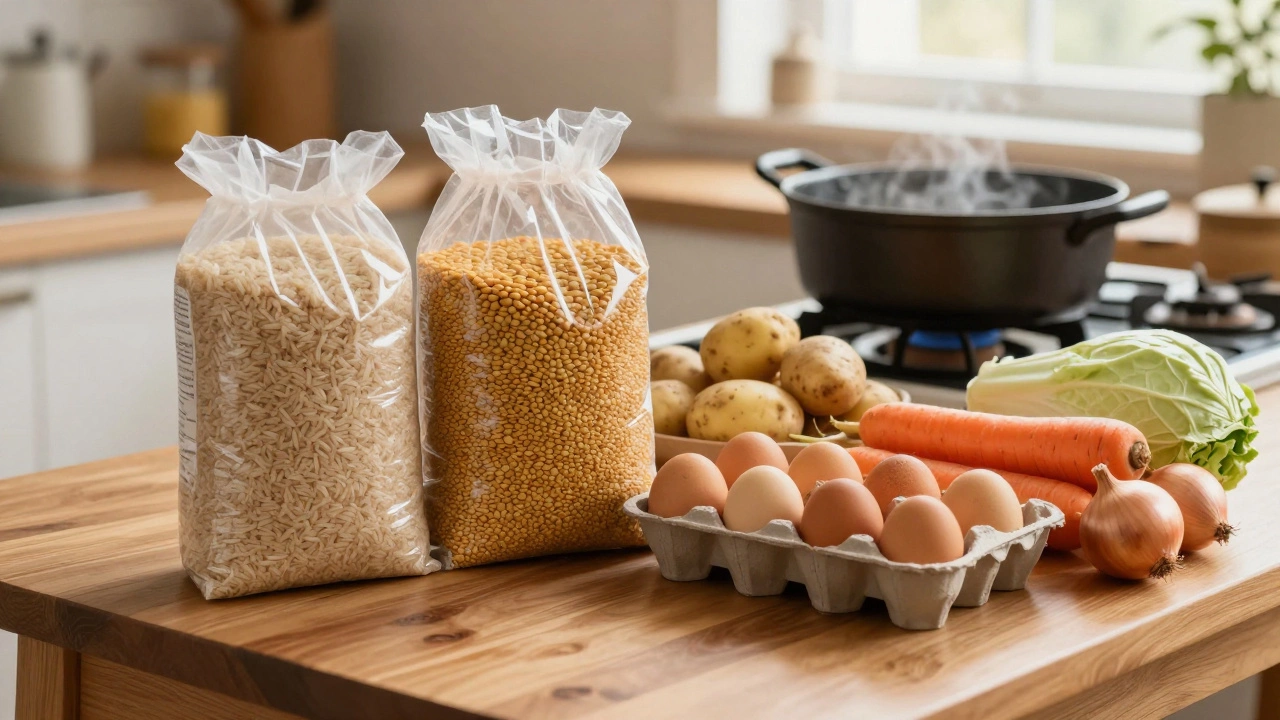
Feeding a family on $40 a week sounds impossible-until you’ve done it. In Wellington, a bag of rice costs $2.50. A kilo of lentils is under $3. Eggs? Around $4 for a dozen. You don’t need fancy ingredients or organic labels to eat well. You just need to know what to buy, what to skip, and how to stretch every dollar.
Start with the basics: grains, legumes, and eggs
The foundation of any cheap, filling meal is simple: rice, pasta, oats, lentils, beans, and eggs. These aren’t just cheap-they’re nutrient-dense and last for months. A 2kg bag of brown rice lasts a family of four for nearly two weeks. A kilo of dried lentils makes 10+ meals. And eggs? One egg gives you 6 grams of protein for about 30 cents. That’s cheaper than any processed meat.
Buy in bulk where you can. Check the discount bins at your local supermarket. Look for ‘reduced for quick sale’ labels-those are often still perfectly good for 3-5 days. Stock up on rice, oats, and dried beans when they’re on sale. Keep them in sealed containers. They won’t go bad. And they’ll save you money every time you avoid buying pre-packaged meals.
Plan meals around what’s on sale, not what’s trendy
Stop buying meals based on Instagram recipes. Start buying meals based on what’s cheapest this week. Head to the store with a blank sheet of paper. Write down what’s on sale: chicken thighs? Carrots? Cabbage? Potatoes? Then build meals around those.
Here’s how a real $40 week looks in Wellington:
- 2kg brown rice - $2.50
- 1kg dried lentils - $2.80
- 1kg dried beans - $2.50
- 12 eggs - $4.00
- 5kg potatoes - $4.50
- 1kg carrots - $1.80
- 1kg onions - $1.50
- 1 large cabbage - $1.20
- 2kg chicken thighs (on sale) - $8.00
- 1L cooking oil - $3.50
- Spices (salt, pepper, paprika) - $3.00 (lasts months)
- Loaf of wholemeal bread - $2.50
- 1kg pasta - $1.80
Total: $39.10
That’s not a fantasy. That’s what a family ate last week. No snacks. No juice boxes. No fancy cheese. But they ate three meals a day, every day. And they weren’t hungry.
Turn one cheap ingredient into five meals
Don’t think of each ingredient as a single dish. Think of it as a building block.
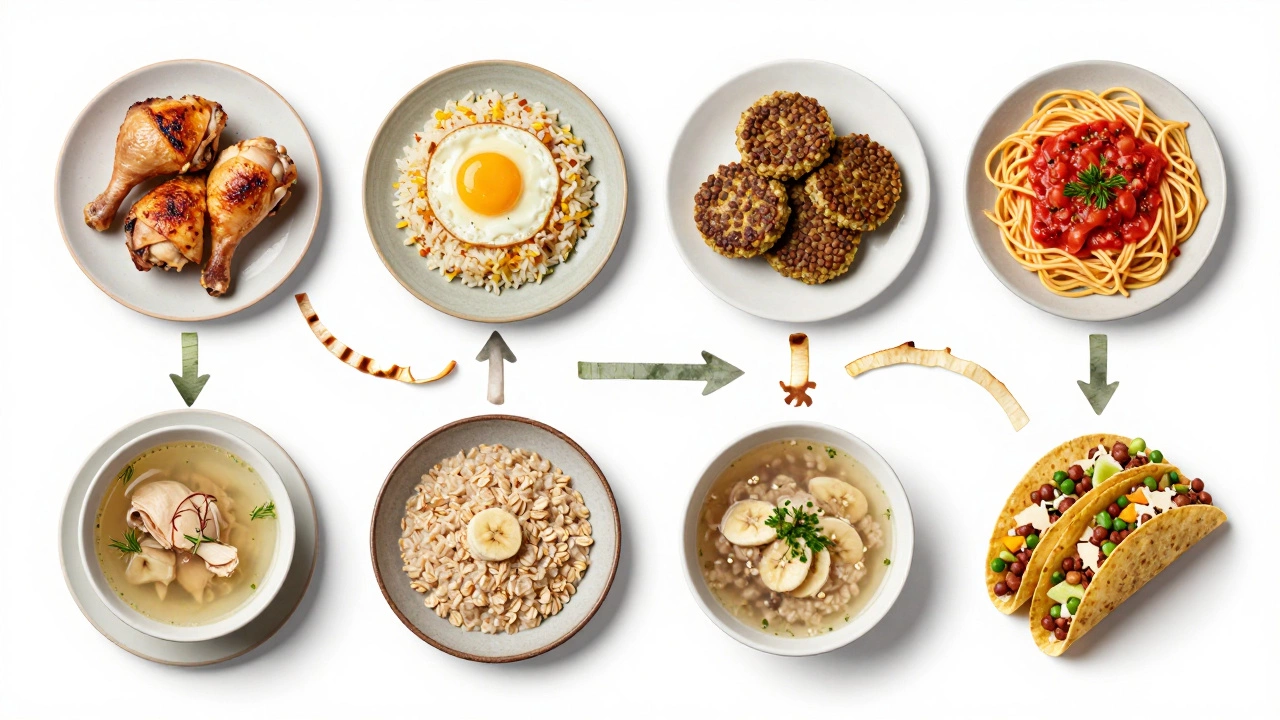
Chicken thighs? Cook a whole kilo on Sunday. Eat half as roasted chicken with potatoes. Use the rest in a stew with lentils and cabbage. Shred the leftovers into a pasta sauce with tomato paste and onions. Make a soup with the bones the next day. And if there’s any left? Mix it into fried rice with rice and carrots.
Lentils? Make a big pot on Monday. Eat it with rice on Tuesday. Turn it into patties with mashed potato on Wednesday. Add it to a veggie stir-fry on Thursday. Use it as a filling for wraps on Friday.
That’s five meals from one $2.80 bag. And you didn’t buy a single pre-made product.
Stop buying pre-packaged and processed food
That $4 packet of instant noodles? It’s 80% salt and filler. You could buy 200g of dried noodles for $1.20 and make the same dish with added veggies and an egg for less than $1.50 per serving.
That $5 tub of yogurt? Buy a litre of milk for $3.50 and make your own yogurt in a thermos. It lasts two weeks. That’s 14 servings for $3.50. Not $5 for one.
That $6 jar of pasta sauce? Tomato paste ($1.50 for 400g), garlic, onion, and a pinch of sugar cost less than $1. You don’t need labels. You need a pot and 15 minutes.
Processed food isn’t just expensive. It’s designed to make you keep buying more. Real food keeps you full longer and costs less per calorie.
Use every scrap
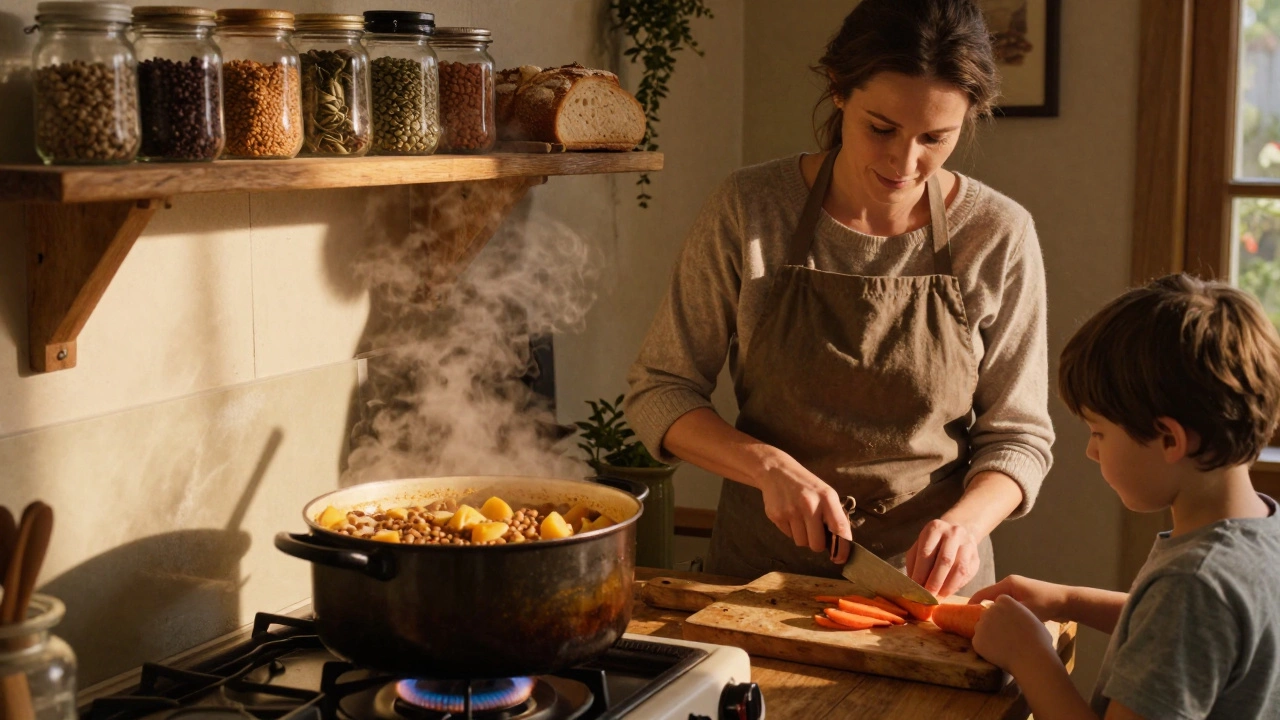
Don’t throw away vegetable peels. Boil them with chicken bones to make stock. Save onion skins, carrot tops, celery ends. Simmer them for an hour. Strain. Freeze. You’ve just made broth for $0.10 a litre.
Stale bread? Turn it into croutons with a little oil and paprika. Or make breadcrumbs to coat chicken or mix into meatballs.
Wilting greens? Blend them into a soup. Overripe bananas? Mash them into oatmeal or bake them into muffins with a bit of flour and egg.
Nothing is waste. Everything is fuel.
Meal plan for the week-no exceptions
Don’t wing it. Write down what you’ll eat each day. Include breakfast, lunch, and dinner. Then shop once. Stick to the list.
Here’s a sample plan using the $40 list:
- Monday: Lentil and potato stew with bread
- Tuesday: Fried rice with eggs, carrots, and cabbage
- Wednesday: Bean and onion tacos on tortillas (make your own with flour and water)
- Thursday: Pasta with tomato sauce made from paste, garlic, and onion
- Friday: Roasted chicken thighs with boiled potatoes and steamed cabbage
- Saturday: Oatmeal with banana and a boiled egg
- Sunday: Chicken and lentil soup made from Sunday’s leftovers
That’s seven days. No repeats. No waste. No extra spending.
What to avoid at all costs
These items eat your budget alive:
- Pre-cut vegetables
- Flavoured yogurts
- Single-serve snack packs
- Ready meals (frozen or refrigerated)
- Soft drinks and juice boxes
- Brand-name cereals
They’re not worth the price. You’re paying for packaging, marketing, and convenience-not nutrition. Buy whole ingredients. Do the prep yourself. You’ll save 60-80%.
It’s not about deprivation. It’s about smart choices.
This isn’t eating like a student on ramen. This is eating like someone who knows how food works. You don’t need organic kale or quinoa to be healthy. You need calories, protein, fibre, and vitamins. You get all of that from rice, beans, eggs, potatoes, and cabbage.
People think cheap food means boring food. But a pot of lentils with cumin, garlic, and a squeeze of lemon is better than most takeaways. A chicken stew with onions, carrots, and potatoes tastes like comfort. It’s not fancy. But it’s real. And it fills you up.
After three weeks of eating this way, one mum in Hataitai told me: "I didn’t know we could feel this full and still have money left for bus fares."
That’s the point.
Can you really feed a family of four on $40 a week?
Yes, but it requires planning and avoiding processed foods. Focus on bulk grains, legumes, eggs, and seasonal vegetables. A family of four can eat three meals a day for $40 by cooking from scratch, using leftovers, and skipping snacks and drinks. It’s not easy, but it’s doable.
What are the best cheap proteins for families?
Dried beans, lentils, eggs, chicken thighs, and canned tuna are the top choices. Chicken thighs cost less than breast meat and have more flavour. Eggs give you protein and fat for under 30 cents each. Lentils and beans are the cheapest complete proteins-just soak and cook. Avoid pre-packaged meat products-they’re inflated in price.
How do I make meals taste good without spending more?
Spices make all the difference. Buy paprika, cumin, garlic powder, onion powder, and black pepper in bulk-they last years. A pinch of smoked paprika turns boiled potatoes into something special. A splash of vinegar brightens lentils. Lemon juice adds freshness to any dish. You don’t need expensive sauces. You need salt, heat, and acid.
What if I don’t have time to cook every day?
Cook once, eat three times. Make a big pot of beans or stew on Sunday. Freeze half. Use the rest for meals all week. Roast a whole chicken on Saturday and use the leftovers for sandwiches, soups, or fried rice. Leftovers aren’t a last resort-they’re the backbone of budget cooking.
Is it healthier to eat this way?
Absolutely. Processed foods are loaded with sugar, salt, and preservatives. Eating rice, beans, eggs, and vegetables means you’re getting fibre, protein, and natural nutrients without additives. Families who eat this way often report fewer stomach issues, more energy, and better sleep. It’s not a diet. It’s real food.

Recent Posts
-
 What Is the Healthiest Lunch Ever? The Science-Backed Answer February 19, 2026
 -
 Healthy Lunch Alternatives to Chips: Delicious and Easy Ideas January 28, 2025
 -
 Easy Lunch Packing: Quick Ideas for Stress‑Free Meals October 15, 2025
 -
 Gentle Foods for a Sensitive Stomach: Quick Lunch Ideas September 14, 2026
 -
 What Not to Ask a Vegan: Avoiding Awkward Questions April 14, 2025