Vegan Weight Loss Planner
Enter your details below to estimate the daily calorie deficit and protein intake needed to lose 20 pounds sustainably.
Vegan Food Suggestions
- Breakfast: Overnight oats with hemp seeds (adds ~10g protein) or tofu scramble.
- Lunch: Lentil soup or chickpea salad wrap (high fiber/protein combo).
- Dinner: Stir-fry with tempeh or edamame over quinoa.
- Snack: Apple slices with almond butter or roasted chickpeas.
Losing 20 pounds sounds like a mountain until you realize it’s just a series of small, manageable steps. You might think going vegan automatically melts fat, but here’s the truth: Oreos are vegan. So is heavy cream (if you swap in coconut milk). If you replace your chicken salad with fried jackfruit tacos and sugary oat milk lattes, you won’t lose a gram. In fact, you might gain weight.
But when done right, a vegan diet is one of the most effective tools for shedding pounds. It works because whole plant foods are naturally high in fiber and water but low in calories. This combination keeps you full while creating the energy gap needed to drop those 20 pounds. The key isn't restriction; it's volume. You get to eat more food, not less. Let’s break down exactly how to make this work without feeling starved or missing out.
The Math Behind the Weight Loss
Before you buy a single bag of kale, you need to understand the mechanics. Weight loss comes down to a calorie deficit. To lose one pound of body fat, you need to burn roughly 3,500 calories more than you consume. For 20 pounds, that’s a total deficit of 70,000 calories.
If you want to lose this weight in a healthy timeframe-say, four to five months-you need a daily deficit of about 400 to 500 calories. That doesn’t mean running a marathon every day. It means adjusting your intake slightly. Most adults need between 1,800 and 2,200 calories to maintain their current weight. By aiming for 1,500 to 1,800 calories from nutrient-dense plant sources, you hit that target effortlessly.
Why does veganism help here? Because plant-based meals have a lower caloric density. A cup of cooked quinoa has about 220 calories. A cup of white rice has similar calories but lacks the protein punch. Add black beans, veggies, and salsa, and you can fill a large bowl with under 400 calories. Try doing that with cheese pasta.
Stop Eating "Junk Food Vegan"
This is where most people fail. They assume if it’s plant-based, it’s healthy. Not true. Highly processed vegan foods often pack hidden sugars and fats. Think beyond the obvious meat substitutes. Many store-bought vegan burgers use pea protein isolate and coconut oil, which can be higher in saturated fat than lean beef.
You don’t need to ban these entirely, but treat them as occasional treats, not staples. Focus instead on whole foods. These are ingredients that look close to how they grew in the ground. Broccoli, lentils, sweet potatoes, tofu, and berries fall into this category. They provide satiety signals that processed foods miss. Your brain registers fullness differently when you chew through fibrous vegetables compared to drinking a smoothie loaded with nut butter and agave.
A simple rule of thumb: If it comes in a box with an ingredient list longer than your arm, read it twice. Look for added sugars listed as cane juice, maltodextrin, or dextrose. Also, watch out for sodium. High salt intake causes water retention, which masks fat loss on the scale and makes you feel bloated.
Protein Is Your Secret Weapon
You’ve heard the myth: "Where do you get your protein?" Here’s the reality: Protein preserves muscle mass during weight loss. Muscle burns more calories at rest than fat does. If you cut calories too aggressively without enough protein, your body breaks down muscle for fuel. Your metabolism slows down, making future weight loss harder.
On a vegan diet, hitting protein targets requires planning. Aim for 0.7 to 1 gram of protein per pound of goal weight. If you’re aiming for 150 pounds, try for 105-150 grams daily. Don’t panic. It’s easier than it looks once you know your sources.
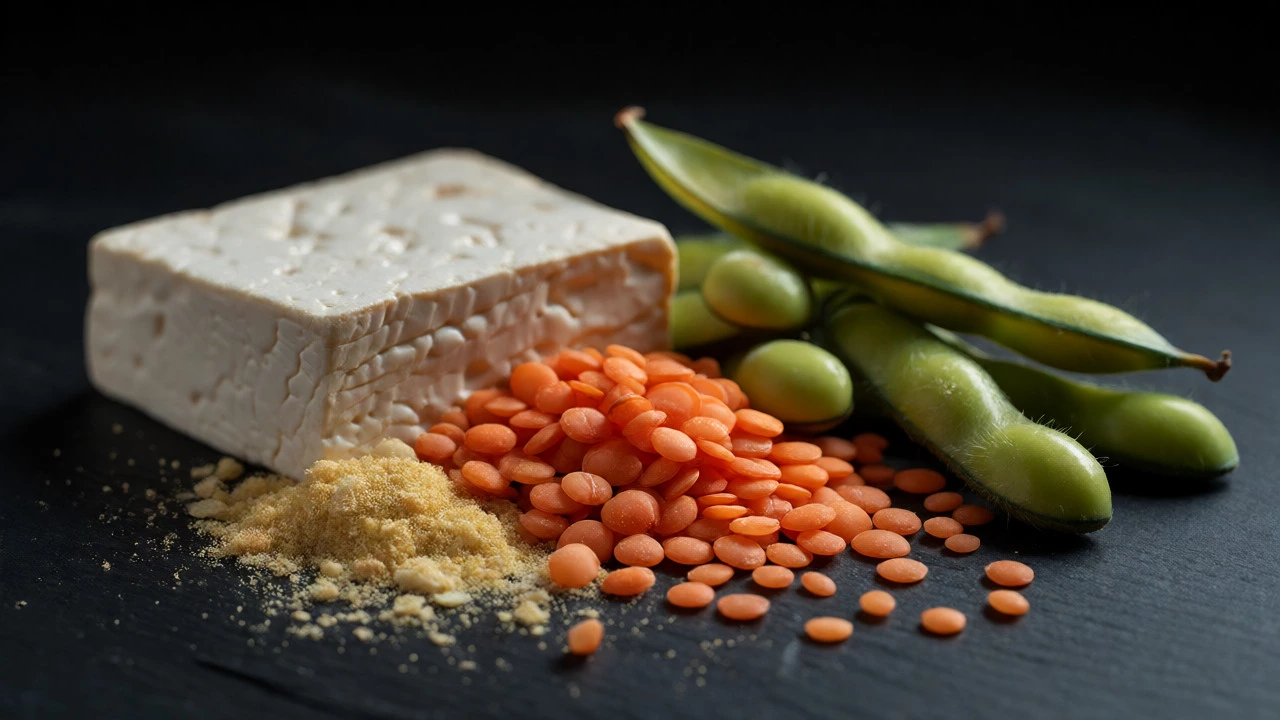
- Tofu and Tempeh: 100g of firm tofu offers about 8-10g of protein. Tempeh is denser, offering 19g per 100g.
- Lentils and Beans: One cup of cooked lentils provides 18g of protein plus 15g of fiber.
- Seitan: Made from wheat gluten, this is a protein powerhouse with 25g per 100g serving.
- Nutritional Yeast: Two tablespoons add 4-5g of complete protein and a cheesy flavor.
- Hemp Seeds: Three tablespoons give 10g of protein and healthy omega-3 fats.
Distribute this protein across all three meals. Breakfast isn’t just fruit and oats. Add hemp seeds to your overnight oats or blend silken tofu into a chocolate pudding. Lunch could be a chickpea salad wrap. Dinner needs a solid anchor, like a stir-fry with edamame or a lentil bolognese over zucchini noodles.
| Food Item | Serving Size | Calories | Protein (g) | Fiber (g) |
|---|---|---|---|---|
| Lentils (cooked) | 1 cup | 230 | 18 | 15 |
| Firm Tofu | 100g | 144 | 17 | 2 |
| Tempeh | 100g | 192 | 19 | 6 |
| Chickpeas (cooked) | 1 cup | 269 | 15 | 12 |
| Edamame (shelled) | 1 cup | 189 | 17 | 8 |
| Quinoa (cooked) | 1 cup | 222 | 8 | 5 |
Mastering Meal Prep Without Boredom
Willpower is a finite resource. If you rely on deciding what to eat every time hunger strikes, you’ll eventually grab the easiest option-usually takeout or snacks. Meal prep solves this. But nobody wants to eat the same sad salad for five days straight.
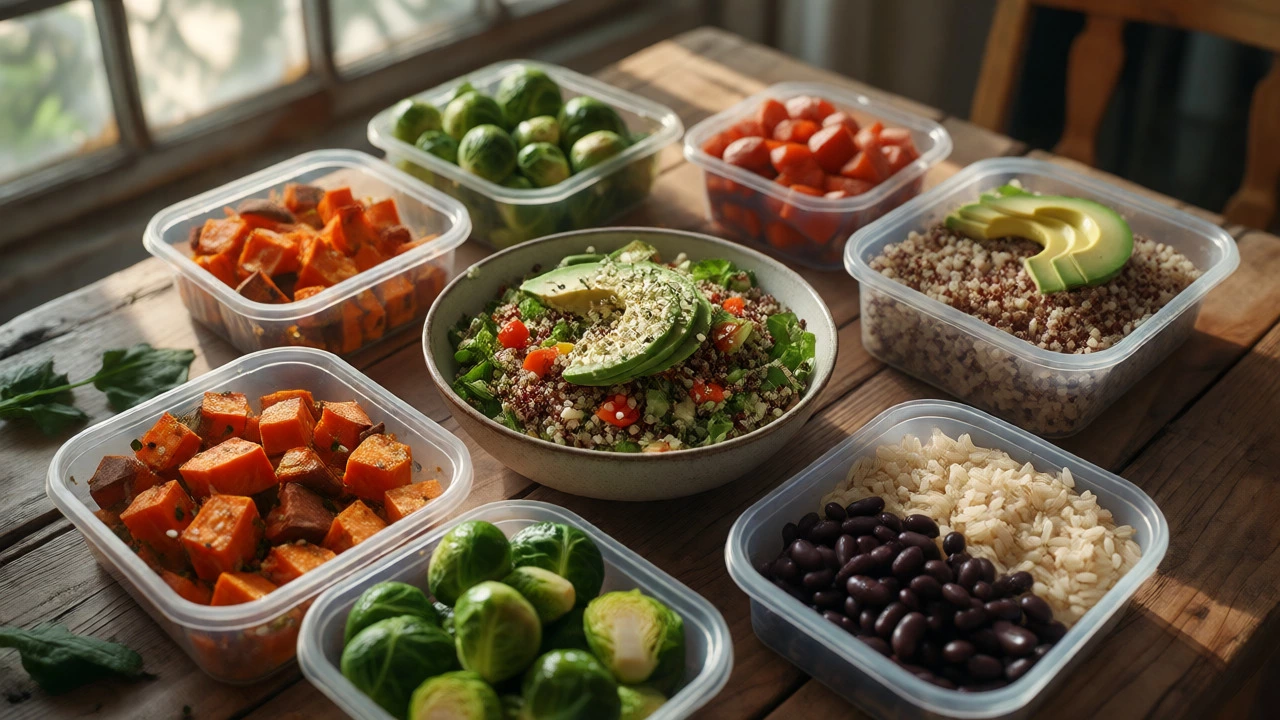
Try the "Component Prep" method. Instead of cooking full meals, prepare bulk ingredients. Roast two trays of mixed vegetables (sweet potatoes, Brussels sprouts, bell peppers) with minimal oil. Cook a big pot of brown rice or farro. Make a batch of black beans and a jar of tahini-lemon dressing. Mix and match these components throughout the week so no two meals taste identical.
For example: * **Monday:** Rice bowl with roasted veg, black beans, and tahini drizzle. * **Tuesday:** Leftover veg and beans wrapped in a lettuce leaf with hummus. * **Wednesday:** Farro salad with roasted pumpkin seeds and fresh herbs. * **Thursday:** Stir-fried tofu with leftover roasted peppers and broccoli.
This approach saves time and keeps your palate interested. Keep a few "emergency" options in the pantry, like canned tuna-style chickpeas or instant miso soup packets, for days when prep fails.
Hydration and Fiber: The Satiety Duo
Thirst often masquerades as hunger. Before reaching for a snack, drink a large glass of water. Wait ten minutes. Often, the craving passes. Proper hydration also helps your kidneys function efficiently, preventing fluid retention that can stall weight loss progress.
Fiber is the other half of the equation. Plant-based diets are rich in soluble and insoluble fiber. Soluble fiber forms a gel in your stomach, slowing digestion and keeping blood sugar stable. Insoluble fiber adds bulk to stool and speeds up waste elimination. Both types contribute to feeling physically full.
Aim for 25-30 grams of fiber daily. Most Americans only get half that. Boost your intake by eating the skins on apples and pears, choosing whole grains over refined ones, and adding chia or flaxseeds to smoothies. Be careful though: increasing fiber too quickly can cause gas and bloating. Ramp up gradually over two weeks and drink plenty of water to keep things moving.

Navigating Social Situations and Dining Out
Diet changes often clash with social lives. You don’t need to announce your new regimen to everyone, but having a plan helps. When dining out, check menus online beforehand. Look for keywords like "grilled," "steamed," "salad," or "stir-fry." Ask for sauces on the side. Many restaurants will happily swap fries for steamed greens or modify a pasta dish to remove cheese.
At parties, avoid arriving hungry. Eat a small, protein-rich snack before leaving, like an apple with almond butter or a handful of almonds. This prevents overeating later. If alcohol is involved, stick to spirits with soda water or dry wine. Mixed drinks and beers contain significant empty calories that derail a calorie deficit fast.
Remember, consistency matters more than perfection. If you indulge in a slice of vegan cake at a birthday party, enjoy it fully. Then return to your plan at the next meal. Guilt leads to stress, and stress raises cortisol, which encourages fat storage around the midsection. Keep it light.
Tracking Progress Beyond the Scale
Weighing yourself daily can be misleading. Water weight fluctuates based on sodium intake, menstrual cycles, and carbohydrate consumption. You might step on the scale after a salty dinner and see a jump of two pounds, even if you burned fat.
Instead, track non-scale victories. How do your clothes fit? Do you have more energy in the afternoon? Are your skin and hair looking better? Take measurements of your waist and hips every two weeks. Photos are powerful too. Take a front, side, and back shot monthly under the same lighting. You’ll often see visible changes before the number drops significantly.
If the scale stalls for more than two weeks, reassess your portion sizes. Use a food scale for a few days to ensure you aren’t accidentally overeating calorie-dense foods like nuts, avocados, or oils. Sometimes, reducing oil usage from one tablespoon to one teaspoon per meal saves 80 calories instantly.
Can I lose weight on a vegan diet if I eat a lot of fruit?
Yes, but moderation is key. Fruit contains natural sugars (fructose). While it’s healthier than candy, eating excessive amounts can spike insulin and add up in calories. Stick to 2-3 servings of whole fruit per day, prioritizing berries and melons which are lower in sugar and higher in water content. Avoid fruit juices, which lack fiber and concentrate sugar.
Do I need to take supplements to lose weight on a vegan diet?
Supplements don’t directly cause weight loss, but deficiencies can hinder progress. Vitamin B12 is essential for vegans to prevent fatigue, which can reduce activity levels. Vitamin D supports metabolic health. Iron deficiency can lead to lethargy. Consider a multivitamin designed for vegans, but focus primarily on getting nutrients from whole foods like fortified plant milks, nutritional yeast, and dark leafy greens.
How long does it realistically take to lose 20 pounds on a vegan diet?
With a consistent calorie deficit of 500 calories per day, you can expect to lose 1-2 pounds per week. Therefore, losing 20 pounds typically takes 10 to 20 weeks, or roughly 2.5 to 5 months. Initial rapid loss in the first week is often water weight due to reduced glycogen stores from cutting processed carbs. Sustainable fat loss follows a steadier pace.
Is intermittent fasting compatible with a vegan weight loss plan?
Absolutely. Intermittent fasting (like the 16:8 method) can help control overall calorie intake by restricting your eating window. Since plant-based meals are often lighter, skipping breakfast might be easier for some. However, ensure you still meet your protein and micronutrient needs within the shorter eating period. Listen to your body; if you feel dizzy or weak, extend your window.
What are the best vegan snacks for weight loss?
Choose snacks that combine protein, fiber, and volume. Examples include carrot sticks with hummus, an apple with a tablespoon of peanut butter, air-popped popcorn, roasted chickpeas, or a small container of unsweetened soy yogurt. Avoid pre-packaged "vegan" chips or crackers, which are often calorie-dense and low in satiety value.

Recent Posts
-
 What Happens If You Don't Rinse Baking Soda Off Meat? January 11, 2026
 -
 What Is a Diabetic Dessert? A Practical Guide to Sweet Treats August 31, 2026