Gluten-Free Pizza Safety Checker
Check if your pizza is safe for gluten intolerance by analyzing ingredients and preparation methods. Many ingredients may contain hidden gluten.
Most people assume pizza is just bread, cheese, and sauce-but if you’re avoiding gluten, that assumption can get you into trouble. The short answer? Traditional pizza almost always has gluten. It’s in the crust. And unless you’re specifically looking for a gluten-free version, you’re eating wheat flour without realizing it.
Why Gluten Is in Pizza Crust
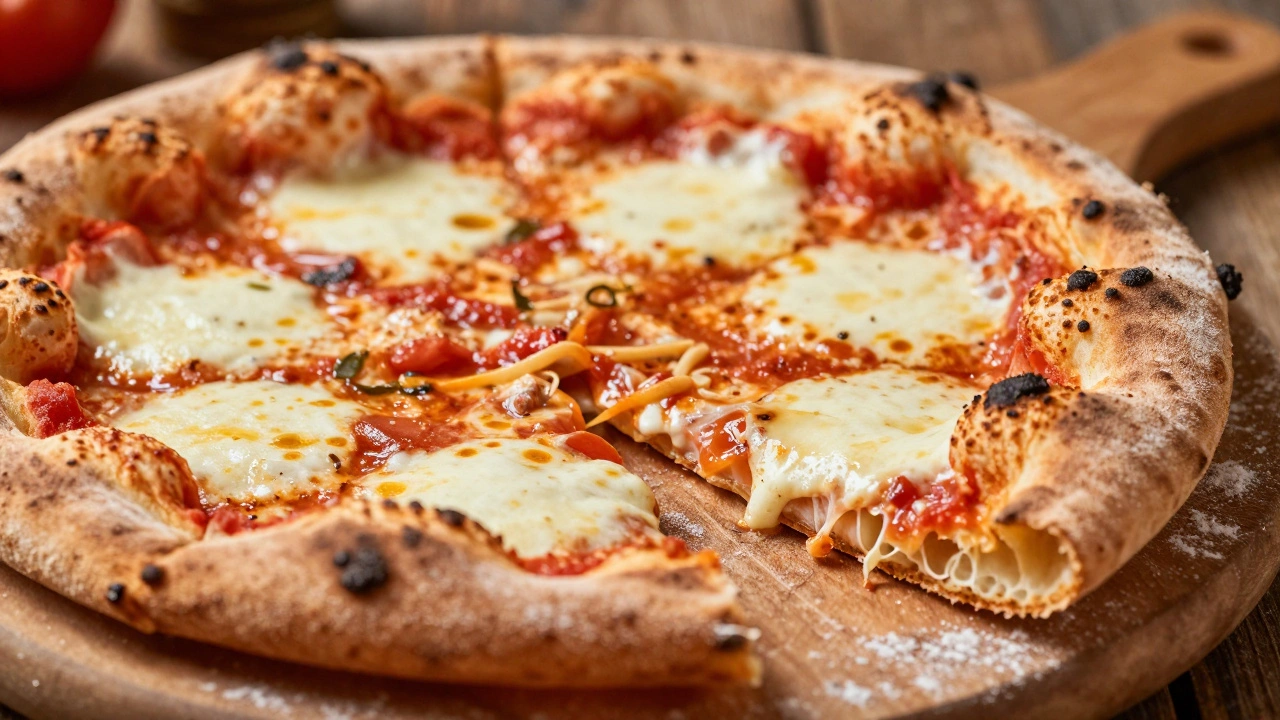
Pizza crust isn’t just dough-it’s a specific kind of dough designed to stretch, rise, and hold toppings without falling apart. That structure comes from gluten, a protein found in wheat, barley, and rye. When flour mixes with water and kneaded, gluten forms elastic strands that trap air bubbles during rising. That’s what gives you that chewy, airy crust you love.Most commercial and restaurant pizzas use all-purpose or bread flour, both made from wheat. Even thin-crust or New York-style pies rely on gluten for structure. Without it, the crust turns brittle, crumbly, or soggy. That’s why gluten isn’t just an ingredient-it’s a functional necessity in traditional pizza making.
What About Gluten-Free Pizza?
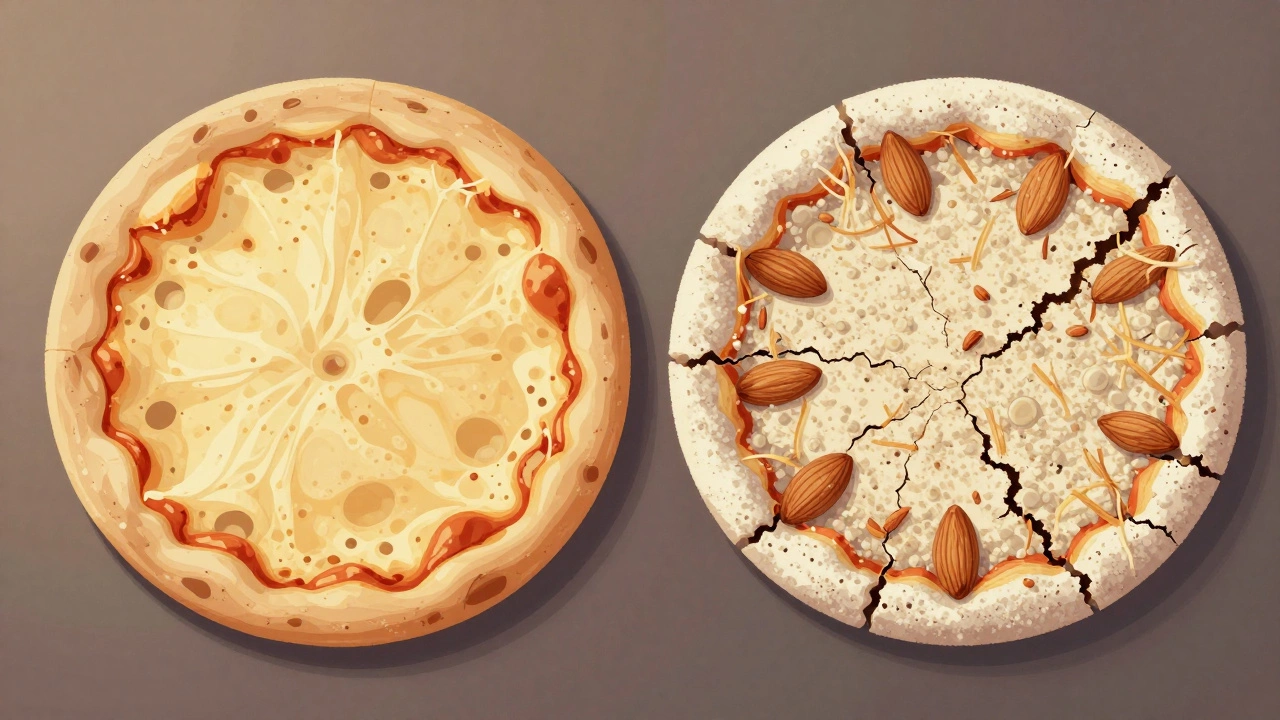
Yes, gluten-free pizza exists. But it’s not just wheat flour swapped out for rice flour. Gluten-free crusts use blends of alternative flours like almond, tapioca, potato, sorghum, or chickpea flour. These lack gluten’s elasticity, so manufacturers add binders like xanthan gum or psyllium husk to mimic stretch and hold.Not all gluten-free crusts are created equal. Some are dense and gritty. Others are too fragile to hold sauce. The best ones, like those from brands like Udi’s or CAULIPOWER, use precise ratios and fermentation techniques to get closer to the real thing. Even then, texture and flavor differ. You won’t get the same chew. But you can still enjoy pizza without triggering celiac symptoms or gluten sensitivity.
Hidden Sources of Gluten in Pizza
It’s not just the crust. Gluten hides in unexpected places on a pizza:- Sauces: Some pre-made tomato sauces include modified food starch or malt vinegar, both derived from wheat.
- Cheese: Shredded cheese often has anti-caking agents like wheat starch. Always check labels-even if it says "natural cheese," additives can sneak in.
- Toppings: Processed meats like pepperoni or sausage sometimes contain wheat filler. Deli-style ham and bacon can be glazed with soy sauce (which contains wheat).
- Seasonings: Garlic powder, Italian seasoning, and even salt blends may contain wheat flour as a flow agent.
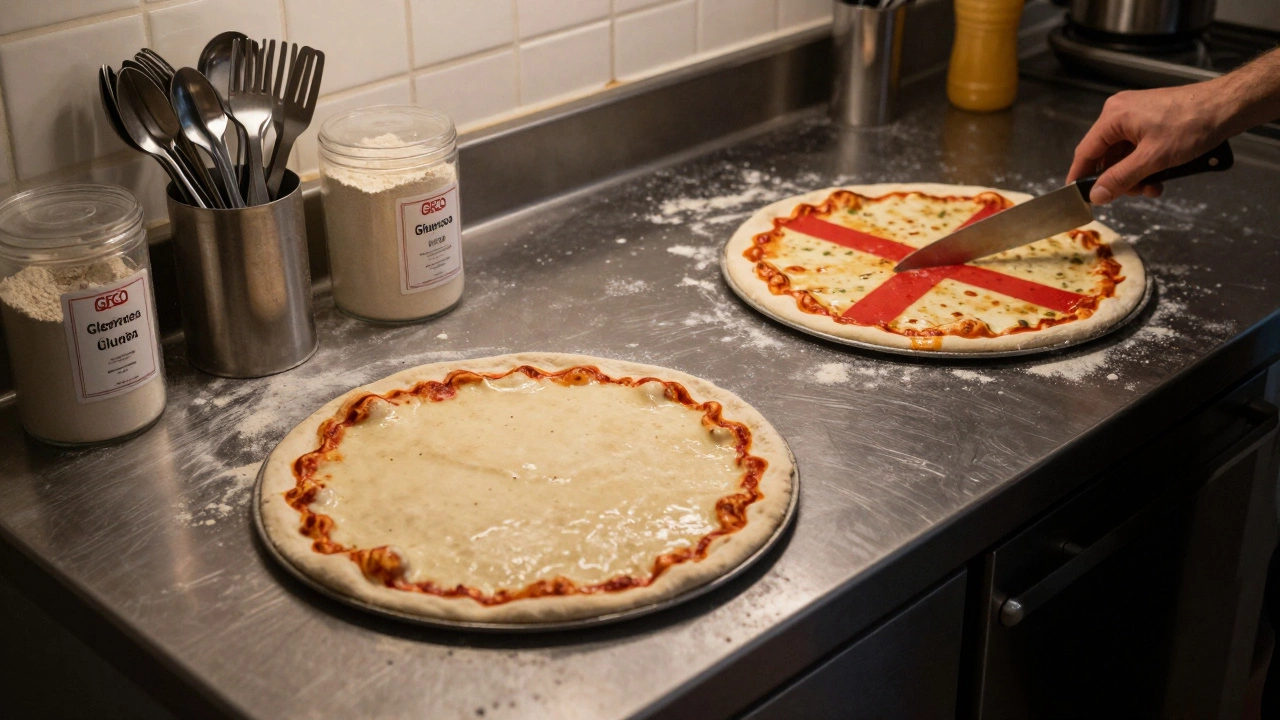
- Cross-contamination: This is the biggest risk in restaurants. If a pizza is baked on the same stone as a regular one, or cut with the same knife, gluten particles can transfer-even if the crust is gluten-free.
A 2023 study by the Celiac Disease Foundation tested 120 gluten-free pizzas from grocery stores and pizzerias. Nearly 30% had detectable gluten levels above the 20 ppm safety threshold for celiac-safe labeling. That’s why buying certified gluten-free pizza matters-not just "gluten-free" on the label.
How to Spot Real Gluten-Free Pizza
Not every pizzeria that says "we have gluten-free options" is safe. Look for these signs:- Certified gluten-free label: The logo from GFCO (Gluten-Free Certification Organization) or NSF International means independent testing.
- Separate prep area: A dedicated gluten-free station with separate utensils, cutting boards, and ovens.
- Staff training: Staff who understand cross-contact risks won’t use the same gloves to handle regular and gluten-free dough.
- Ingredient transparency: They list all ingredients, including sauces and seasonings.
If you’re ordering delivery or eating out, call ahead. Ask: "Do you use a separate oven for gluten-free pizzas?" and "Can I see the ingredients list for the crust?" Most places won’t know-but the ones that do are worth your business.
Can You Make Gluten-Free Pizza at Home?
Absolutely-and it’s easier than you think. You don’t need fancy equipment. Just a mixing bowl, a baking sheet, and a few pantry staples.Here’s a simple rule: use a 1:1 gluten-free flour blend designed for baking. Brands like Bob’s Red Mill 1-to-1 or King Arthur Gluten-Free Measure for Measure work well. Add:
- 1 cup gluten-free flour blend
- 1 tsp xanthan gum (if not already in the blend)
- 1 tsp yeast
- 1/2 tsp salt
- 3/4 cup warm water
- 1 tbsp olive oil
Mix, let rest for 30 minutes, then press into a greased pan. Bake at 425°F (220°C) for 12-15 minutes before adding toppings. Finish with another 8-10 minutes. The crust won’t puff like wheat dough-but it browns nicely and holds up under sauce and cheese.
For better texture, try a pre-baked crust from the store, then top it at home. That way, you control the ingredients and avoid cross-contact.
Gluten-Free Pizza vs. Regular Pizza: What’s the Difference?
| Feature | Traditional Pizza | Gluten-Free Pizza |
|---|---|---|
| Main flour | Wheat (all-purpose or bread) | Almond, tapioca, rice, potato, or chickpea |
| Texture | Chewy, elastic, airy | Crisp, dense, sometimes gritty |
| Binding agent | Gluten (naturally occurring) | Xanthan gum, psyllium husk, eggs |
| Prep time | 1-2 hours (rising) | 30 minutes (no rising needed) |
| Cost (per pizza) | $3-$8 | $6-$15 (store-bought) |
| Availability | Everywhere | Specialty stores, certified pizzerias |
Gluten-free pizza costs more and doesn’t replicate the exact experience-but it’s not a compromise. It’s an alternative. And for people with celiac disease or non-celiac gluten sensitivity, it’s not optional. It’s necessary.
What If You Think You’re Sensitive to Gluten?
Many people assume they’re gluten intolerant because they feel bloated after eating pizza. But is it the gluten-or the cheese, the sauce, the toppings, or even the way the pizza is cooked?Before cutting out gluten entirely, get tested. Celiac disease is a genetic autoimmune condition. It can’t be diagnosed with a food diary. A blood test and biopsy are needed. If you skip testing and self-diagnose, you might miss something more serious-like a dairy intolerance or FODMAP sensitivity.
And if you don’t have celiac, going gluten-free won’t necessarily help you lose weight or feel better. Many gluten-free products are higher in sugar and fat to compensate for texture. A 2024 study in the Journal of Nutrition found people on gluten-free diets without medical need gained more weight over 12 months than those eating regular grains.
Final Thoughts
Gluten is in pizza-not because it’s a trick, but because it works. It’s the reason pizza crust holds up, stretches, and tastes the way it does. But gluten-free pizza isn’t a gimmick. It’s a lifeline for millions. And with better ingredients and clearer labeling, it’s getting better every year.If you need to avoid gluten, don’t give up pizza. Just learn how to find-or make-the right kind. Read labels. Ask questions. Test brands. And remember: your health isn’t about perfection. It’s about control.
Does all pizza have gluten?
Almost all traditional pizza has gluten because the crust is made from wheat flour. However, gluten-free pizza exists and uses alternative flours like almond, rice, or chickpea. Always check for certification if you have celiac disease or gluten sensitivity.
Can I eat pizza if I have celiac disease?
Yes-if you choose a certified gluten-free pizza made in a dedicated facility or with strict cross-contamination controls. Most restaurants do not have separate prep areas or ovens, so homemade gluten-free pizza is often the safest option.
Is gluten-free pizza healthier?
Not necessarily. Gluten-free pizza is not inherently healthier. Many store-bought versions are higher in sugar, fat, and sodium to improve texture. For people without gluten intolerance, it offers no health advantage. For those with celiac or gluten sensitivity, it’s a medical necessity, not a diet trend.
What’s the difference between gluten-free and regular pizza crust?
Traditional crust uses wheat flour and develops gluten, giving it chew and structure. Gluten-free crust uses grain-free flours and synthetic binders like xanthan gum to mimic texture. It’s usually denser, less elastic, and doesn’t rise the same way. Flavor and texture vary widely by brand and recipe.
Can I make gluten-free pizza at home easily?
Yes. Use a 1:1 gluten-free flour blend with xanthan gum, yeast, water, and oil. Mix, rest 30 minutes, press into a pan, and bake. It won’t be identical to wheat crust, but it’s simple, affordable, and lets you control ingredients to avoid cross-contamination.

Recent Posts
-
 Tasty Lunch Alternatives to Salads for a Nutritious Midday Meal January 16, 2025
 -
 Common Challenges Vegans Face and How to Overcome Them January 7, 2025
 -
 Discover Why Vegetarians Often Appear More Youthful November 21, 2024