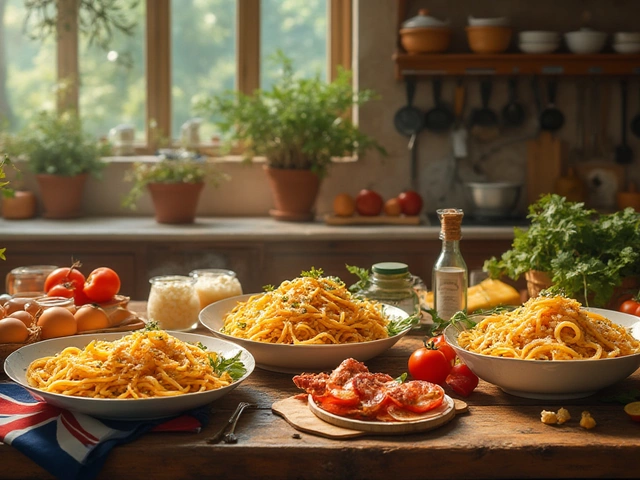
Italian Pasta Identity Quiz
Discover which authentic Roman or Northern Italian classic suits your palate. Avoid the tourist traps!
Flavor Profile:
Key Ingredients:
Cooking Note:
Quick Reference Guide
You walk into a restaurant in Rome or Milan and order "Spaghetti Bolognese." The waiter gives you a polite but confused look. Why? Because that dish barely exists in Italy. If you want to know what Italian cuisine truly loves, you have to forget the tourist menus. The real answer isn't one single dish, but a clear winner when you ask millions of Italians what they crave most.
The data is surprisingly consistent. While regional pride runs deep, Carbonara consistently ranks as the most requested and beloved pasta dish across the country. It’s not just about taste; it’s about history, simplicity, and the specific way Romans treat ingredients. But wait-what about Ragù alla Bolognese? Or Pasta al Pomodoro? Let’s break down why Carbonara takes the crown, where other contenders fall short, and how you can make them right at home.
Why Carbonara Wins the Heart of Italy
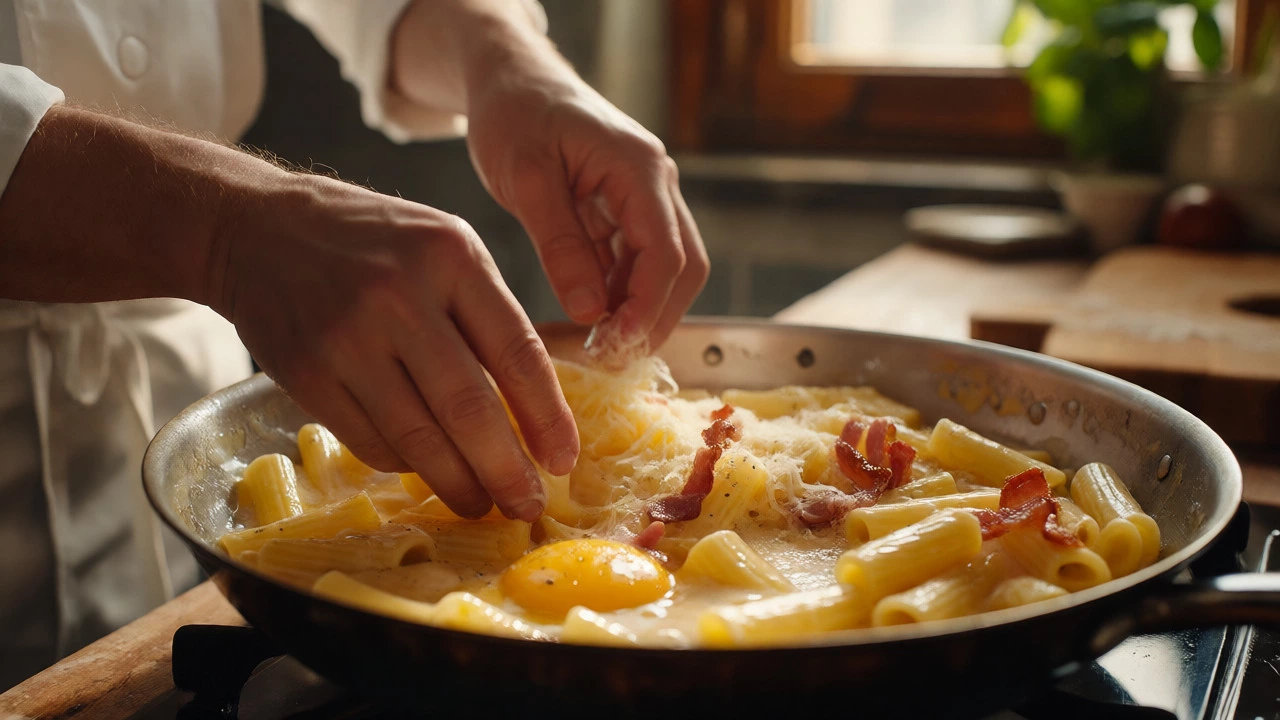
Ask anyone from Rome, and they will tell you: Carbonara is religion. It’s simple, rich, and deceptively difficult to get right. Unlike heavy cream sauces found abroad, authentic Roman Carbonara uses no dairy besides cheese. The creaminess comes entirely from emulsifying eggs, hard cheese, and starchy pasta water with rendered pork fat.
Carbonara is a traditional Roman pasta dish made with egg, hard cheese (Pecorino Romano), cured pork (guanciale), and black pepper. Its name likely derives from "carbone," meaning coal, referencing the black pepper or the charcoal burners who originally ate it. This dish dominates polls in major Italian cities. A 2023 survey by Coldiretti, Italy’s largest agricultural association, placed Carbonara at the top of the list for most popular first courses nationwide.
Here’s why it works so well:
- Texture contrast: Crispy guanciale against silky egg sauce.
- Umami bomb: Pecorino Romano provides a salty, sharp kick that Parmesan can’t match.
- Simplicity: Only four main ingredients. No hiding bad produce behind tomato sauce.
If you try making this with bacon and cream, you’re essentially eating a different meal. The fat content in guanciale (cured pork jowl) is higher than pancetta, creating a more luxurious mouthfeel. And please, no parsley. It’s not garnish territory; it’s a spice profile issue.
The Contenders: Ragù and Amatriciana
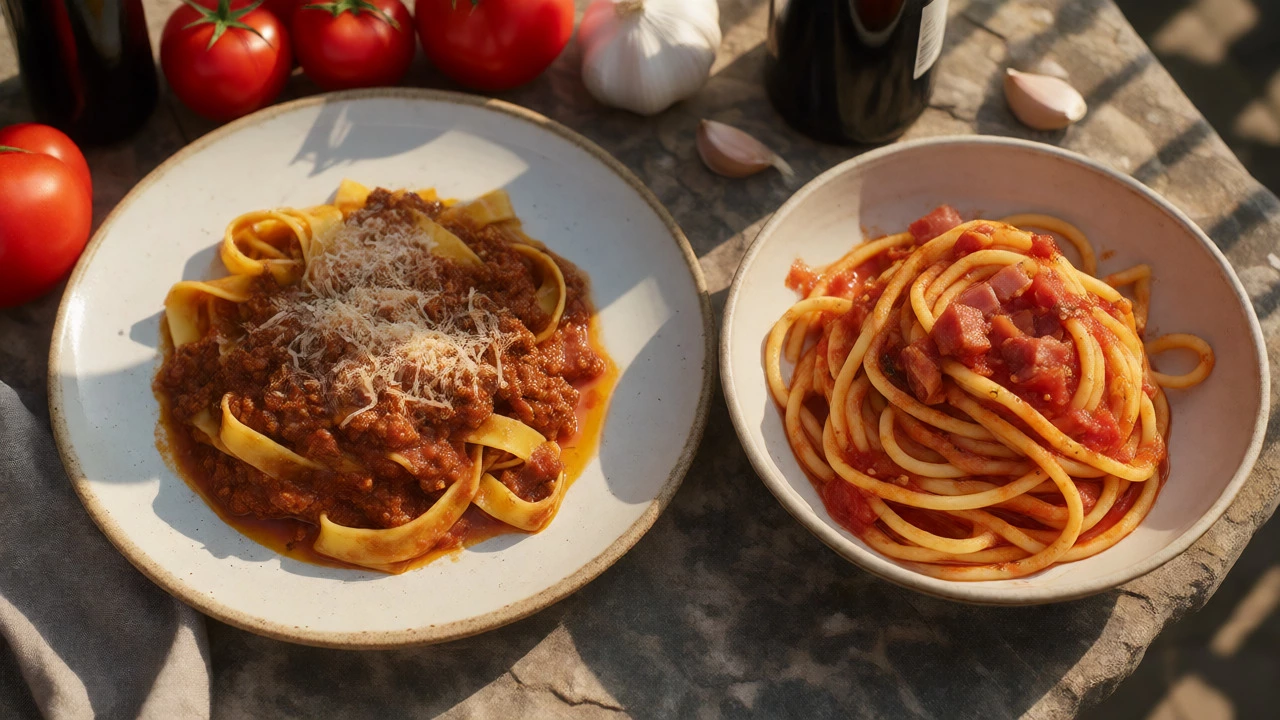
While Carbonara holds the throne, two other dishes fight fiercely for second place. First, let’s clear up the confusion around meat sauces. In Bologna, nobody eats "Spaghetti Bolognese." They eat Tortellini in Brodo or Tagliatelle al Ragù. The ragù itself is slow-cooked for hours, using beef, pork, soffritto, wine, and milk-not just tomatoes. It’s dense, hearty, and perfect for winter.
Then there’s Pasta all'Amatriciana, which hails from the town of Amatrice in Lazio. Think of it as Carbonara’s spicy cousin. It swaps eggs for a robust tomato base and adds chili heat. Many Romans actually prefer Amatriciana over Carbonara because it feels lighter yet still packs a punch. The key ingredient here is also guanciale, proving that this cured pork is the backbone of Roman pasta identity.
| Dish | Region | Key Ingredients | Flavor Profile | Difficulty Level |
|---|---|---|---|---|
| Carbonara | Lazio (Rome) | Eggs, Pecorino, Guanciale, Pepper | Rich, Salty, Creamy (no cream) | High (Temperature control critical) |
| Ragù alla Bolognese | Emilia-Romagna | Beef/Pork, Soffritto, Wine, Milk, Tomato | Deep, Savory, Slow-Cooked | Medium (Time-intensive) |
| Pasta al Pomodoro | Nationwide | Fresh Tomatoes, Basil, Olive Oil, Garlic | Bright, Acidic, Fresh | Low (Ingredient quality matters) |
| Cacio e Pepe | Lazio (Rome) | Pecorino Romano, Black Pepper, Pasta Water | Sharp, Spicy, Emulsified | Very High (Emulsion technique) |
Regional Pride: Why There Is No Single "National" Dish
Italy wasn’t unified until 1861. Before that, regions were separate states with distinct cuisines. This fragmentation means "Italian food" is a myth. You don’t eat pizza every day in Naples like Americans think. You eat pasta differently in Sicily than you do in Venice.
In the north, butter and rice dominate. Risotto is often preferred over pasta. In the south, dried pasta made from durum wheat semolina reigns supreme. Pasta al Pomodoro might technically be the most frequently eaten dish simply because it’s cheap, fast, and vegetarian-friendly. However, when asked for their favorite, people choose indulgence. That’s why Carbonara wins. It’s special enough to crave but common enough to cook weekly.
Consider Orecchiette con le Cime di Rapa in Puglia. Small ear-shaped pasta with turnip tops and anchovies. Locals swear by it. Tourists rarely find it outside Bari. Similarly, Pesto alla Genovese from Liguria is iconic, but many Italians find it too oily or overpowering for daily consumption. These regional champions prove that popularity is local, even if national trends favor Roman classics.
Making Authentic Italian Pasta at Home
You can replicate these favorites without flying to Italy. The secret isn’t fancy equipment-it’s respecting the rules. Here are three non-negotiables for any Italian pasta dish:
- Salt the water aggressively. It should taste like the sea. Under-salted pasta results in bland final dishes, no matter how good your sauce is.
- Reserve pasta water. Always save a cup before draining. The starch helps bind oil-based sauces to the noodles, creating that glossy finish seen in restaurants.
- Finish cooking in the pan. Never dump plain noodles onto a plate and pour sauce on top. Toss them together in the skillet over low heat for 30 seconds. This marries the flavors.
For Carbonara specifically, remove the pan from heat before adding eggs. If the pan is too hot, you’ll scramble the eggs instead of making a sauce. Patience pays off. For Ragù, use whole milk. It tenderizes the meat and balances the acidity of the tomatoes, a trick most American recipes skip.
Common Mistakes That Ruin Italian Pasta
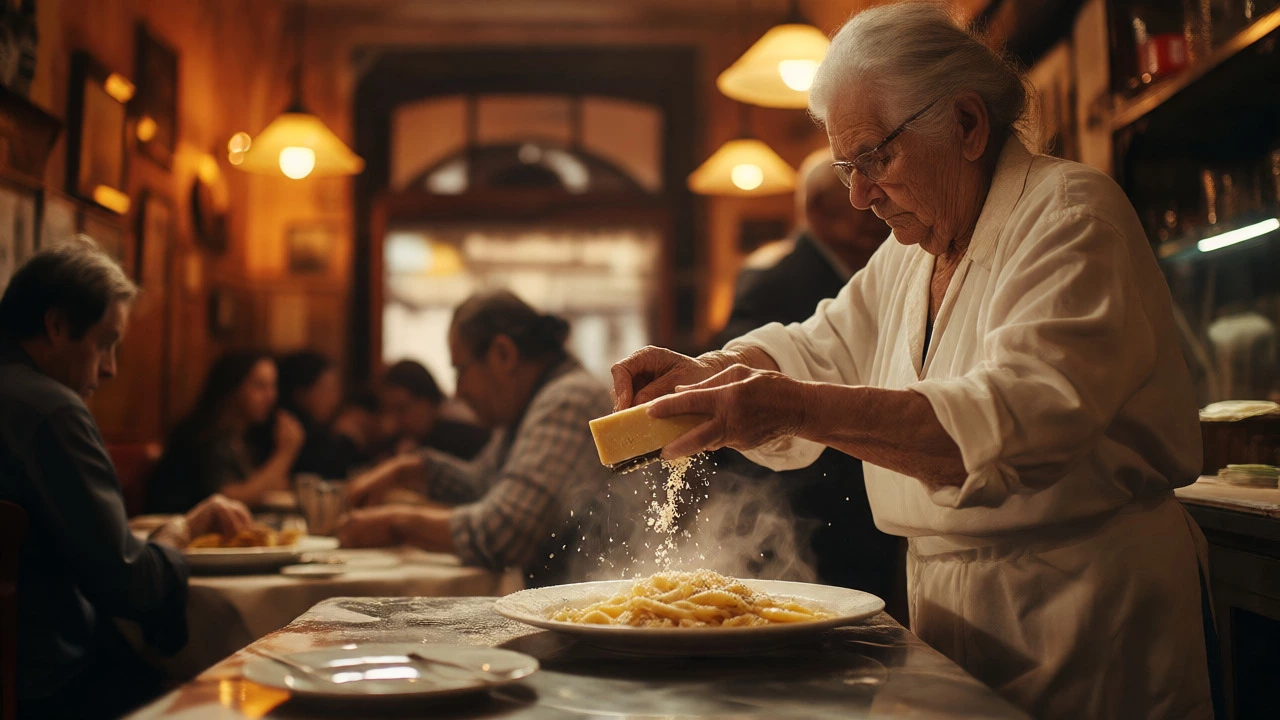
Avoid these pitfalls if you want to impress an Italian grandmother (nonna):
- Adding chicken to Alfredo. Fettuccine Alfredo was invented in Rome by Alfredo di Lello. It’s just butter and Parmesan. Chicken is an American addition.
- Breaking spaghetti. Don’t snap long pasta before boiling. It changes the texture and makes it harder to twirl properly.
- Rinsing pasta. Never rinse cooked pasta unless it’s for a cold salad. You wash away the starch needed for sauce adhesion.
- Using pre-grated cheese. Pre-grated Parmesan contains anti-caking agents that prevent proper melting. Buy a block and grate it yourself.
These small adjustments transform average meals into authentic experiences. Italians care less about perfection and more about respect for tradition. Use good olive oil, fresh basil, and real cheese, and you’re halfway there.
Frequently Asked Questions
Is Spaghetti Bolognese actually Italian?
Not really. In Italy, the meat sauce from Bologna is called Ragù alla Bolognese and is traditionally served with Tagliatelle, not Spaghetti. The version with ground beef, carrots, celery, and onions is authentic, but serving it on thin spaghetti is largely an international adaptation.
What is the difference between Pancetta and Guanciale?
Guanciale is cured pork jowl (cheek), while Pancetta is cured pork belly. Guanciale has a higher fat content and a stronger, funkier flavor essential for authentic Carbonara and Amatriciana. Pancetta is a acceptable substitute if you can't find guanciale, but avoid regular bacon due to its smoky flavor.
Do Italians put cream in Carbonara?
No. Authentic Roman Carbonara does not contain cream. The creamy texture is achieved by emulsifying raw eggs, grated Pecorino Romano cheese, and starchy pasta water with the rendered fat from guanciale. Adding cream is considered a cardinal sin in Rome.
Which pasta shape goes best with Carbonara?
Traditionally, Rigatoni or Mezze Maniche are used because their ridges and hollow centers trap the sauce effectively. Spaghetti is also common internationally, but shorter, wider tubes hold the heavy egg-cheese mixture better.
What is Cacio e Pepe?
Cacio e Pepe translates to "Cheese and Pepper." It is another Roman classic consisting only of Pecorino Romano cheese, cracked black pepper, and pasta water. It relies entirely on technique to create a smooth sauce without clumping.

Recent Posts
-
 How Long Should Baking Soda Sit on Chicken for Best Results? April 30, 2025
 -
 Is Hummus a Low-Carb Delight? Unveiling the Nutritional Truth November 30, 2024
 -
 What Are the Three Main Meals Taken by a Family? December 22, 2025
 -
 Impact of Going Meat-Free on Skin Health: Discover the Benefits January 31, 2025