Chicken Moisture Calculator
Calculate Your Perfect Chicken
Use science-based guidelines to avoid dry chicken. Input your chicken details for personalized recommendations.
Your Chicken Details
Cooking Parameters
Please enter all required information
Fill in the chicken details to get your personalized moisture recommendations.
Nothing ruins a good chicken dish faster than dry, tough meat. You’ve marinated it, seasoned it, even bought the best-quality breast or thigh-yet when you cut into it, it’s like chewing on cardboard. Why does this keep happening? It’s not magic. It’s not bad luck. It’s science. And once you understand what’s actually going on, you can fix it for good.
The Main Culprits Behind Dry Chicken
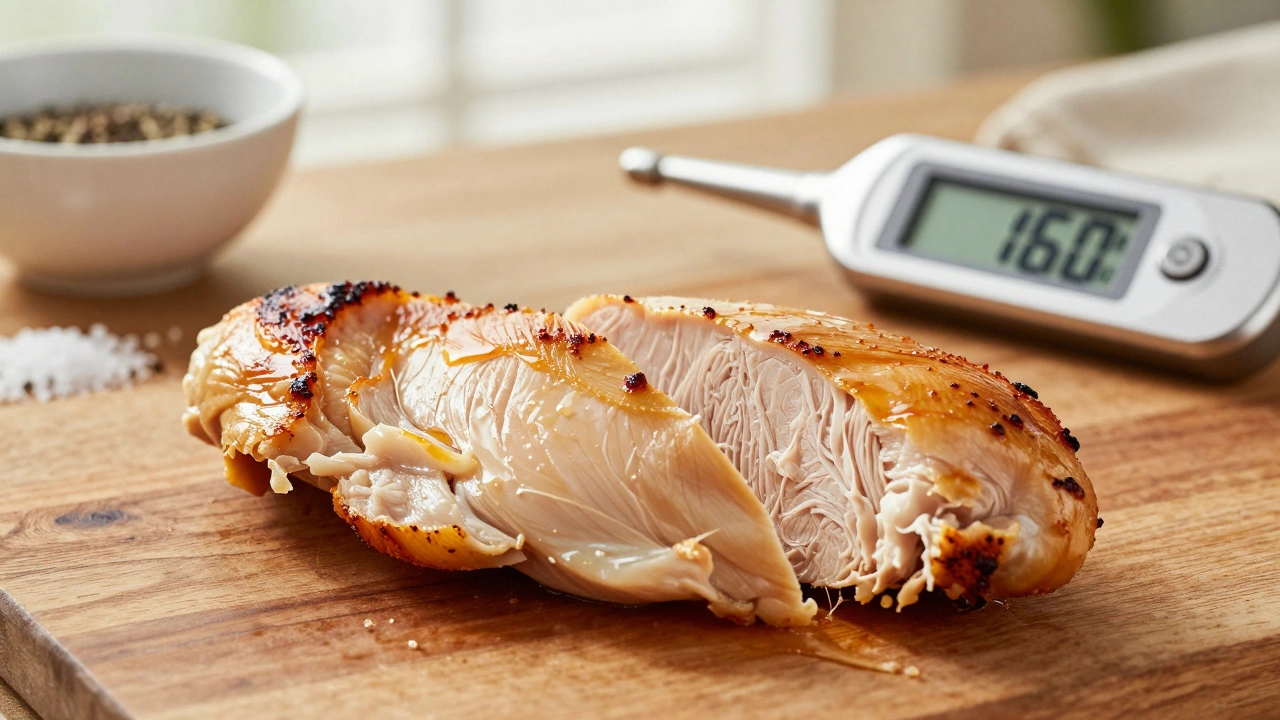
The biggest reason chicken dries out? Overcooking. Chicken breast, especially, has very little fat. Unlike a ribeye or even a chicken thigh, it doesn’t have enough internal fat to stay juicy as it heats up. When the internal temperature climbs past 165°F (74°C), the proteins start to tighten up, squeezing out every last drop of moisture. That’s not just a guideline-it’s a hard limit. Many people think they need to cook chicken until it’s white all the way through or until the juices run completely clear. That’s a myth. At 165°F, it’s already safe. Cooking beyond that? You’re asking for trouble.
Another big mistake? Cooking skinless, boneless chicken breasts the same way you’d cook a whole chicken. Bone-in, skin-on chicken stays juicier because the bone acts like a heat buffer and the skin locks in steam. Take those away, and you’re left with a lean slab of meat that’s basically a sponge waiting to be squeezed dry. If you’re using boneless, skinless breasts, you’re already working against nature. So you need to compensate.
Then there’s the issue of size. Not all chicken breasts are created equal. Some are huge, thick, and uneven. When you throw one of those into the oven or pan, the outside burns while the inside is still raw. By the time the center hits 165°F, the edges are already overcooked. It’s like trying to toast a thick slice of bread without burning the outside.
Why Brining Makes a Difference
Brining isn’t just for turkeys. It’s one of the most effective ways to keep chicken moist, even if you overcook it a little. A simple saltwater soak-just 1/4 cup of salt dissolved in 4 cups of cold water-can transform chicken. The salt changes the structure of the proteins so they hold onto water better. It’s not about flavoring the meat; it’s about turning it into a moisture-trapping sponge. Even a 30-minute brine makes a noticeable difference. For extra flavor, add a tablespoon of sugar, a bay leaf, or a few peppercorns.
Don’t confuse brining with marinating. Marinades with acidic ingredients like lemon juice or vinegar can actually start to break down the meat’s surface, making it mushy. They’re great for flavor, but they won’t help with moisture retention the way salt does. If you want juicy chicken, salt first. Then add flavor.
The Secret of Even Cooking
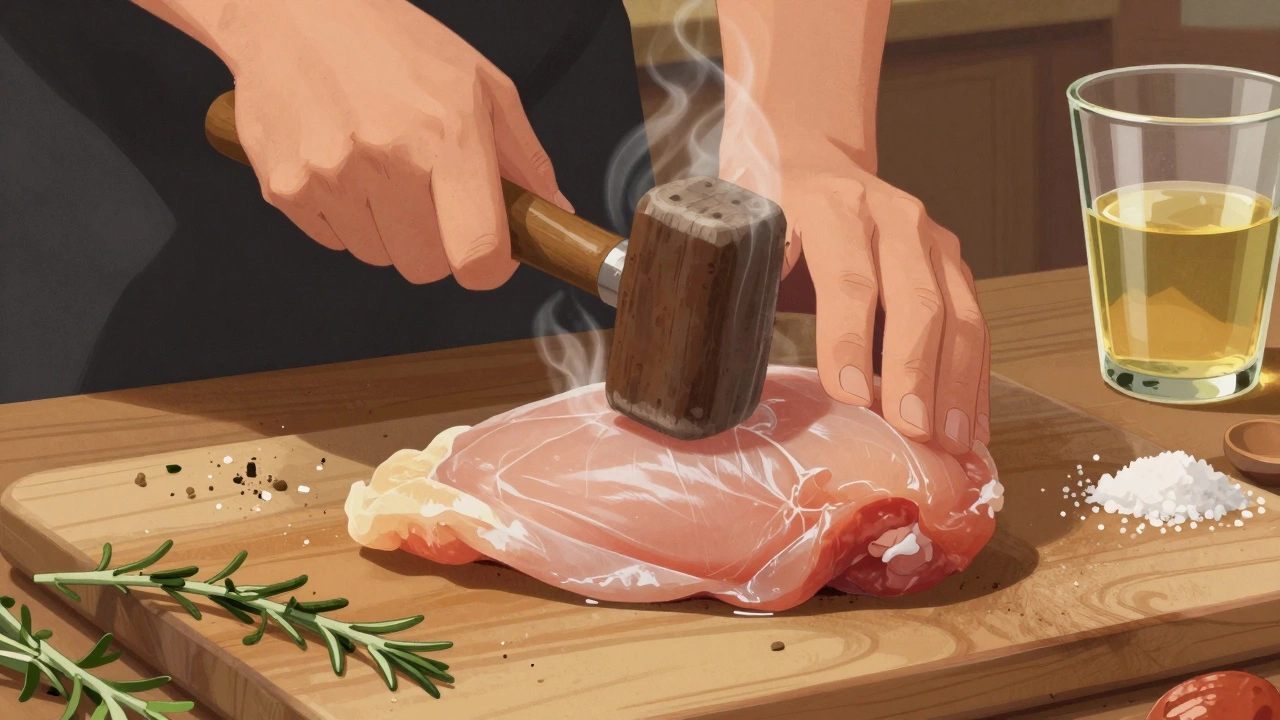
One of the easiest fixes? Flatten your chicken breasts. Use a meat mallet or the bottom of a heavy pan to gently pound them to an even thickness-about 3/4 inch. This ensures that the whole piece cooks at the same rate. You won’t have one end charred and the other underdone. It also reduces cooking time, which means less chance of drying out.
And here’s a trick most home cooks miss: start with room temperature chicken. Taking chicken straight from the fridge and putting it into a hot pan or oven creates a huge temperature gap. The outside cooks too fast while the inside struggles to catch up. Let it sit out for 20 to 30 minutes before cooking. It’s a small step, but it makes a measurable difference in how evenly it cooks.
Resting Isn’t Optional
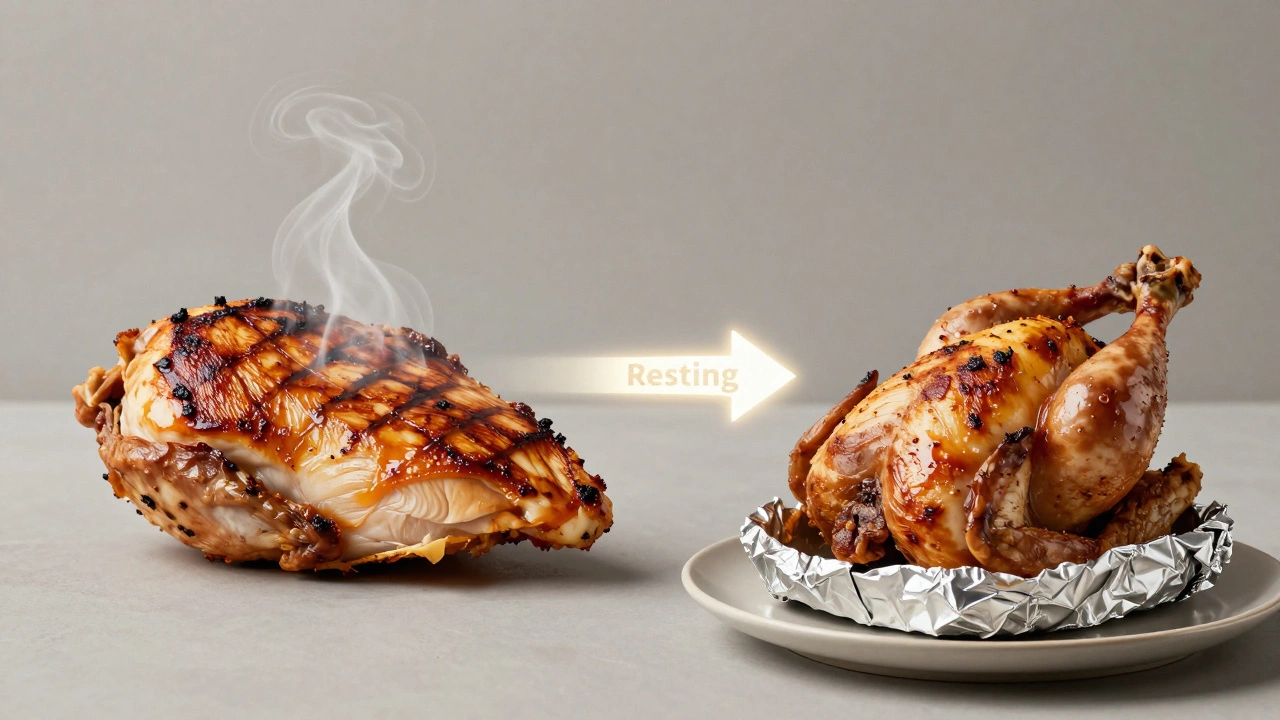
Here’s the thing: chicken doesn’t stop cooking when you take it off the heat. The internal temperature keeps rising by 5 to 10 degrees due to residual heat. That’s why you should always let it rest. Cover it loosely with foil and walk away for 5 to 10 minutes. During that time, the juices-pushed to the center by heat-have a chance to redistribute. Skip this step, and every time you cut into it, the juices pour out onto the plate. You’re not just losing flavor-you’re losing moisture.
Think of it like a sponge. If you squeeze it and immediately tear it apart, water flies everywhere. Let it sit for a minute, and the water stays where it belongs.
How to Cook Chicken Without Drying It Out
Here’s a simple, foolproof method for boneless, skinless chicken breasts:
- Brine the chicken for 30 minutes in saltwater (1/4 cup salt per 4 cups water).
- Pound the breasts to an even thickness.
- Let them sit at room temperature for 20 minutes.
- Pat them dry with paper towels-wet chicken doesn’t brown well.
- Heat a skillet over medium-high heat with a tablespoon of oil.
- Cook for 5 to 6 minutes per side, until the internal temperature hits 160°F.
- Remove from heat, cover, and rest for 5 minutes. The temperature will rise to 165°F.
This method works every time. You’ll get a golden crust on the outside and juicy, tender meat inside.
What About Other Cuts?
Chicken thighs? They’re forgiving. With more fat and connective tissue, they can handle longer cooking times and still stay moist. Even if you cook them to 175°F, they’ll be tender and juicy. That’s why they’re perfect for slow cooking, grilling, or braising. If you’re new to cooking chicken, start with thighs. They’re harder to mess up.
Whole chickens? Roast them breast-side down for the first 30 minutes. This lets the juices flow into the breast meat instead of draining out. Then flip it over to crisp the skin. You’ll get a juicier bird with better texture.
Common Mistakes That Make Chicken Dry
- Using too high heat-burns the outside before the inside cooks.
- Not using a meat thermometer-guessing leads to overcooking.
- Leaving chicken in the oven or on the stove after it’s done.
- Skipping the rest step-cutting into it right away.
- Using frozen chicken without thawing properly-leads to uneven cooking.
One more thing: don’t rely on cooking time alone. Ovens vary. Chicken sizes vary. A 6-ounce breast might take 20 minutes in one oven and 28 minutes in another. Your thermometer is your best friend. Get one that reads in seconds. They cost less than $15 and are the single best investment for better chicken.
What to Do If Your Chicken Is Already Dry
Oops-you overcooked it. Now what? You can’t turn back time, but you can save it. Slice the chicken thinly and warm it gently in a bit of broth, sauce, or even a splash of olive oil and lemon juice. Let it soak up some moisture. It won’t be perfect, but it won’t be dry either. Use it in salads, sandwiches, or soups where the extra liquid helps.
Another trick: make a quick pan sauce. Deglaze the pan with chicken stock, add a pat of butter, and let it emulsify. Pour it over the chicken. The sauce adds moisture and flavor, masking the dryness.
Final Tip: Buy Better Chicken
Not all chicken is the same. Some brands inject chicken with saltwater solutions to increase weight. That’s not brining-it’s a cheap trick. Look for labels that say “no added solutions” or “raised without antibiotics.” Higher-quality chicken often has better flavor and texture. It’s not just about price-it’s about how the bird was raised and processed.
And if you’re still struggling? Try cooking chicken sous vide. It’s not as hard as it sounds. Set your water bath to 150°F, vacuum-seal the chicken with herbs and oil, and cook it for 1 to 2 hours. Then sear it quickly in a hot pan. You’ll get restaurant-quality results every time.
Why does chicken dry out in the oven?
Chicken dries out in the oven because the high, dry heat causes the proteins to contract and squeeze out moisture. Chicken breast has very little fat, so it lacks natural insulation. Cooking beyond 165°F or not letting it rest afterward makes it worse. Using a meat thermometer and resting the chicken after cooking prevents this.
Does brining really make chicken juicier?
Yes. Brining with saltwater changes the protein structure in the meat so it holds onto water better during cooking. Even a 30-minute soak can make a big difference. It’s not about adding flavor-it’s about improving moisture retention. Sugar and herbs in the brine add flavor, but the salt is what does the heavy lifting.
Should I cover chicken when baking?
Covering chicken with foil while baking can help trap steam and keep it moist, especially for boneless, skinless breasts. But if you want crispy skin, uncover it for the last 10-15 minutes. For thighs or whole chickens, covering isn’t usually needed because they have more fat and moisture naturally.
Is it better to cook chicken fast or slow?
It depends on the cut. Chicken breast cooks best with moderate heat and short time-too fast and it burns; too slow and it dries out. Thighs and legs benefit from slower, lower heat because they have more fat and connective tissue that breaks down over time. For breasts, aim for 165°F quickly. For thighs, 175°F slowly is ideal.
Can you fix dry chicken after it’s cooked?
Yes. Slice it thinly and warm it gently in broth, sauce, or a mix of olive oil and lemon juice. You can also make a pan sauce by deglazing the cooking pan with stock and butter. The liquid will soak into the meat and mask the dryness. It won’t be perfect, but it’ll be edible and flavorful.
Next Steps: How to Keep Cooking Better Chicken
Start by buying a meat thermometer. It’s the most important tool you don’t already have. Then try one brined, flattened chicken breast using the method above. Compare it to one you cooked the old way. You’ll notice the difference immediately. Once you get that right, experiment with thighs, drumsticks, and whole chickens. Each cut behaves differently-and once you learn how, you’ll never serve dry chicken again.

Recent Posts
-
 Does Sleeping Count as Fasting? Quick Lunch Ideas Explored March 26, 2025
 -
 Top 10 Comfort Food Recipes You Can't Resist January 12, 2025
 -
 Exploring Vegetarian-Friendly Cultures Around the World April 7, 2025