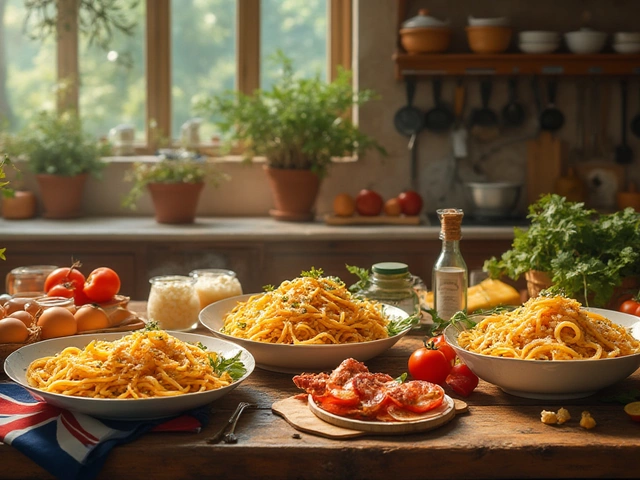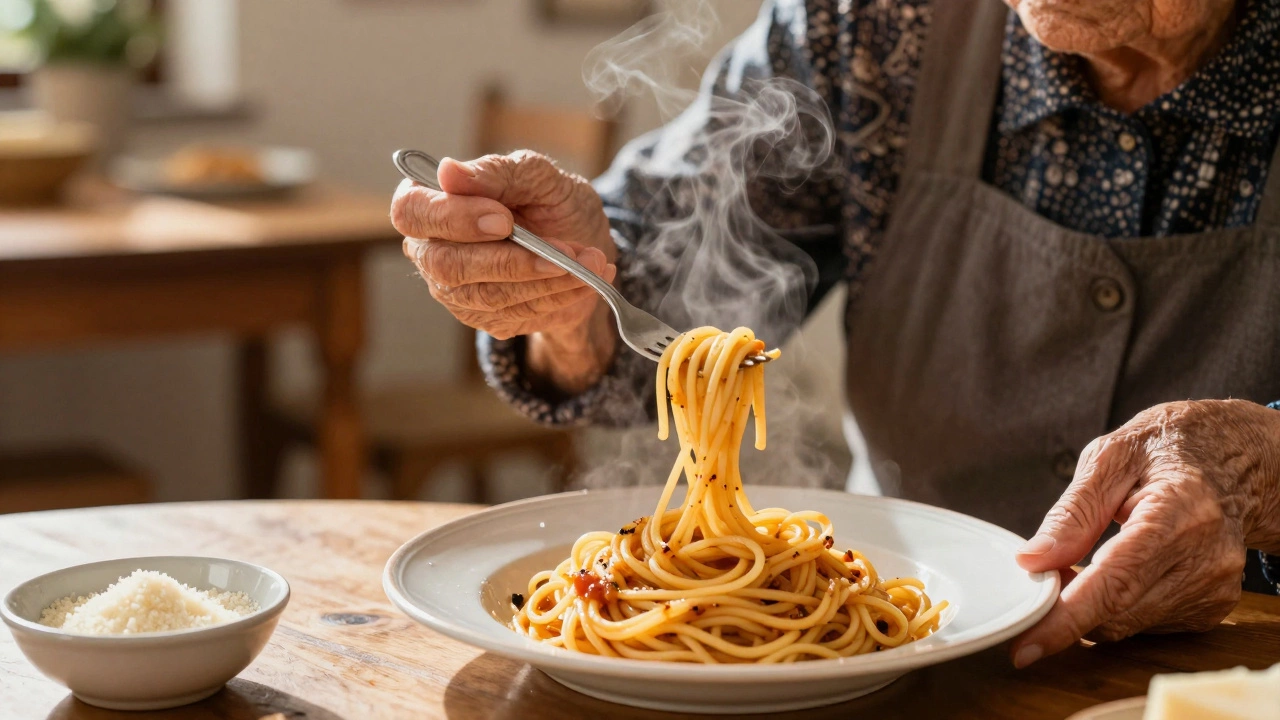
Most people think eating spaghetti is simple: fork, twirl, eat. But if you’ve ever watched a nonna in Naples or a nonno in Bologna at dinner, you know it’s not that simple. True Italians don’t just eat spaghetti-they respect it. There’s a rhythm, a ritual, even a quiet pride in how it’s done. And no, you won’t see them using a spoon to help twirl it. Not in Italy.
Spaghetti Isn’t Served With a Spoon
The biggest myth? That you need a spoon to help twirl spaghetti. In Italy, that’s a dead giveaway you’re not from there. The spoon is only used in some northern regions for very long, thin pasta like capellini, and even then, it’s rare. In the south-where spaghetti truly lives-it’s all fork. A single fork. No spoon. No help. You twirl it against the side of the plate, using the tines like a winding tool. The trick? Use the fork like a rolling pin, pressing the pasta gently into the curve of the plate. It’s not about speed. It’s about control. You want a neat, tight coil, not a messy glob of sauce dripping down your shirt.
It’s Always a Small Portion
True Italians don’t serve spaghetti like American restaurants do-mountains of pasta drowned in sauce. A proper serving is about 80 to 100 grams per person dry weight. That’s roughly a handful, not a bowl. Why? Because pasta is a primo, the first course. It’s not the main event. After spaghetti, there’s often a secondo-grilled fish, roast chicken, or a simple cutlet. The meal moves forward. In Italy, pasta is a moment, not a marathon.
No Cheese on Seafood Pasta
Put parmesan on spaghetti with clams? In Italy, that’s a culinary crime. The rule is simple: no cheese on seafood pasta. Ever. The briny taste of the ocean and the richness of cheese clash. You’ll find this rule followed even in tourist-heavy towns like Amalfi. If you’re eating spaghetti alle vongole (with clams), keep the cheese off. Same with spaghetti ai frutti di mare. The sauce is the star. Cheese is a distraction.
It’s About the Sauce, Not the Pasta
True Italians don’t overcook the pasta. It’s always cooked al dente-firm to the bite. Not crunchy, not mushy. Just right. And the sauce? It’s never drowning the pasta. It clings. It coats. It’s made to marry with the noodles, not bury them. In Naples, they toss the pasta in the saucepan with a splash of pasta water to help the sauce stick. In Rome, they might add a spoonful of olive oil at the end to make it shine. But they never rinse the pasta. Rinsing washes away the starch that holds the sauce. That’s a mistake you won’t see in a home kitchen in Sicily.
Spaghetti Is a Family Meal
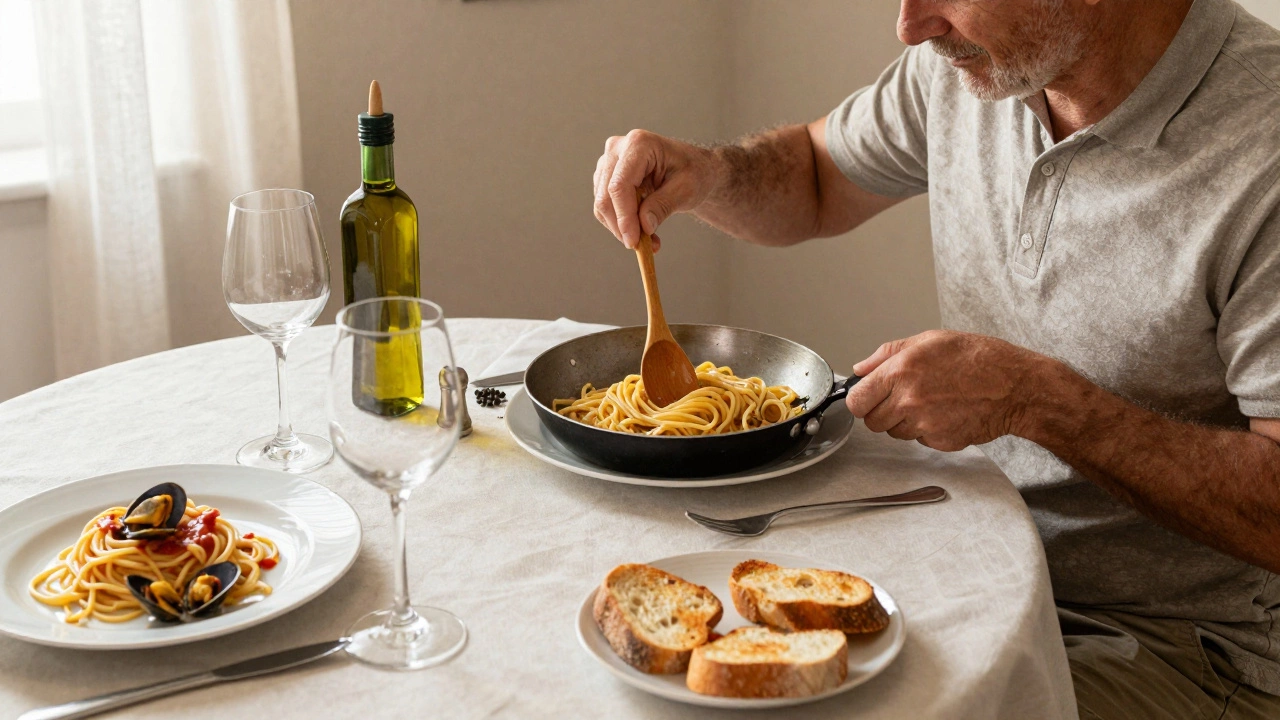
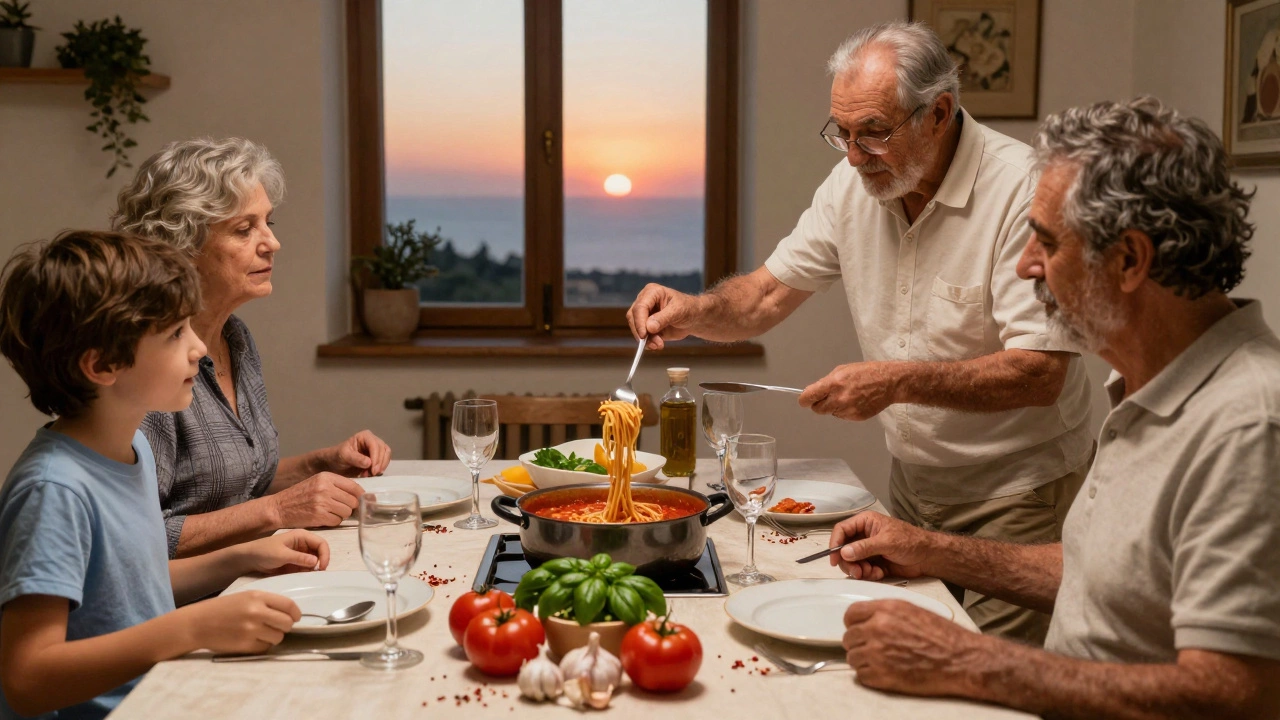
You won’t find Italians eating spaghetti alone at a desk. It’s not a quick lunch. It’s not a grab-and-go snack. Spaghetti is a shared moment. It’s eaten at the table, with family, often on Sunday afternoons. Kids learn to twirl it by watching their grandparents. It’s passed down-not through cookbooks, but through silence, through watching, through the clink of fork on ceramic. The meal lasts. Conversation flows. Wine is poured. It’s not about efficiency. It’s about connection.
There’s No Garlic Bread
Garlic bread? It doesn’t exist in Italy as a side to pasta. In Italy, bread is served plain, toasted, or lightly rubbed with garlic-never drowned in butter and herbs. It’s meant to mop up leftover sauce at the end of the meal, not to be eaten before the pasta even arrives. If you’re served garlic bread with spaghetti in Italy, you’re either in a tourist trap or a restaurant run by someone who’s never been south of Milan.
Spaghetti Is Eaten With a Fork-Only
Let’s say it again: no spoon. No knife. No fork and knife. Just the fork. And the fork is held like a pencil, not like a shovel. You don’t stab the pasta. You don’t cut it. You twirl. And you twirl slowly. You don’t rush. You don’t slurp. In Italy, slurping is rude. It’s not a sign of enjoyment-it’s a sign of being uncouth. Quiet, calm, deliberate. That’s how spaghetti is eaten. Even children learn this early. No one wants to look like they’re eating in a hurry.
It’s Not About the Type of Pasta
True Italians don’t obsess over spaghetti shapes. They know that spaghetti works best with light, oily, or seafood-based sauces. Spaghetti carbonara? That’s Roman. Spaghetti aglio e olio? That’s southern. Spaghetti alle vongole? That’s coastal. But they don’t swap spaghetti for linguine just because it’s “fancier.” The shape matches the sauce. And the sauce matches the region. You won’t find spaghetti with Bolognese in Bologna. That’s tagliatelle territory. Italians don’t mix rules. They follow them.
Leftovers? You Reheat It Right
Leftover spaghetti? Italians don’t microwave it. They reheat it gently in a pan with a splash of water or olive oil, stirring slowly. The goal is to bring back the texture, not turn it into glue. And they never reheat it with cheese on top. That’s a recipe for a greasy mess. Instead, they might add a pinch of black pepper or a drizzle of fresh olive oil. Leftovers are treated with care. Because in Italy, food isn’t wasted. It’s honored.
Spaghetti Is a Daily Ritual, Not a Fancy Dish
True Italians don’t save spaghetti for special occasions. It’s a weekday dinner. A Sunday lunch. A quick meal after work. It’s not fancy. It’s honest. It’s made with simple ingredients: tomatoes, garlic, olive oil, salt, maybe a bit of chili. No cream. No heavy sauces. No fancy garnishes. Just good ingredients, cooked well. That’s the Italian way. The secret isn’t in the recipe. It’s in the rhythm. In the patience. In the quiet respect for the food.
Do Italians really never use a spoon with spaghetti?
Yes. In southern Italy, where spaghetti is most traditional, a spoon is never used. It’s considered a foreign habit. Even in the north, where spoons might occasionally appear with very fine pasta, it’s rare and not part of the authentic tradition. The fork alone is the only tool you need.
Why is spaghetti served as a first course in Italy?
In Italy, meals are structured in courses. Spaghetti is a primo-the first main dish-followed by a secondo (meat or fish) and then vegetables or salad. It’s not meant to fill you up. It’s meant to prepare your palate for the rest of the meal. Serving a huge plate of pasta as the only dish is seen as excessive and unbalanced.
Can you put cheese on spaghetti with meat sauce?
In Italy, meat sauces like ragù are traditionally served with tagliatelle, not spaghetti. But if you’re eating spaghetti with a meat-based sauce-say, in a northern city-you might see a little parmesan. But it’s never added before tasting. Italians always taste first, then decide. And they never use pre-grated cheese. It’s always freshly grated.
Is spaghetti only eaten on Sundays in Italy?
No. While Sunday spaghetti is a cherished tradition, especially in families, Italians eat spaghetti any day of the week. It’s a quick, affordable, and satisfying meal. Many working people have it for dinner after a long day. It’s not a luxury-it’s a staple.
Why don’t Italians rinse pasta after cooking?
Rinsing removes the starch that helps the sauce cling to the pasta. Italians rely on that starch to bind the sauce to the noodles. They also use a little of the starchy pasta water to adjust the sauce’s consistency. Rinsing defeats the whole purpose. It’s a habit from outside Italy.

Recent Posts
-
 Quick and Simple Meals for the Bored Cook January 29, 2025
 -
 Most Unhealthy Fruit: What to Watch Out For May 28, 2025