The Authentic Italian Dining Quiz
Select the correct answer for each rule to see how well you know authentic Italian customs.
Rule 1: Seafood Pasta
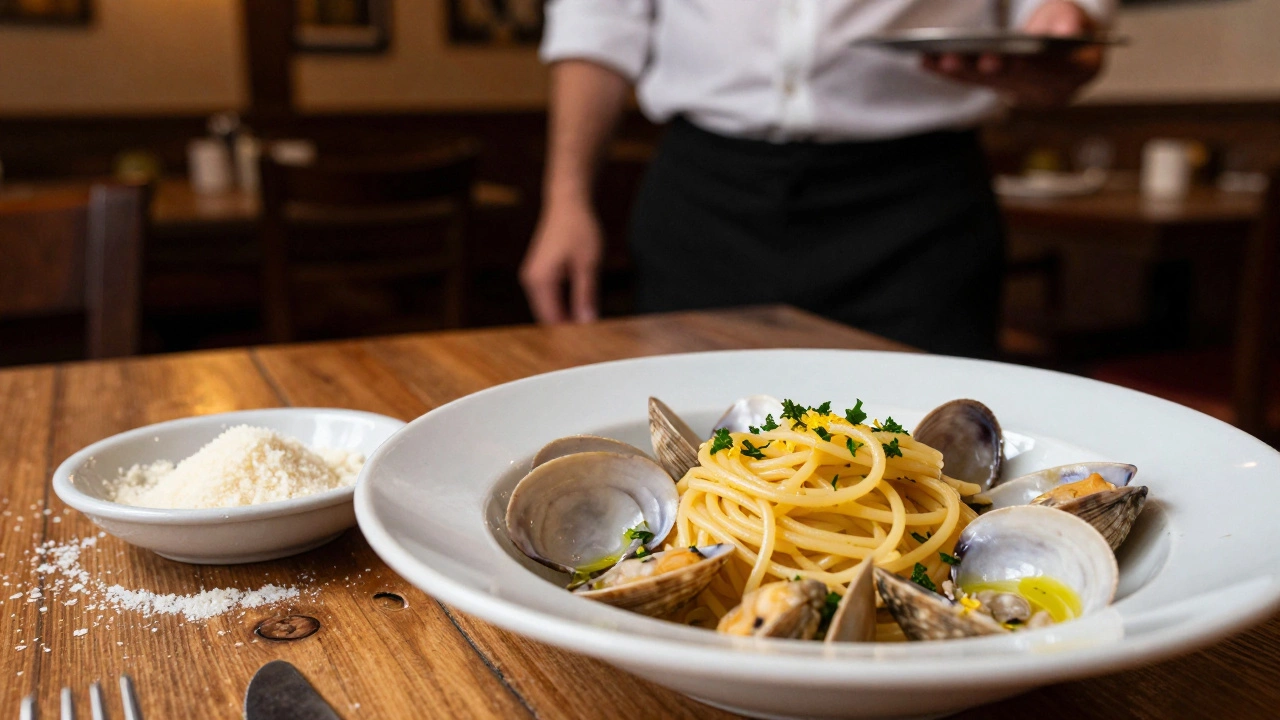
You are served Spaghetti alle Vongole (clams). What is the correct way to finish it?
Rule 2: Carbonara
A true Roman Carbonara contains only five ingredients. Which ingredient below should NEVER be in it?
Rule 3: Bread Etiquette
Your plate has leftover marinara sauce. How should you use the bread provided?
Rule 4: Coffee Timing
You have just finished a heavy dinner with tiramisu. What do you order next?
Authenticity Score
Picture this: you’re sitting at a small trattoria in Rome. You order spaghetti with meatballs. The waiter’s eyes widen slightly. He doesn’t say anything rude, but the silence is deafening. Why? Because you just broke one of the most sacred Italian food rules. It’s not about being snobbish; it’s about respecting centuries of culinary tradition. For many travelers and home cooks, Italian cuisine seems simple-just pasta, tomato sauce, and cheese. But beneath that simplicity lies a strict code of conduct that dictates what goes on your plate and when.
If you want to eat like a local or cook authentically at home, you need to understand these unwritten laws. They aren't just arbitrary restrictions; they are the framework that keeps Italian flavors balanced and distinct. Ignoring them can lead to flavor clashes that even the best ingredients can't fix. Let’s break down the four essential rules that govern the Italian table, starting with the most controversial one involving dairy.
Rule 1: No Parmesan on Seafood Pasta
This is the rule that causes the most shock for visitors from North America or Asia. In the US, sprinkling grated Parmigiano-Reggiano over everything is standard practice. In Italy, putting cheese on seafood pasta is considered a culinary crime. Why? Because the delicate, briny sweetness of shellfish clashes violently with the sharp, salty funk of aged cow’s milk cheese. The flavors don’t complement each other; they fight.
Parmigiano-Reggiano is a hard, granular cheese made from cow's milk, produced in specific regions of Italy including Emilia-Romagna and parts of Lombardy. It has a rich, savory taste known as 'umami' which enhances earthy flavors but overwhelms light ones.
When you cook dishes like Spaghetti alle Vongole (spaghetti with clams) or linguine with shrimp, the star is the ocean. The sauce usually consists of white wine, garlic, olive oil, and parsley. Adding cheese masks the natural sweetness of the seafood. Instead, Italians finish these dishes with a squeeze of lemon juice or a drizzle of high-quality extra virgin olive oil. This brightens the dish without hiding the main ingredient. If you see a bowl of seafood pasta arriving with a dusting of cheese, you know immediately that the kitchen isn’t following traditional guidelines.
There is a nuance here, though. Fresh ricotta or mozzarella might appear in some southern Italian seafood pasta bakes, but never grated hard cheese like Parmesan or Pecorino. Stick to lemon zest and fresh herbs for seafood. Your palate will thank you for the clarity of flavor.
Rule 2: Never Add Tomato Sauce to Carbonara
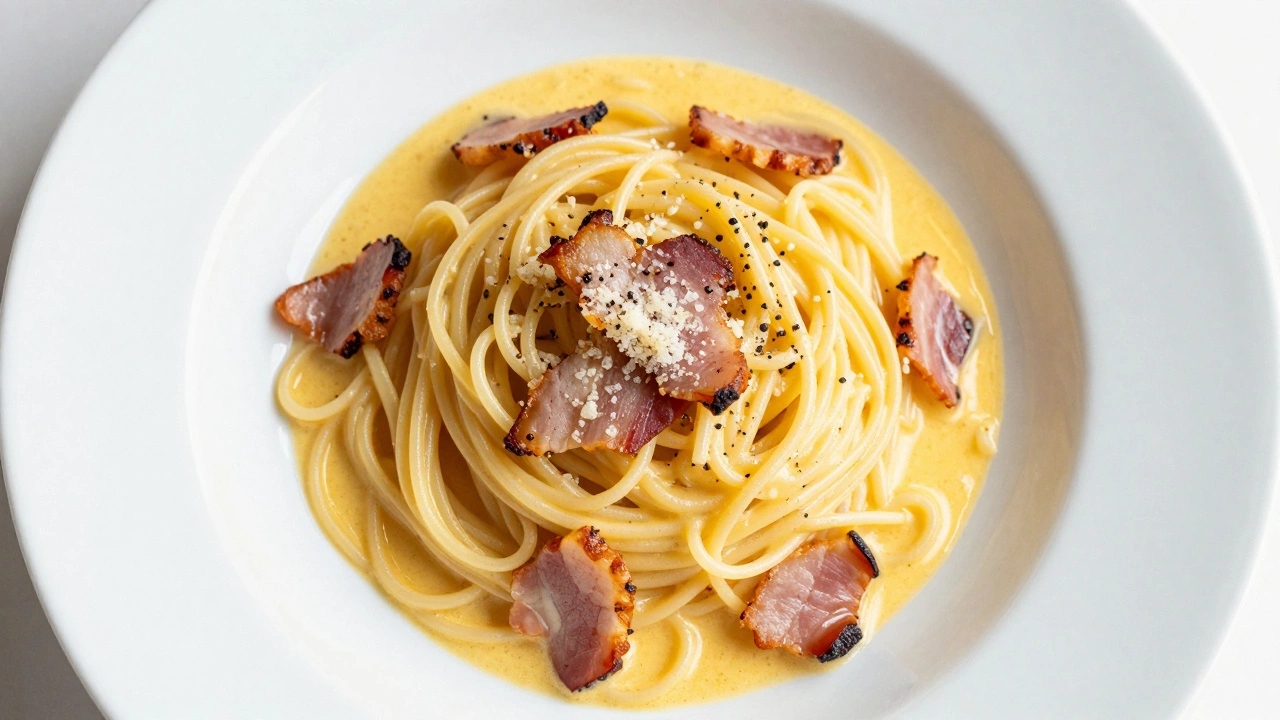
The second rule protects the integrity of Rome’s most famous export: Carbonara. True Roman carbonara contains only five ingredients: guanciale (cured pork jowl), eggs, Pecorino Romano cheese, black pepper, and pasta water. That’s it. No cream. And absolutely no tomato sauce. Yet, if you look at menus outside Italy, or even in some tourist-trap restaurants within Italy, you’ll often find "Carbonara" served with a red sauce base.
This misconception likely stems from confusion with other Roman pastas like Amatriciana, which does use tomato sauce. But mixing the two destroys the essence of Carbonara. The magic of this dish lies in the emulsion created by beating raw egg yolks with hard cheese and hot pasta water. The result is a creamy, glossy coating that clings to every strand of spaghetti or rigatoni. Adding tomato introduces acidity and liquid that breaks this delicate emulsion. It turns a silky masterpiece into a soggy mess.
Guanciale is cured pork jowl that provides a richer, more complex flavor than bacon or pancetta due to its higher fat content and distinct texture. It is essential for authentic Carbonara.
To respect this rule, ensure your carbonara stays yellow and creamy. If you crave tomato, order Amatriciana instead. If you want creaminess without eggs, look for Cacio e Pepe variations or regional cream-based sauces, but don’t call it Carbonara. Purists will judge you, but more importantly, you’ll miss out on the true experience of how eggs and cheese should interact with starch.
Rule 3: Save the Bread for the Oil, Not the Sauce
In many cultures, bread is used to mop up leftover gravy or sauce on the plate. In Italy, this is frowned upon, especially when eating pasta. Using a piece of crusty ciabatta or focaccia to soak up marinara sauce is seen as wasteful and messy. Italian bread serves a different purpose: it is a vehicle for olive oil.
At an Italian table, bread arrives alongside the meal, often before the first course. Its primary job is to be dipped in high-quality extra virgin olive oil, sometimes with a sprinkle of sea salt. This acts as a palate cleanser between bites or courses. Using bread to clean your plate suggests that the sauce was too thin or poorly prepared, or simply that you don’t understand the role of bread in the meal structure.
Furthermore, pasta is designed to be eaten with a fork, twirled efficiently so that each bite contains both noodle and sauce. The sauce should cling to the pasta naturally through proper cooking technique-specifically, finishing the pasta in the sauce (mantecatura). If you need bread to get the last bit of sauce, the chef didn’t cook the pasta correctly. So, save your bread for dipping in oil, and trust that your pasta is already perfectly sauced.

Rule 4: Dessert Before Coffee, Not After
The final rule concerns timing rather than ingredients, but it’s crucial for the dining experience. In Italy, coffee-specifically espresso-is not a dessert accompaniment. It is a digestive aid consumed after the meal is completely finished. Ordering a cappuccino or latte with your tiramisu or gelato is a major faux pas.
Milk-based coffees are breakfast drinks only. Italians believe that drinking milk late in the day slows digestion. Therefore, if you’ve had a heavy lunch or dinner, you might feel tempted to wash it down with a milky coffee. Don’t do it. Instead, enjoy your sweet treat first. Then, head to the bar for a standalone espresso. This separates the indulgence of sugar from the bitterness of caffeine, allowing you to appreciate both fully.
| Mistake | Traditional Rule | Reason |
|---|---|---|
| Cheese on seafood pasta | No hard cheese | Clashes with delicate seafood flavors |
| Tomato in Carbonara | No tomato, no cream | Breaks the egg-cheese emulsion |
| Bread soaking up sauce | Dip bread in olive oil | Bread is a side, not a utensil |
| Cappuccino after dinner | Espresso only after meals | Milk aids digestion only in morning |
Understanding these four rules transforms you from a tourist to a respectful guest. It shows that you value the history and craftsmanship behind the food. Whether you’re cooking at home in Wellington or dining in Milan, applying these principles ensures that your meal honors the source. You won’t just eat better; you’ll connect deeper with the culture.
Can I put butter on my pasta?
Yes, but sparingly. Butter is common in northern Italian recipes like those from Lombardy or Veneto, often paired with sage or mushrooms. However, it is rarely used in southern dishes where olive oil is king. Avoid adding butter to tomato-based sauces as it can make the sauce greasy and separate.
Why is water added to pasta?
Pasta water is starchy gold. It helps bind the sauce to the noodles, creating a cohesive dish. When cooking, reserve a cup of the cloudy water before draining. Add it gradually to your pan while tossing the pasta with sauce to create a silky texture.
Is it okay to cut spaghetti with a knife?
No. Cutting long pasta is considered bad manners and impractical. Long strands are meant to be twirled around the fork. Cutting them makes them slippery and difficult to eat elegantly. Practice twirling against the spoon or the side of the bowl for better control.
What cheese should I use for non-seafood pasta?
Parmigiano-Reggiano is versatile for most meat and vegetable sauces. Pecorino Romano is sharper and saltier, traditionally used in Roman dishes like Cacio e Pepe and Carbonara. Grana Padano is a milder, cheaper alternative to Parmigiano but still delicious.
Do Italians rinse their pasta after cooking?
Never. Rinsing pasta washes away the starch that helps the sauce adhere. It also cools the pasta down, making it less enjoyable. Always drain directly into the colander or transfer directly to the saucepan with residual water.

Recent Posts
-
 What to Bring to Lunch Easy? 15 No-Fuss Meals That Actually Work December 8, 2025