Vegan Food Checker
Is This Food Vegan?
Check if common foods are vegan-friendly based on their ingredients and common myths.
Onions are plants. They grow in the ground. They don’t have feelings, eyes, or a nervous system. So why do some people say vegans can’t eat them? The short answer: they can. Most vegans eat onions without a second thought. But if you’ve heard otherwise, you’re not alone. There’s a quiet but persistent myth floating around vegan circles that onions - along with garlic, leeks, and shallots - are somehow off-limits. It’s not about cruelty. It’s not about health. It’s about a misunderstanding that’s been passed down like an old family recipe.
Where Did This Myth Come From?
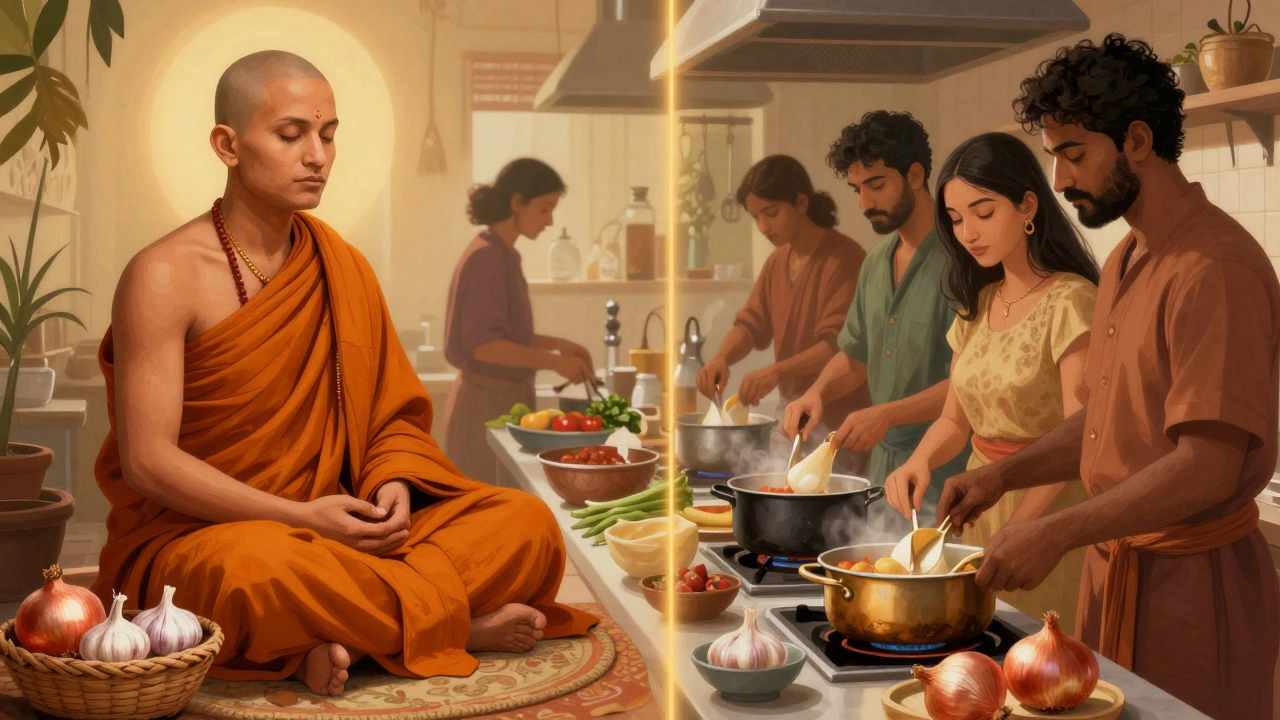
The idea that vegans shouldn’t eat onions traces back to certain spiritual traditions, especially in parts of India. In Jainism and some branches of Hinduism, foods like onions and garlic are considered rajasic or tamasic - meaning they’re believed to stimulate passion or dull the mind. Some yogis and ascetics avoid them to maintain mental clarity or spiritual purity. These practices are deeply personal and culturally rooted. But they’re not veganism.
Veganism, as defined by The Vegan Society since 1944, is about avoiding animal exploitation and cruelty. That means no meat, dairy, eggs, honey, gelatin, or any ingredient derived from animals. It doesn’t include avoiding plants based on ancient spiritual beliefs. If someone chooses to skip onions for religious reasons, that’s their choice. But labeling it as a vegan rule? That’s inaccurate.
What Do Vegans Actually Eat?
Think about your favorite vegan meals. A spicy lentil curry? Onions are probably sautéed in the base. A hearty vegetable stew? Onions, garlic, and celery are the flavor foundation. Even store-bought vegan burgers often list onion powder as an ingredient. If onions were truly off-limits, most vegan recipes would collapse.
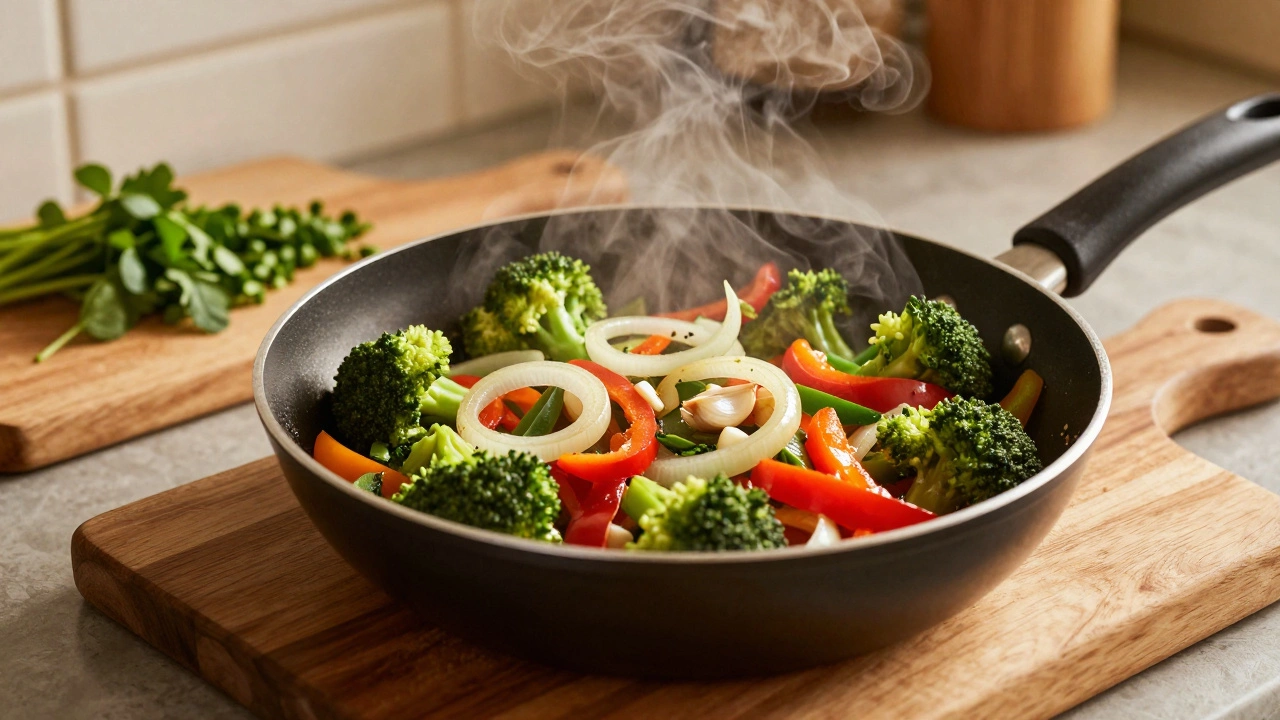
Real-world vegan diets rely heavily on allium vegetables - onions, garlic, shallots - for depth and umami. Without them, plant-based cooking loses its soul. A tomato sauce without garlic? A stir-fry without onion? They’re flat, dull, and unrecognizable. Millions of vegans around the world cook with these ingredients daily. From New York to Nairobi, from Wellington to Warsaw, onions are a staple.
Are There Any Vegans Who Avoid Onions?
Yes - but not because they’re vegan. Some vegans who also follow Ayurveda, Jainism, or certain forms of Buddhism may choose to avoid alliums. Others might have medical reasons - like IBS, acid reflux, or food sensitivities - and cut them out for digestive comfort. But these are personal or medical choices, not vegan ones.
There’s a big difference between “I avoid onions for spiritual reasons” and “Vegans can’t eat onions.” The first is valid. The second is misleading. Mixing the two creates confusion, especially for new vegans trying to figure out what’s allowed. If you’re just starting out, don’t let this myth scare you off. Eat the onions. Enjoy the flavor. You’re doing it right.
Why Does This Myth Keep Spreading?
It’s easy for misinformation to stick, especially online. A single Instagram post saying “Real vegans don’t eat garlic” gets shared 10,000 times. A TikTok video with dramatic music and a caption like “This is why I quit veganism” goes viral - even if the person was never vegan to begin with. Social media rewards simplicity over accuracy. And when people want to feel like they’re part of a “purer” version of a movement, they cling to strict rules - even fake ones.
Some vegan influencers promote these myths to stand out. “I don’t eat onions or garlic” sounds more extreme. More disciplined. More holy. But it’s not vegan. It’s a personal boundary wrapped in the language of a movement that doesn’t require it.
And here’s the problem: when someone hears “vegans don’t eat onions,” they might assume the whole diet is full of arbitrary restrictions. That turns people away. It makes veganism seem harder than it is. And that’s the real cost of this myth.
What Should You Do If Someone Tells You Vegans Can’t Eat Onions?
Stay calm. You’re not wrong for eating them. You’re not breaking any rules. You can say something simple: “Actually, veganism is about avoiding animal products. Onions are plants. Most vegans eat them just fine.”
If they’re coming from a spiritual or cultural background, you can acknowledge that: “I get why you avoid them - that makes sense for your practice. But it’s not part of veganism.”
There’s no need to argue. Just clarify. You’re not defending onions. You’re defending the actual definition of veganism.
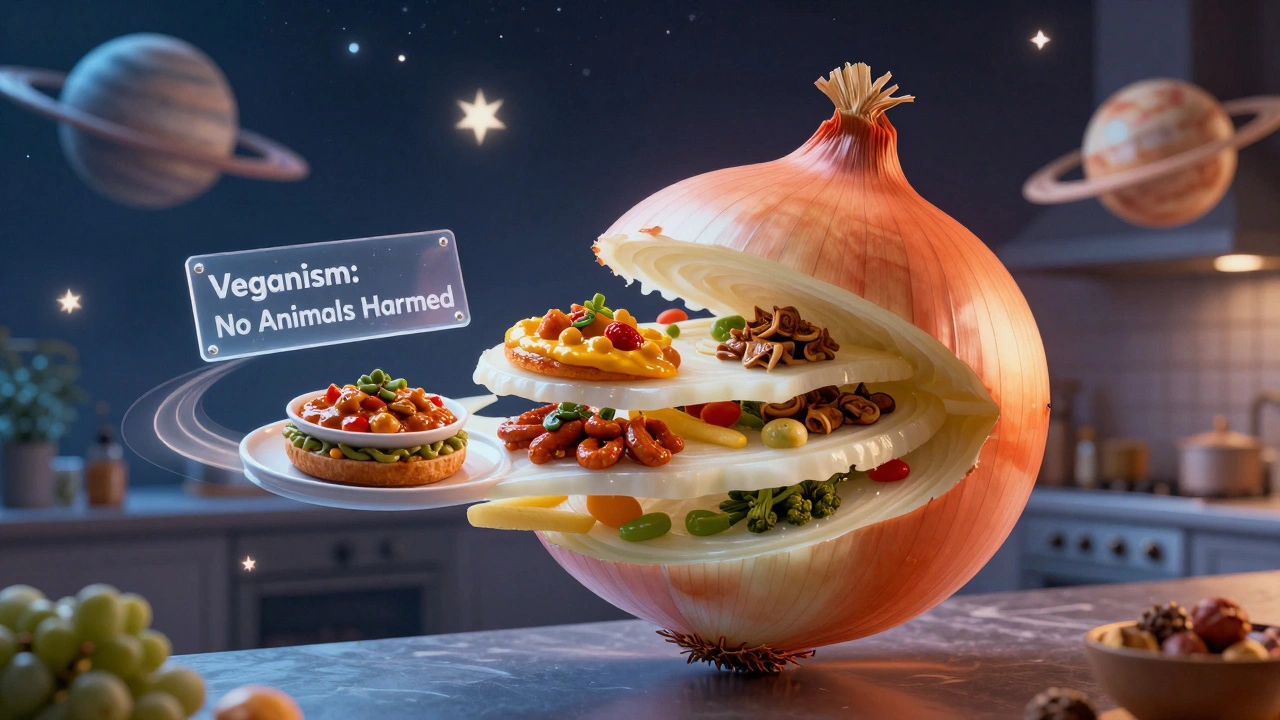
Can You Still Be Vegan Without Onions?
Technically, yes. You could survive on plain rice, beans, potatoes, and lettuce. But you’d miss out on a huge part of what makes plant-based food delicious. Vegan cooking isn’t about deprivation. It’s about creativity. And onions? They’re one of the most versatile ingredients on the planet.
They caramelize into sweet, sticky jewels. They sizzle into savory bases. They add crunch to salads and depth to soups. Skip them, and you’re not being more vegan - you’re just making your meals boring.
If you’re avoiding onions for personal reasons, that’s fine. But don’t let anyone make you feel like you’re not a “real” vegan because you enjoy them. You are.
Final Thought: Veganism Is About Compassion - Not Perfection
Veganism isn’t a religion. It’s a practical choice to reduce harm. It’s about choosing oat milk over cow’s milk. About buying shoes made from synthetic materials instead of leather. About reading labels to avoid hidden animal ingredients like casein or whey.
It’s not about whether your soup has onions. It’s about whether your burger came from a cow. It’s not about avoiding foods that “stir the mind.” It’s about refusing to support industries that exploit animals.
So go ahead. Chop that onion. Sauté that garlic. Enjoy the flavor. You’re not just eating vegan food - you’re eating real, honest, delicious food. And that’s exactly what this movement was built for.

Recent Posts
-
 Discover the World's Tastiest Pasta Varieties March 24, 2025
 -
 Best Baking Temperature for Juicy Chicken: 350 vs 400 Degrees November 26, 2024