Longevity Risk Estimator
Your Eating Habits
Your Longevity Estimate
Potential Lifespan Benefit
How this compares to meat-eaters
0.0
years longer
Article Insight: The Loma Linda study found vegetarians live about 7 years longer than meat-eaters. Your benefit is based on the same science!
Better plant foods and less red meat increase your advantage.
For decades, people have wondered if skipping meat means living longer. It’s not just a belief passed down at dinner tables or trendy online posts - there’s real data behind it. And yes, the evidence suggests vegetarians, on average, live longer than meat-eaters. But it’s not because they avoid burgers. It’s because of what they eat instead.
What the research actually shows
A 2013 study from Loma Linda University tracked over 70,000 people for more than five years. Those who ate no meat lived about seven years longer on average than those who ate meat regularly. That’s not a small difference. Another analysis from the American Heart Association, reviewing data from 10 major studies, found vegetarians had a 16% lower risk of dying from heart disease and a 10% lower risk of dying from any cause.
But here’s the catch: not all vegetarians are the same. Someone who eats a lot of white bread, fried potatoes, and sugary cereals - and calls it vegetarian - isn’t getting the same benefits as someone who eats beans, lentils, leafy greens, nuts, and whole grains. The quality of the diet matters more than just removing meat.
Why plant-based diets help you live longer
Plant-based eaters tend to have lower blood pressure. Their cholesterol levels are usually better. Their bodies deal with inflammation more efficiently. These aren’t minor perks - they’re the foundation of long-term health.
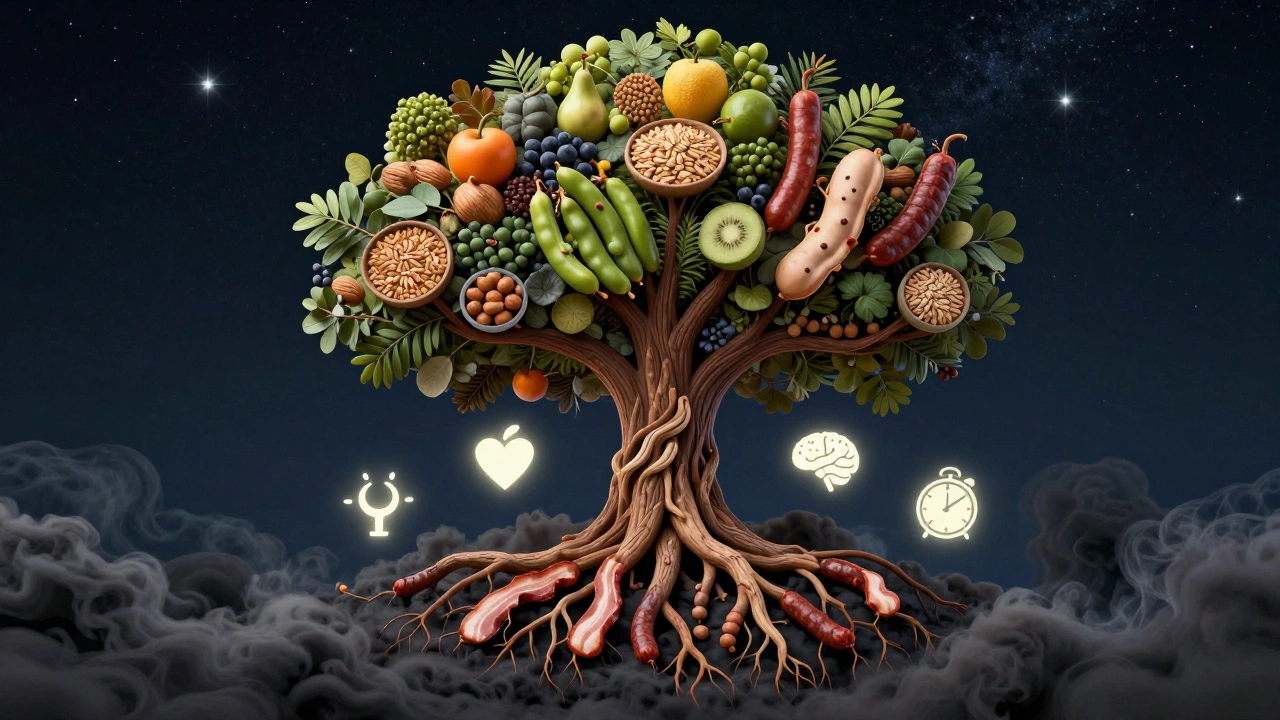
Red and processed meats are linked to higher rates of colon cancer, type 2 diabetes, and heart disease. The World Health Organization classifies processed meats like bacon and sausages as carcinogens. Even unprocessed red meat, eaten daily, increases risk. On the flip side, vegetables, fruits, legumes, and whole grains are packed with fiber, antioxidants, and phytonutrients that protect cells and reduce chronic disease.
One big reason vegetarians live longer is weight management. People who eat mostly plants tend to have lower body mass indexes (BMI). That means less strain on the heart, joints, and organs. A 2020 study in the journal Nutrients found that vegetarians had, on average, 10 to 15 pounds less body weight than meat-eaters - even when both groups ate the same number of calories.
It’s not just about food - lifestyle matters too
Vegetarians are more likely to exercise regularly, smoke less, and drink less alcohol. They’re also more likely to get regular health check-ups. So when researchers say vegetarians live longer, part of that might be because of habits, not just food.
But even when scientists adjust for smoking, exercise, and alcohol use, the health advantage for plant-based eaters still shows up. That means the diet itself is doing something important. It’s not just that vegetarians are healthier people overall - their food choices are actively protecting them.
What about vegans? Do they live even longer?
Vegans - people who avoid all animal products, including dairy and eggs - often show even stronger health markers. A 2022 study in the Journal of the American College of Nutrition found vegans had the lowest rates of hypertension and type 2 diabetes among all dietary groups studied. Their LDL (bad) cholesterol was 30% lower than meat-eaters’.
But vegan diets come with risks if not planned well. Vitamin B12, iron, calcium, and omega-3s aren’t naturally found in plant foods. Without supplements or fortified foods, vegans can develop deficiencies. That’s why some vegans don’t live longer than vegetarians - they’re missing key nutrients. The difference isn’t in avoiding dairy, it’s in knowing how to replace what you lose.
Real-world examples: who’s living longer?
Take the Blue Zones - regions around the world where people live past 100 at the highest rates. In Okinawa, Japan, the traditional diet is 95% plant-based: sweet potatoes, tofu, bitter melon, seaweed. In Sardinia, Italy, people eat beans, barley, and whole-grain bread, with meat only once a week. These aren’t trendy diets - they’re centuries-old ways of eating that happen to match what science says promotes longevity.
Compare that to the average American diet, where meat makes up nearly 30% of daily calories. It’s no surprise life expectancy there has been declining since 2014.
What if you don’t want to go fully vegetarian?
You don’t need to quit meat cold turkey to see benefits. The biggest jump in health happens when you cut out processed meats and reduce red meat to once a week. A 2021 Harvard study found that replacing just one serving of red meat per day with beans, lentils, or tofu lowered the risk of early death by 14%.
That’s the power of small changes. You don’t need to be perfect. You just need to shift the balance. More plants. Less processed meat. That’s enough to make a measurable difference in how long you live - and how well you live.
What to eat if you want to live longer
If you’re thinking about eating more plants, here’s what actually works:
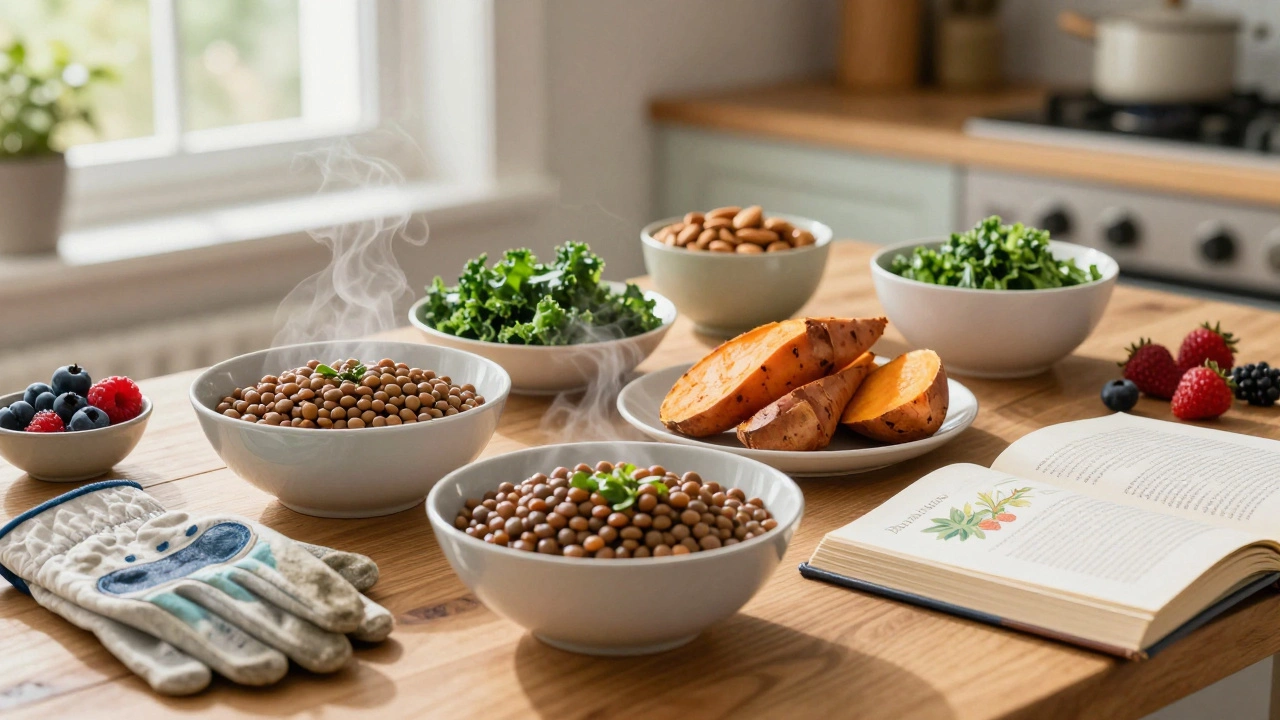
- Legumes - beans, lentils, chickpeas. Eat at least 3 servings a week. They’re packed with fiber and protein.
- Whole grains - oats, quinoa, brown rice, barley. Swap white bread and pasta for these.
- Leafy greens - spinach, kale, Swiss chard. Eat them daily, even if it’s just in a smoothie.
- Nuts and seeds - almonds, walnuts, flaxseeds, chia. A small handful a day cuts heart disease risk.
- Fruits - berries, apples, oranges. Don’t juice them. Eat the whole fruit for the fiber.
- Plant-based proteins - tofu, tempeh, edamame. Use them in stir-fries, salads, or bowls.
Don’t stress over perfection. Start by adding one new plant-based meal a week. Try lentil soup instead of chili. Swap ground beef for black beans in tacos. Use mashed avocado instead of butter on toast. These aren’t sacrifices - they’re upgrades.
Common myths about vegetarian diets
Myth: Vegetarians don’t get enough protein.
Truth: A cup of lentils has 18 grams of protein. A serving of tofu has 20. You don’t need meat to hit your daily target.
Myth: Plant-based diets are expensive.
Truth: Beans, rice, oats, and seasonal vegetables cost less than chicken or steak. A bag of dried lentils lasts weeks and costs under $2.
Myth: You’ll feel weak or tired.
Truth: Many people report more energy once they cut out heavy, processed meals. Fatigue often comes from blood sugar spikes and inflammation - both reduced on a plant-based diet.
What’s holding people back?
The biggest obstacle isn’t food - it’s convenience. People think vegetarian meals take too long or require special ingredients. But most traditional vegetarian dishes - like dal, chickpea curry, or vegetable stir-fry - are simple, cheap, and quick.
Start with what you already know. Make your usual pasta with marinara and lentils instead of meatballs. Add beans to your salad. Use mushrooms instead of ground beef in tacos. You don’t need a new recipe book. You just need to tweak what you’re already doing.
Final thought: It’s not about being perfect - it’s about progress
You don’t have to go vegetarian to live longer. But if you eat more plants and less meat, especially processed meat, your odds improve. Every swap counts. Every extra serving of broccoli, every week without bacon, every time you choose beans over beef - it adds up.
Longevity isn’t about extremes. It’s about consistency. And the best part? You don’t have to give up flavor. Plant-based eating isn’t bland. It’s colorful, bold, and full of texture. It’s the kind of food that makes you feel good - inside and out.
Do vegetarians live longer than meat-eaters?
Yes, on average, vegetarians live longer. Studies show they have a lower risk of heart disease, high blood pressure, type 2 diabetes, and certain cancers. One major study found vegetarians lived about seven years longer than meat-eaters. But the key is eating whole, unprocessed plant foods - not just avoiding meat.
Is veganism better for longevity than vegetarianism?
Vegans often have better health markers like lower cholesterol and blood pressure. But they’re also at higher risk of nutrient deficiencies like B12, iron, and omega-3s if they don’t plan their diet. So while veganism can support longevity, it requires more attention to nutrition than vegetarianism. Many vegetarians who eat dairy and eggs get these nutrients more easily.
Do I need to go completely plant-based to see benefits?
No. Even small changes help. Replacing one serving of red meat per day with beans or tofu lowers your risk of early death by 14%. Cutting out processed meats like bacon and sausages makes a bigger difference than going fully vegetarian. Progress matters more than perfection.
What’s the best plant-based food for living longer?
Legumes - beans, lentils, chickpeas - are the most powerful. They’re linked to lower blood pressure, reduced inflammation, and longer life. A 2023 study found people who ate legumes daily had a 22% lower risk of dying from any cause. Whole grains, nuts, and leafy greens are also top performers.
Can a vegetarian diet help with weight loss?
Yes. Vegetarians tend to have lower body weight because plant-based foods are lower in calories and higher in fiber, which keeps you full longer. A 2020 study showed vegetarians weighed 10 to 15 pounds less on average than meat-eaters, even when eating the same number of calories. It’s not magic - it’s about food density and satiety.

Recent Posts
-
 How to Eat for $20 a Week: Real Family Meals That Work February 22, 2026
 -
 Common Challenges Vegans Face and How to Overcome Them January 7, 2025